Latest News

Writing the book on patriotism: Two heroes from here featured in Patterson book on battlefield sacrifice

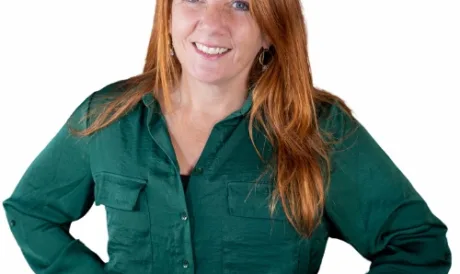
MORGANTOWN – Jenny Secreto retired last year as an English teacher at Morgantown High School, but she’s still recommending books for people to read. 

One of them is “American Heroes,” by James Patterson, the prolific bestselling author mainly known for his mystery novels – which she says would be quite appropriate to crack open for the Fourth of July.

Patterson also pens nonfiction, and in 2024, he sat down with Matt Everson, a former Army ranger who distinguished himself during the “Black Hawk Down” rescue mission in Somalia. 

What came out of that collaboration is “American Heroes,” a series of vignettes highlighting the risks and sacrifices of 30 soldiers from all walks that would be made on the battlefields of World War II, Korea, Vietnam, Afghanistan and Iraq.

Soldiers who would be recognized with the Medal of Honor, the American military highest acknowledgement for bravery, for their answering of the call. 

Two of them profiled by Patterson and Everson hailed from north-central West Virginia: Herschel “Woody” Williams and Tom Bennett.

‘I’M JUST THE CARETAKER’

If this had been a war movie, John Wayne would have materialized just in time and the music would have swelled.

Except, it wasn’t a movie.

It was a little Marine from Marion County, playing a big role in the battle for Iwo Jima in World War II.

For about four hours on Feb. 23, 1945, Williams, shouldering a flamethrower, systematically neutralized a row of pillboxes and their machine gunners who were pinning down the Marines in the volcanic sand of the island some 600 miles south of Tokyo.

Two of his platoon mates trying to flank him were shot dead almost immediately as he began his charge.

Others stepped up, including his buddy Doral Lee, a big kid from Minnesota who said, “Stay with me, Woody.”

Williams, who grew up in Quiet Dell, an unincorporated community just outside Fairmont, was strong and wiry – but he was also on the smallish side.

He was just 5-foot-6 and weighed maybe 135 pounds.

The flamethrower weighed a good 70 pounds.

With two tanks of jellied gasoline sitting on his shoulders, his war was fought standing up.

Bullets pinged off those tanks and Doral kept yelling for him to keep going. 

After he found out he was being recognized with the Medal of Honor, and after he read the citation that accompanied it, he focused on the sections about his fellow Marines who zigged and zagged up the mountain with him that day.

The ones who didn’t get to come home with accolades from Iwo Jima. 

“This medal doesn’t belong to me,” he said in the seconds after President Harry Truman draped it around his neck in the Rose Garden. 

“It belongs to all of them. I’m just the caretaker.”

TORN, OVER WHAT TO DO

Feb. 11, 1969: Pleiku, the Central Highlands.

Second Platoon, Company B, of the Fourth Infantry, is on the move again – and the bullets are snapping the air once more.

Charlie has been gunning for the company for three days straight.

“Medic!” and “I’m hit!” came the cries, and Tom Bennett answered each time.

At just 5-foot-6, the earnest Morgantown High graduate and West Virginia University dropout he wasn’t scraping any doorways at the PX.

He was a slight, pipe-cleaner of a guy, around the same dimensions as Woody, actually, but he carried himself bigger, too. 

Like a linebacker rushing the quarterback on Pony Lewis Field, he’d charge into the combat chaos and save a life.

And another, and another.

The kid from Morgantown who was deeply religious, couldn’t have been more conflicted about the fighting in Southeast Asia.

One of his best friends from MHS had already died there. 

Bennett didn’t want to burn his draft card. He didn’t want to flee to Canada.

When he found out he could muster in as a conscientious objector and be a combat medic – he leapt.

Three months in-country, and the lieutenant and his sergeant and most of his buddies were worried he was now too quick on the draw.

By Feb. 11, that third day of skirmishes, incoming rounds and snipers, the wartime fates exacted their due. 

One of those buddies had been hit. Everybody could see it wasn’t good. 

Sadly, if the kid wasn’t dead already – he was going to be.

Tom uncoiled. Everybody yelled to hold up, but he waved them off as he surged forward. 

He toppled like a statue when the bullet bore into his forehead, just below the rim of his helmet.

In that one inexorable pulse of the trigger-pull and that one last overture of a beating heart that right up to that instant had been so very full … everything that Tom Bennett ever was, or ever was going to be, was gone.

Just like that.

He was posthumously recognized with the medal at the White House in a ceremony on April 7, 1970, on what would have been his 23rd birthday. 

HONORING THE MEMORY (AND THE STORIES THAT DON’T GET TOLD)

Secreto, meanwhile, is gratified that Morgantown High continues to honor Bennett and his 17 other classmates killed in Vietnam.

As part of her Honors English classes, she’d always assign “Peaceful Patriot,” a biography a WVU classmate wrote of Bennett’s life and times.

Because Morgantown High, the building, hadn’t changed a bit, the book really resonated, she said.

“Tommy Bennett walked the same hallways just like they do,” she said.

“He went to games at Pony Lewis Field just like they do. He had dreams just like they have dreams. He’s from where they’re from.”

Williams, who died at 98, made a career back home in West Virginia helping veterans transition to civilian life.

The Marine remembers his heart pounding like the pistons of a V-8 Ford that afternoon on the island.

He remembers the wrenching eye contact with an enemy soldier – in the second before the incineration by his flamethrower. 

After that, not much.

He always speculated his brain buried the trauma on purpose.

As a little girl, his daughter Tracie Williams remembers Woody being popular at parades. Everybody wanted to shake his hand. 

“We always thought he was a big deal just by being our dad,” she said. “We never knew he was a war hero.”