
Morgantown to consider banning ‘hostile architecture’ on city property
Trending
MORGANTOWN - To bench, or not to bench.
Seemingly minor in the grand scheme of things, that is a question - the placement of benches in and around downtown Morgantown - that has been contemplated a number of times over the years.
Councilor Jenny Selin alluded to that fact during Morgantown City Council's June 30 work session.
"Our downtown has had the most interesting flow of, 'Put in all the benches.' We got an Association of Retired Persons grant and we put in a whole bunch of benches. And then people slowly go, 'Well, that bench is irritating. Let's get rid of that one. Oh, I don't think that one should be there. Let's get rid of that one. Oh, I had a complaint here.' So, they go away, and we kind of go on a cycle."
The grant Selin mentioned - $7,500 provided by the AARP in 2018 - came with the goal of placing nine benches along High Street.
Today, there are a handful of public benches downtown.
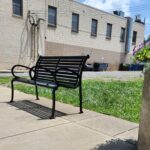
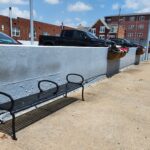
Two on High Street, near Iron Horse Tavern. Three along Chestnut Street.
And each an example of "hostile architecture" in that they include armrests that segment the seating area, presumably to prevent people from lying down.
During council's recent conversation on enhanced interconnectivity, members said they would like to see more benches across the city, and they want them to be more welcoming.
"I think we certainly need a lot more respites within town, throughout the city in general. Closer to downtown is great, but I think also within the city and next to the trail. Maybe more built-up spaces, where we find opportunity, where people can sit and rest," Deputy Mayor Brian Butcher said. "And I think to that end, I would like to see us, when we're building those places to sit and rest, that they be constructed in such a way that they are not hostile to people sleeping or lying down on them."
To that end, council will contemplate as part of its July 7 regular meeting a resolution prohibiting hostile architecture on public property.
Per the resolution, hostile infrastructure is defined as, "physical design features installed on public infrastructure primarily intended to deter people from resting, sitting, lying down, or remaining in a particular area, when such features operate as a deterrent through discomfort, exclusion or restriction rather than through legitimate safety, security or operational necessity."
In terms of benches, slanted or segmented surfaces fit the definition. On other surfaces, it might be anti-sitting protrusions, or planters installed to prevent people from sitting or lying down.
Passage of the resolution would prohibit the city's use of hostile architecture in public infrastructure on public property or public rights-of-way, including new installations, expansions, repairs, replacements or capital improvement projects.
As for installations already in place, like the aforementioned benches, the city will inventory existing public infrastructure within 180 days of the resolution's effective date. Where feasible, the city will identify opportunities for removal, modification or replacement of prohibited features.
"When we think about hostile infrastructure, our minds immediately go to the homeless population, but I also just want to acknowledge that it negatively impacts mothers with kids, people with kids, larger-bodied people, handicapped people, the elderly," Councilor Jodi Hollingshead said.