
COLUMN: Once nearly disbanded, WVU’s trip to College World Series is a true story of perseverance
Trending
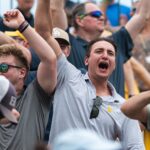
GRANVILLE — Before there was a wild celebration Saturday - the result of West Virginia adding a giant notation in the school's athletic history books by advancing to the College World Series with a 17-1 victory against Cal Poly - there was a ton of doubt.
Before there were Steve Sabins and Randy Mazey, as well as J.J. Wetherholt, Alek Manoah or even a Kendrick Family Ballpark, there was but one question:
Is the WVU baseball program even worth keeping around?
Hard to imagine, based on the sea of fans that not only packed the Ken - on the inside and outside the stadium - over the last two weekends, but the terrific journey the Mountaineers (45-15) took this season to get to Omaha, Neb. for the World Series almost never happened.
There was a time, back in 2012, when the program was nearly disbanded and was basically almost left for dead.
You may remember that time as when WVU was getting set to join the Big 12, which at that time, was a powerhouse of a baseball conference.
Texas, Oklahoma, Oklahoma State and even Baylor were big boys of the sport back then. They had tradition. They also had facilities and money to spend.
WVU had Hawley Field, a baseball arena - we refuse to call it a stadium - with just one bathroom facility for everyone at the game, including the players and coaches. Players dressed for each game out in the parking lot. The press box was the size of a billboard.
Suites? Please, there was nothing, ahem, sweet about Hawley Field.
Former WVU head coach Greg Van Zant was rarely, if ever, given the sport's full allotment of scholarships to offer to potential recruits. As the old story was once told to me, WVU athletic officials at the time basically told Van Zant to be content working with scraps and in turn the athletic department wouldn't get caught up in the results on the scoreboard.
Looking back in hindsight, the fact that Van Zant was able to keep WVU competitive in the Big East - he won 528 games over 18 seasons and took the Mountaineers to the 1996 NCAA tournament - was quite an accomplishment.
Then came 2012. Oliver Luck was the WVU athletic director and he put together a think tank to discuss the future of the program, as it was about to play in a conference that was already light years ahead of where WVU was with its baseball program and facilities.
Killing the program off was certainly on the table.
Instead, Luck was told by baseball people in the know, that West Virginia could be a school that thrived in college baseball if the school put its heart and soul into committing to the program.
It had to get a new stadium. It couldn't be stingy and continue to cut corners and hold back money and scholarships from the program.
In short, if WVU didn't want to get embarrassed by Big 12 competition in baseball, the school had to get serious about funding the sport to the same level as everyone else.
The rest you basically know. In came Mazey and the beginning of a 14-year journey that eventually gave way to Sabins two years ago that was capped with the grandest of moments seen on Saturday.
“You feel like you provided something special,” Sabins said. “I’m jogging out to the third-base box and people are screaming, ‘Thank you.’ I’m just going to work, like, thank you. I’m just appreciative to be here and to have the opportunity. When you’re belting ‘Country Roads’ at the top of your lungs and you see the excitement in their faces. After the regional, I saw grown men crying in the stands. You’re thinking this is impacting somebody. You never want anything more than to have an impact on someone else’s life and for what you do to be meaningful.”
WVU is going to Omaha. Not as a footnote and certainly not as a joke. The Mountaineers are going with the intention of bringing back a national championship to Morgantown.
Think about that for a second. Nearly left for dead at one point and reaching the sport's pinnacle destination the next.
How in the world is that possible?
"I'd say that anything is possible if there is belief and backing and support," Sabins said. "If you get the right people in the room and the right relationships are connected, anything is possible.
"You see a program that was nearly disbanded to being one of the best programs in the nation."
And yes, money was literally poured into the program - both by the school and the taxpayers of Monongalia County - to help make it successful.
The crowning achievement, though, is that we're not talking about the type of money that comes gushing in for one or two years for a quick stab of national success and then goes away.
It was a 14-year journey highlighted by perseverance, consistency and a willingness to continue to take one step after another without trying to skip three or four at a time.
All of it with the hope that someday, somehow that patience would be rewarded, which it finally was on Saturday.
"There are a lot of good schools. There are a lot of great players, but we didn't do it because we all of a sudden miraculously have the most talented 40 players," Sabins continued. "We have really good players and a lot of talent, but there's something more to that.
"There's culture and there's work and there's belief. What this program has done is go and outwork people for the last decade, and so you're starting to see some of the fruits of that labor."