
Beyond the bridge: City moving on White Park southside project
Trending
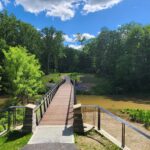
MORGANTOWN - With the newly christened Cobun Creek Bridge opening up a previously inaccessible portion of White Park, the city of Morgantown and BOPARC are turning their attention to what lies beyond the water’s edge.
Today, it's woods - approximately 21 acres acquired by the city in 1973. It's among the 100-plus acres of woodlands included in the 170-acre park’s footprint.
But like all of White Park, the newly accessible southern portion has an industrial past - meaning efforts to activate the land will be equal parts remediation and recreation.
The South Morgantown Tank Farm, formerly operated by the Eureka Pipeline Company (a subsidiary of Standard Oil), began crude oil storage activities across hundreds of acres, including modern day White Park, around 1890. At its height, dozens of above ground storage tanks provided capacity for more than two million barrels of crude oil. Some of those tanks remained in place into the early 1970s.
Detailing the efforts to identify and undo the environmental impacts to the land dating back to the early 1980s is a lengthy story unto itself.
But according to the city, nearly $4 million has been invested in remediation efforts to date, including early cost-sharing agreements with Shell Oil, and assistance from the Land Stewardship Corporation, the Northern Brownfields Assistance Center, the city of Morgantown and two recent cleanup grants from the federal Environmental Protection Agency's Brownfields program.
Which brings us back to the future of the park's south side.
Utilizing Brownfields grant funding, the city has contracted with Onterris (formerly Montrose Environmental Group) to serve as the lead partner for ongoing environmental cleanup efforts for the next phase of White Park improvements.
Onterris has subcontracted with the International Mountain Bicycling Association to assist with trail planning and design as part of the park's expansion.
Preliminary concepts include approximately two miles of new trails, bicycle skills and play areas, and additional visitor amenities. Construction is anticipated to begin in the next fiscal year (July 1, 2026 – June 30, 2027), pending final planning.
Morgantown Staff Engineer Drew Gatlin said the remediation project has expanded significantly since its beginnings in 2019, when it was initially envisioned as a limited effort within the corridor identified by the Morgantown Utility Board for the placement of a water line connecting the Flegal Reservoir to its water treatment plant.
Site assessments undertaken at that time confirmed the presence of arsenic, cobalt, iron and polycyclic aromatic hydrocarbons above recreational screening levels in subsurface soils, prompting the city to enroll the land in the West Virginia Voluntary Remediation Program.
According to the request for qualifications for the White Park southside project, the newly constructed trail loop will be designed with protective cover to reduce exposure risks, stating, "The trail will help manage user access, discourage informal trail creation, and minimize soil disturbance. Measures such as signage, native vegetation buffers, and limited fencing will guide visitors to designated areas and reduce contact with contaminated soils."
Gatlin said the current scope of the larger remediation plan includes a comprehensive review of all wooded areas of city-owned land formerly used for the crude oil tank farm. It's expected the project will continue to evolve as additional funding is secured to address the impacts of the site's industrial past.
According to the city, lessons learned from the southside development will inform wider cleanup and redevelopment efforts across the park. The city also notes that since 2019, it’s hosted several public meetings on the project and plans to hold multiple sessions in the future to ensure community input aligns with recreation, conservation and long-term land use goals.
“We view this site as an incredible community asset that holds tremendous potential. Over the past six years, we've conducted assessments of its industrial legacy and found that while there is evidence of impact from past oil storage, it is generally confined to the subsurface and poses no immediate risk to park visitors,” Gatlin said. “In many ways, that legacy is also an opportunity. By addressing it responsibly, raising awareness, and developing thoughtful policies to guide future land use, this effort is about turning that potential into reality. Together we are working to enhance one of the crown jewels of our park system and make it even more exceptional for generations to come."