
MARL executive talks issues with The Dominion Post
Trending
MORGANTOWN - The four public comment hearings for the NextEra Energy Transmission MidAtlantic’s MidAtlantic Resiliency Link Project are just around the corner: June 4,5,10 and 11 - with the final two set in Morgantown and Kingwood.
As of Wednesday, 4,281 letters of protest had been filed with the Public Service Commission, along with 115 letters of support.
In view of the strong public response, Matt Pawlowski, vice president and head of execution for NextEra Energy subsidiary NextEra Energy Transmission took some time to talk with The Dominion Post about the issues: the aims and potential benefits of the project, and the opposition.
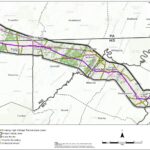
About 58.9 miles of the 107.5-mile, 500 kilovolt line would cross West Virginia. And a leading issue cited by the opposition is that the line is just a pass-through for power going from Pennsylvania to Virginia’s Data Center Alley in Loudoun County.
Pawlowski addressed that from several angles - one of them new to most in West Virginia.
"We have been working extensively with the Office of Energy in West Virginia and also PJM to come up with an agreement and approach to start to think about what an actual direct substation in West Virginia would look like: where it would be, who the customer would be. And we’re progressing on that."
Pawlowski said he would have more on that as it develops.
Apart from that possible direct benefit, he made some other points.
"I think the residents are making a fair point," he said. But electrons don’t follow state lines; the power generated here and elsewhere all feeds in the PJM Interconnection grid, covering 13 states.
Locally, he said, two existing power substations near the state border and their connections provide real benefit. "That’s the reliability and resiliency benefit that we talk about." Power flows into the state, and power produced in the state is exported out, providing economic benefit.
Also, he said, there are benefits already coming to West Virginia beyond reliability and resiliency. For instance, taxes and jobs. The project will provide 200-300 construction jobs, along with the indirect benefits to hotels and restaurants across the two-three years of construction. And MARL is expected to generate $133 million in property tax benefits across the project life, with 70% going to public education.
"I think the key is to look at the whole suite of benefits that we bring, in its current configuration, and as they look forward to bring more jobs and growth."
Data centers
Anyone following discussions of the PJM grid and the growth of data centers is aware of the argument that their power sources ought to be situated closer to them so that they take more responsibility for their own power and don’t burden other utility customers.
Data centers are a big part of the conversation nationally, Pawlowski said. But they aren’t the only issue in view.
"You have a significant amount of load growth that’s been happening here in the state over the last 40 years," he said. The grid designed 50 years ago isn’t designed for today’s energy needs.
"Think about how connective devices you have in your homes right now. ... We have a grid that is outdated and we can’t wait for it to fail. We need the grid modernization to happen now."
West Virginia has had significant load growth, he said, and among the highest power outage rates in the country (an assertion supported by various new reports). "Those are really important things to address now, and we can’t wait. That’s why PJM designed this line and that’s why we’re building this line."
West Virginia has a lot of existing baseload generation but not transmission lines to move the power to the PJM grid, he said. Transmitting power into the PJM system will not only give PJM more megawatts, "but also bring existing generation on, which lowers capacity prices, which lowers electricity prices."
Some fact questions
We asked Pawlowski to clarify some facts about MARL that have floated around among the opposition groups.
Among them, PJM originally designed MARL as a single project that was broken into three separate projects. Pawlowski confirmed that.
Pawlowski said, "We worked with partners to figure out what the best way to divide up the project is." There is some existing right of way and other things those utilities have - it created a better route
so they worked with PJM and the partners to figure out a good redesign to have the most successful project.
As we reported last August, PJM explains that the lines are part of a project series - also called a baseline reliability project - that PJM labels B3800. The PJM Board of Managers approved the project series on Dec. 11, 2023, "to expand the regional transmission system to accommodate electricity demand growth, generator retirements and future capacity needs in the area PJM serves."
MARL is the western segment of B3800. It is planned to start in Greene County, Pa., and end at a handoff point - a new 500 kV transmission line to be constructed by FirstEnergy - in Frederick County, Va.
MARL will connect to FirstEnergy subsidiary Potomac Edison’s project called the Gore-Doubs-Goose Creek Improvements Project.
Potomac Edison says its work will primarily take place within about 44 miles of existing rights of way, beginning at the Gore Substation in Frederick County, Virginia. The work will use an existing right of way that traverses east through Frederick County (17.9 miles); Clarke County, Virginia (0.2 miles); Jefferson County, West Virginia (15.4 miles); and Loudoun County, Virginia (10.5 miles).
Potomac Edison said it will also build two new 138-kV lines between the Stonewall Substation in Clear Brook, Virginia, and the proposed Woodside Substation nearby.
The third segment is being built by Dominion Energy: about three miles, within existing right of way, in eastern Loudoun County.
Opposition groups have noted that the cost of MAR nearly doubled in January. We have reported that the current cost estimate for MARL is $1.167 billion, with the estimate for the West Virginia Portions at $482,706,000. But that has since jumped to $960, according to the Institute for Energy Economic and Financial Analysis.
Pawlowski said, "The initial cost submitted to PJM was very preliminary." Then, out in the field, they had teams doing engineering, land and other outreach, and reaching out to stakeholders to figure the route. (They are currently at 30% of the engineering design phase.)
"That’s why we updated the cost of the project, and PJM ultimately approved that cost. ... It’s more a maturity of the project as we’re going through a more detailed design. I think it’s also taking into account the touch-points that we’ve had with local communities, whether it’s commissioners or landowners or other stakeholders. That’s what ultimately increased the cost - because we’re smarter about what the route’s going to be, what the design’s going to be."
An opposition group in Virginia has asserted that all the power for MARL will originate from three West Virginia coal-fired plants: FirstEnergy’s Fort Martin and Harrison, and AEP’s Mitchell Power Plant.
Pawlowski had a different view. The electrons aren’t unidirectional, he said. The power will originate from all sources through the PJM system. "There’s not one specific customer that’s really in mind on this. Its really part of a network line of transmission projects that PJM has."
The three West Virginia plants are closest to the line, he said, but it’s not correct to say those electrons are automatically flowing to MARL. "We’re part of a regional backbone of transmission that PJM has designed to allow those electrons to freely flow throughout the entire system.
Property questions
We asked Pawlowski about concerns raised by landowners along the proposed route: loss of property value and loss of pristine scenery.
"Those concerns are valid," he said, "and I respect that property is both a personal and financial investment. In our decades of experience across 19 states in every major regional transmission organization, we have consistently seen that transmission lines can coexist with communities. In fact, a 2020 study in the Journal of Real Estate Literature, which analyzed 60 years of data, found little to no measurable impact on property values from the presence of electric transmission lines."
He continued, "We also recognize that scenic impact is important to residents. That is why we work closely with landowners to site projects responsibly, minimize visual disruption where feasible, and maintain open, ongoing dialogue throughout the process."
Pawlowski concluded with these thoughts: "I’m super proud of being head of execution for the project. I’m super proud of all the work that the team has done to do outreach to all the thousands of people that we’ve touched. Not everybody is going to like the project but I think it;s really important for them to be heard and for us to consider that feedback. I think we’ve done a pretty good job of that."