
MORGANTOWN – There was a lot said about the MidAtlantic Resiliency Link power transmission project Wednesday evening.
A lot.
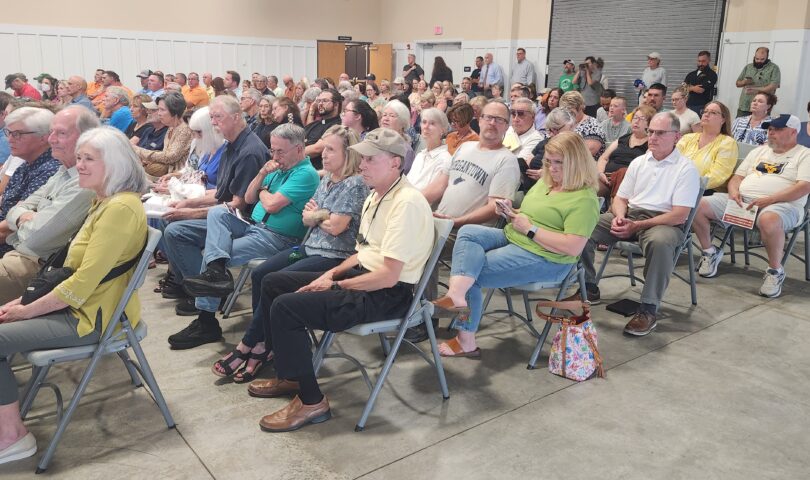
An estimated 250 people turned up at the Mon County Center to both speak and listen as the West Virginia Public Service Commission conducted its third public hearing on a four-stop tour through Mineral, Hampshire, Monongalia and Preston counties.
One by one, two minutes at a time, dozens of attendees stood at the microphone and made their case for why they believe MARL is a bad deal for Monongalia County and West Virginia.
Perhaps Frank Tate summed up the prevailing opinion most succinctly when he said, “Simply, this transmission line is a stupid, terrible deal for West Virginians.”
NextEra Energy Transmission’s proposed MARL project would span 107.5 miles starting in Greene County, Pennsylvania and ending at a handoff point in Frederick County, Virginia.
About 58.9 miles of the 500 kilovolt line would cross West Virginia on a route that would include 5.9 miles in Monongalia County before passing through Preston (15.8 miles), Mineral (10.9) and Hampshire (26.2) counties.
Much of what was said Wednesday mirrored points made in recent months in public proclamations of opposition by all four county commissions as well as state and local elected officials, public advocacy groups like West Virginians Against Transmission Line Injustice, and the citizens behind thousands of letters of protest filed with the PSC.
To summarize those points: West Virginia, a net exporter of energy, will be asked to sacrifice natural beauty, public and private lands, and property values to become a passthrough for a massive extension cord plugging data centers in Virginia into power generated in Pennsylvania through a project that will raise customer rates while providing little to no benefit to West Virginians.
“I hope what you find when you look at this, and I pray that you do, is that no sane person would take the terms of this deal,” Sean St. Martin said. “They’re going to Pennsylvania for power because Virginia has such strong restrictions on plants that they won’t build a plant. So instead of building a plant in their backyard, because they’re going to economically benefit, what are they going to do? They’re going to get it from Pennsylvania, not us. And then they’re going to run a long extension cord across our state … I just ask that as you review this you would say to yourself in the simplest of terms, ‘Would I do this deal?”
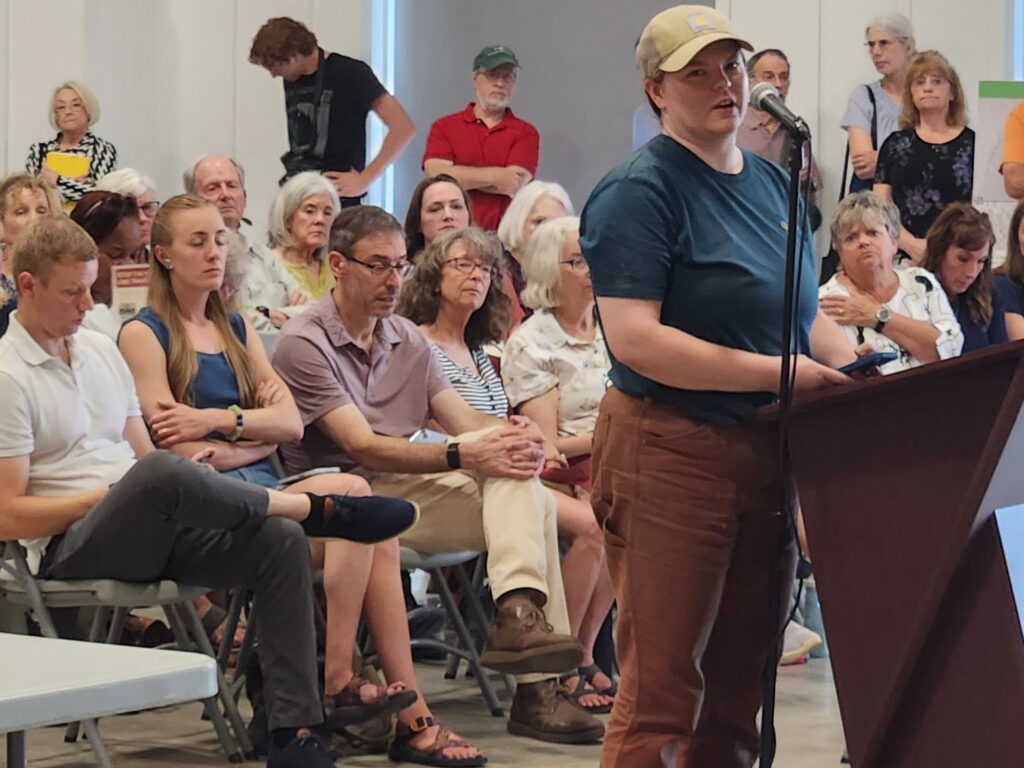
Linda Campbell said the MARL project strikes at the very core of “Almost Heaven” in asking West Virginians to help cover the cost of a project that promises increased electricity rates and environmental impacts.
“West Virginia gets no electricity and limited jobs. It is not an economic boost. It’s actually going to hurt the tourism industry, which brings in millions annually, and it’s going to hurt the heart and soul of this state,” she said, later adding, “If the PSC is trying to balance the interest of the West Virginia consumer ratepayer with another state’s need for electricity, a “no” vote on the MARL project is what is needed. Preserve the heart and soul of West Virginia, and keep West Virginia “Almost Heaven.”
While the vast majority of speakers asked PSC Chair Charlotte Lane and commissioners William Raney and Renee Larrick to deny NextEra Energy Transmission’s application for a Certificate of Public Convenience and Necessity, the perspective wasn’t unanimous.
Kyle Kull, an organizer for the West Virginia & Appalachian Laborers’ District Council, said the project will support needed jobs for working families.
“We need new construction and projects like this to keep our members working. We need steady job opportunities that support working families,” he said. “This project offers immediate jobs and an opportunity for the workers to improve their position in life. For these reasons, we support the MidAtlantic Resiliency Link.”