Latest News, Local Government

One of five MUB members, two thirds of customers live outside the city

MORGANTOWN – According to numbers provided by the Morgantown Utility Board, roughly two-thirds of its customers reside outside the city of Morgantown.

Yet Article 169 of city code, which governs the utility board, does not require Morgantown City Council to appoint any members to the five-seat board of directors who reside outside city limits.

It states only that each member must be a residential customer of MUB with “outstanding reputation, ability and integrity,” and that no more than two members can reside outside city limits.

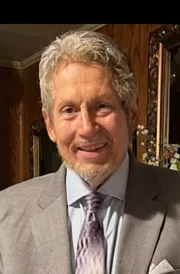
For the last decade, there’s been one – Cheat Lake area resident Tom Witt.

During MUB’s most recent meeting, Witt informed the body that he does not intend to seek reappointment.

“At the end of this 10 years, I decided we need to get some fresh blood on the board, particularly with the continued growth in the Cheat Lake area,” Witt told The Dominion Post. “Hopefully it would be someone who would be from this area.”

Or, at the very least, someone from outside the city.

Witt noted the growth of MUB’s customer base, not to mention its major development projects, are primarily occurring outside city boundaries.

“The Morgantown Utility Board services customers. Customers are not necessarily voters. They’re not necessarily residents of the city of Morgantown. They’re individuals and companies that use the water and wastewater and stormwater services of the utility board,” Witt said. “Our board has been able to maintain a growth pattern to accommodate both the acquisition of failing public service districts, but also the economic development that has been occurring in Monongalia County. We go hand in hand with economic development in the county.”

It’s Witt’s final point that has the Monongalia County Commission, and particularly Commission President Tom Bloom, paying close attention to who ultimately fills that open seat.

Bloom said he believes that since the 2022 turmoil surrounding city-proposed changes to Article 169, the city has moved to exert political control over what was formed to be an apolitical utility.

In September 2022, a series of proposed changes to Article 169 came before city council. The amendments came with a stated goal of improving communication and coordination between the city and MUB in response to a relationship left bruised following the placement of a water line through White Park – a lingering issue that became a public fight in 2019.

Among the proposed changes to Article 169 were the reservation of one of MUB’s five board seats for a member of council and placement of the city manager on the board as a non-voting member. Further, a provision was included that would have essentially given city council veto power over MUB projects larger than $1 million or deemed by council to be “outside the ordinary course of business.”

MUB was strongly opposed to the idea, calling it “unnecessary and contrary to the apolitical and autonomous nature of MUB as reflected in the original ordinance that created MUB in 1987.”

The county commission agreed.

In October of that year, the ordinance appeared before council. It was tabled on a 4-3 vote, following which the city and MUB met in a pair of closed-door sessions with a third party facilitator.

Changes to Article 169 would ultimately never come back before city council – but council has always had the authority to appoint who it sees fit to the utility’s board of directors.

In the immediate aftermath, it was announced that J.T. Straface would not be reappointed to MUB after 22 years on the body. Less than a week later, former 6th Ward Councilor Dave Harshbarger was placed in the open seat. Current 6th Ward Councilor Mark Downs holds it presently.

Earlier this year, Barbara Parsons was not reappointed to the utility board after a total of 17 years with MUB. The city council appointed Rich Brooks to the seat.

While Witt said council’s decisions regarding Staface and Parsons were not behind his choice to forgo application for reappointment, his departure will represent a near complete overhaul of the board since the Article 169 discussion less than four years ago.

Behind Witt, Chair Erik Carlson is the next longest-serving member of the board. Carlson joined in October 2021.

Bloom, who served on Morgantown City Council in 1987 when the former Morgantown Water Commission and Morgantown Sanitary Board were merged to create the Morgantown Utility Board, said he has concerns about whether MUB will end up with any non-city representatives following Witt’s departure this fall.

“It was never meant to be political, and it seems like it’s being made a political tool,” he said, explaining he also has issues with the fact that Morgantown City Manager Jamie Miller has started sitting in on the board’s executive sessions.

Bloom said he believes the county commission should be able to appoint members to the utility board, or, at the very least, recommend appointments from outside the city.

“Or, maybe it just needs to be completely re-evaluated and become a countywide utility since the majority of the development and a majority of the ratepayers are outside the city,” he said. “I don’t know why that couldn’t be looked at.”