
State’s first charter school holds first-ever graduation for its seniors
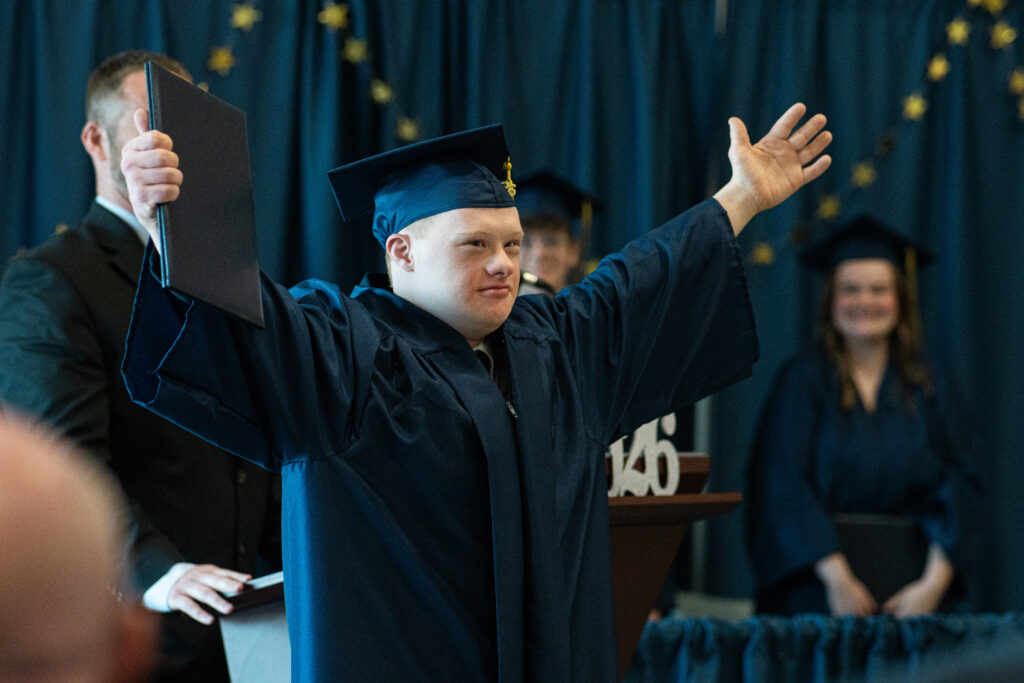
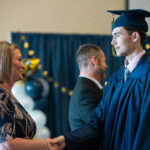
Benjamin Powell/The Dominion Post Liam Murphy celebrates receiving his diploma Wednesday at West Virginia Academy's graduation.
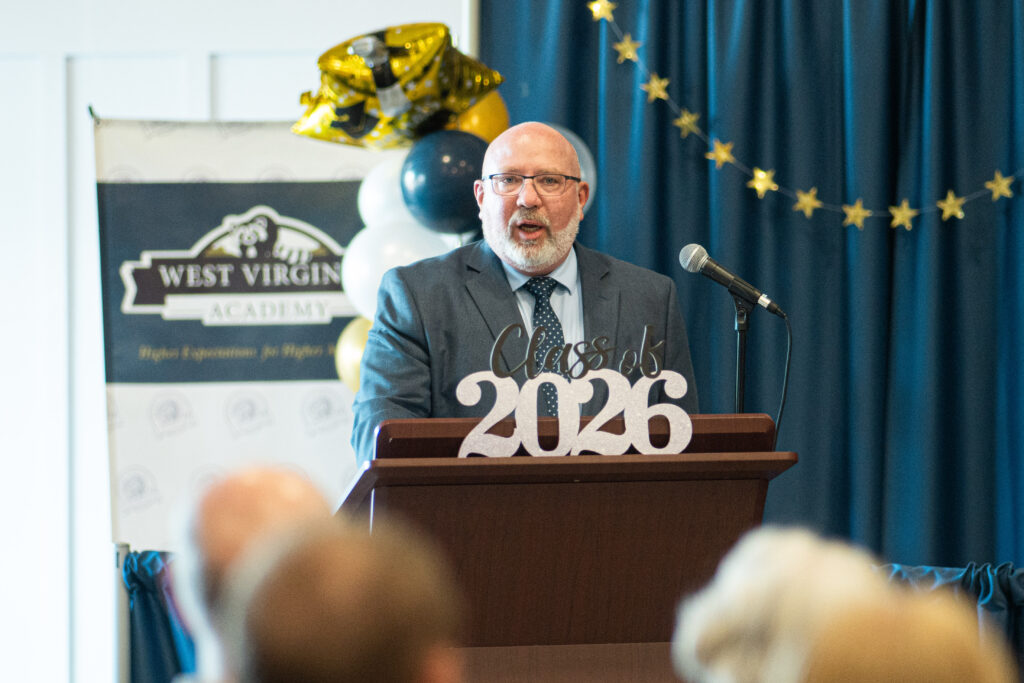
Benjamin Powell/The Dominion Post Executive Director of West Virginia Public Charter School Board Barry Holstein gives an inspiring speech to the class of 2026 on Wednesday evening.
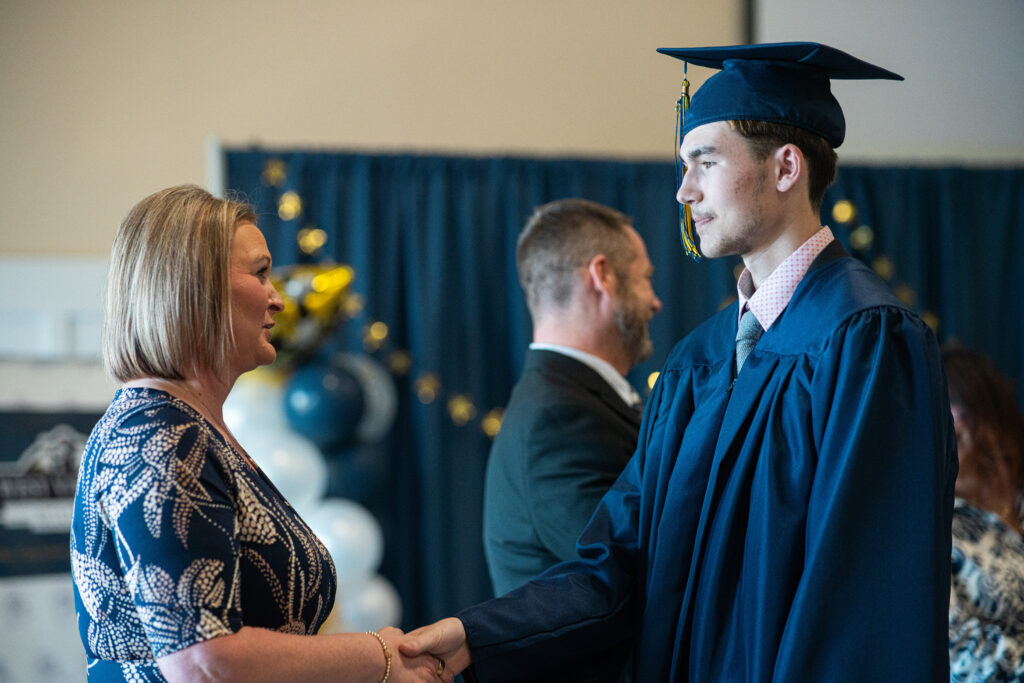
Benjamin Powell/The Dominion Post Graduate Zane Woods shakes hands with Principal Holly Honeycutt during West Virginia Academy's graduation Wednesday night.
Benjamin Powell/The Dominion Post Liam Murphy celebrates receiving his diploma Wednesday at West Virginia Academy's graduation.
Benjamin Powell/The Dominion Post Executive Director of West Virginia Public Charter School Board Barry Holstein gives an inspiring speech to the class of 2026 on Wednesday evening.
Benjamin Powell/The Dominion Post Graduate Zane Woods shakes hands with Principal Holly Honeycutt during West Virginia Academy's graduation Wednesday night.
Trending
MORGANTOWN - Meet the trailblazers of West Virginia Academy.
There's Katie Matala, who is bound for Coastal Carolina University, where she'll train to be an elementary school teacher.
And Drake Harper, a soon-to-be Brigham Young University student who will also go forth on a two-year mission for the Church of Jesus Christ of Latter-day Saints.
Don't forget Liam Murphy, who plans on a career of working with students in classroom settings.

Bryer Shafer may join the military for training as a medic, on the way to his definite professional life as an emergency medical technician.
Zane Woods is going to Garrett College - so he can go outside. He'll major in the school's Outdoor Leadership and Adventure program, with a goal of a job in the recreation industry.
Hayden Shaffer doesn't necessarily have to make history, he said - but wouldn't mind teaching it, after he completes his major in that subject at West Virginia University.
Now, meet the person who brought the box of tissues with her to the podium.
"My goal is to make it through this without any tears," Holly Honeycutt said. "But I'm not gonna make any promises."
FIRST FORAY
Honeycutt is principal of the aforementioned West Virginia Academy, the state's first-ever, brick-and-mortar charter school, which began educating students four years ago in Morgantown.
Wednesday was all about celebrating the promise of aforementioned Katie, Drake, Liam, Bryer, Zane and Hayden.
They are the academy's first-ever seniors of Class of 2026, and made their inaugural steps forth, in ceremonies in Mon County Center at Mylan Park.
"Yep, they did it," Honeycutt said in the minutes before the ceremonies at the center.
"We're so proud of them," continued Honeycutt, who spent years in Monongalia County Schools as a special education teacher and administrator before joining the academy.
"We're proud of their parents and everyone in the community who was ever involved with this, really. These seniors really are trailblazers."
OBSTACLE COURSE
Trailblazers don't always have the easiest paths. That was the case with West Virginia Academy.
Legal challenges and unhappy parents were present early on, as students filed in for that first day in 2022 on Chestnut Ridge Road, in a retro-fitted building once used by West Virginia University for research.
Two years later, however, the academy was bestowed for its innovations with a $500,000 offering from the Yass Prize, an advocacy group that rates the prowess of schools and other learning centers nationwide.
And two days ago in Charleston, Paul Hardesty, the president of the West Virginia Board of Education, said learning options are now the school rule in the state - as opposed to simply enrolling your child in the public district, from before.
"School choice is here to stay," the BOE leader said. "Our 55 county superintendents and boards need to understand that."
Barry Holstein, the executive director of the West Virginia Charter School Board and state Sen. Mike Oliverio, who both delivered remarks, told graduates they should always choose to not be negatively defined by inevitable setbacks and failures.
Jason Pauly, the academy's executive director, raised his hand in agreement.
Like Honeycutt, he also came up in special education - they were teaching colleagues in Mon County, in fact - and most recently served as an assistant principal at University High School before his move to the charter.
To date, West Virginia Academy boasts an enrollment of 250 students - 28 of whom will enter 1st grade in the fall.

NO CHOICE
Call that a vote for the future, he said.
While he's proud of the uniquely new Class of 2026, that success, he said, was expected.
The real trailblazing, he said, starts now.
"Challenge yourself," he said. "Be the best version of yourself. Never stop learning. Be willing to take risks and create your own path."
There was something else, the administrator said, which drew appreciative smiles from the graduates.
A something else — for which the class had no say, as articulated in no uncertain terms by the top administrator of their now-alma mater.
"I will follow up," Pauley said. "You guys know that 5, 10, 20 years from now, I'll be expecting an update on how you're doing."