Latest News, Local Government

Morgantown Council halts conversion therapy amendment amid backlash

MORGANTOWN – The second reading of an amendment to Article 153 of city code pertaining to the ban of conversion therapy involving minors was not on Morgantown City Council’s agenda on Tuesday.

Mayor Danielle Trumble said the matter is on hold while the city works with the ACLU of West Virginia and Fairness West Virginia on the best path forward.

Even so, members of city council took turns apologizing after being taken to task over the perceived speed and manner with which the body moved to amend the prohibition in the face of legal precedent set by the United States Supreme Court.

In a letter to Trumble dated April 21, West Virginia Attorney General J.B. McCuskey explained that the language of the city’s ordinance mirrored that of a Colorado law deemed unconstitutional by the 8-1 decision of the high court in Chiles v. Salazar

Conversion therapy – per Article 153 of city code adopted Oct. 19, 2021 – consists of “any practices or treatments that seek to change an individual’s sexual orientation or gender identity, including efforts to change behaviors or gender expressions or to eliminate or reduce sexual or romantic attractions or feelings toward individuals of the same gender.” 

Charleston, Wheeling and Huntington adopted laws containing similar language. Each received similar notice from the AG’s office.

In the letters, McCuskey laid out the Supreme Court’s majority opinion, which identified such sweeping prohibitions as “viewpoint discrimination” and opined that outlawing conversion therapy that is limited to speech, or talk therapy, violates the First Amendment.

On May 19, Morgantown City Council approved on first reading an amendment to Article 153 that maintained the prohibition of conversion therapy involving minors, but addressed the court’s free speech challenge by adding the line “by any means other than talk therapy that consists only of speaking with the therapist’s client and no other therapeutic interventions.”

Members of council immediately started hearing from the community via social media and other avenues.

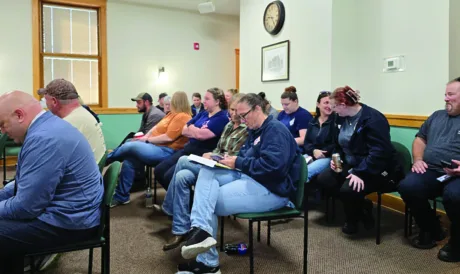
The feedback continued during the public portion of Tuesday’s meeting.

“I appreciate your decision to table the child torture ordinance for the time being. I’m both shocked and disgusted by your initial complete capitulation on this issue, but I appreciate and support this step you’re taking in the right direction,” Harrison York said. “That being said, this council has really killed my ability to feel like I can trust them, both as effective lawmakers and as moral human beings … This city is owed real leaders who will stand up and fight the fascists trying to destroy this country.”

Leslie Wilbur said the issue seemed rushed forward unnecessarily.

“The way you guys talked about it at the last meeting didn’t really feel like there was a lot of planning or thought going into how you were handling it. It, in fact, seemed a little bit glib,” Wilbur said. “It was just alarming to see that get on the agenda so quickly.”

Paige Rearing added that conversion therapy, even when limited to conversation, is condemned by medical institutions including the American Psychological Association and the American Medical Association.

“I encourage you to review the language of the amendment and find all the red tape that you can. Make this impossible to implement. Do whatever you can to stop this from happening, because children will die, and it’s not acceptable,” she said.

In response, multiple members of council conceded that while there was time spent discussing and debating the proper response, it wasn’t enough.

“I just don’t want people to think that we spent no time talking about it, deliberating about it, deciding what we were going to do with this, because we did. Did we spend enough time? I don’t think so. That’s why it’s not here today,” Deputy Mayor Brian Butcher said. “That’s a mistake that we made; a mistake that I made, at least.”

Councilor Jodi Hollingshead said she felt compelled to “sincerely apologize.”

“Specifically for me, personally, in one of the emails I received, we were reminded that this body had agency in the revolution, in resistance. On a personal note, a couple years ago I was at that podium exercising that agency, and I forgot for a moment that I still have that agency as a council member,” she said.

Trumble, who was a member of council along with Butcher and Jenny Selin when the conversion therapy ban was adopted in 2021, said council and city staff spent weeks debating how to respond to McCluskey’s letter prior to putting the amendment on the May 19 agenda.

“We are certainly happy to be working with the ACLU and Fairness West Virginia on ways that could be improved, and we are. We are happy to take a pause and do that,” she said. “We certainly, especially during pride month, want to show everyone that we value their participation in our community.”

The goal, Selin concluded, is finding the middle ground between taking a stand and getting the city drug into court.

“It’s good to push back,” she said. “And it’s also good to figure out how to thread the needle, and figuring out where that is is the tricky business of governance, I guess. So we’ll keep working on it.”