
BZA wants legal input on limits of ‘reasonable accommodation’
Trending
MORGANTOWN - The Morgantown Board of Zoning Appeals walked away from its most recent session with questions for the city's legal counsel.
At what point does a request for reasonable accommodation submitted under the federal Fair Housing Act become unreasonable?
Exactly how much discretion does the body have, and what are the factors it can and must consider, when weighing in on such requests?
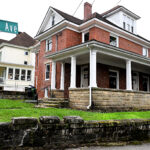
On Wednesday evening, the BZA took up a request for reasonable accommodation submitted by Morgantown Sober Living Inc. for a group residential facility at 318 Wilson Ave.
Under city code, a group residential facility is allowable by right in single family residential zoning districts, but such uses must provide minimum off-street parking equal to one space per employee plus one space for every five residents.
Based on the planned use, this facility would require four off-street spaces. It has room for one.
If the entire scenario sounds familiar, it should.
In September, West Virginia Sober Living came before the BZA for the same reason regarding a group residential facility at 201 Waitman St.
In that case, three off-street parking spaces were required by code, but the property had none.
Initially, WVSL submitted its request to waive the parking requirement as a standard application for variance relief.
The BZA denied the application, explaining the additional on-street parking associated with the facility would add to parking scarcity and congestion issues already plaguing the neighborhood.
Three months later, WVSL returned to the BZA, this time seeking reasonable accommodations regarding the parking requirements under the guidelines of the Fair Housing Act, which recognizes recovery from substance abuse disorder as a covered condition.
In the request for accommodation, WVSL pointed out that waiving off-street parking requirements in favor of on-street passes is already common practice for the city in that neighborhood and others.
The city concurred.
In providing the recommendations of city staff, Morgantown Zoning Administrator Sailor Thompson explained, one, that the Fair Housing Act mandates housing be offered to handicapped persons in a manner equal to that offered to other residents; two, that on-street parking passes "are typically provided to other single-family homes within the neighborhood without requiring the construction of off-street parking spaces."
Under that framing, and with the recommendation of city staff, the board approved the request. That approval was subsequently appealed to Monongalia County Circuit Court by neighboring property owners. It remains an open issue before the court.
It was clear that the Waitman Street process was on the minds of BZA members as they deliberated the Wilson Avenue request.
They noted the property on Wilson Avenue is subject to the same parking and density concerns the board considered when initially addressing the nearby Waitman Street property.
Heidi Cook explained that despite her misgivings and the concerns raised by some of the surrounding property owners, she felt "bullied" into supporting the Waitman Street request when it was returned to the BZA citing federal law.
Thompson said the "reasonable accommodation must be granted if it is, one, reasonable, two, necessary, and three, directly linked to enabling equal housing opportunity."
It's not required, he continued, if it would impose undue financial or administrative burdens or fundamentally alter the nature of the zoning regulation.
"I guess what I'm driving at is if we grant too many of these, it does significantly alter because it's changing the characteristics of the neighborhood," BZA Chair Chris Benison said. "There's a reason the parking regulations are written into the zoning code. There are good reasons for that. History happens. Observations are made. 'Oh, we have these vehicles in this very dense neighborhood and there are conflicts and congestion. This is not working. We need to adopt rules.'"
Benison said the board must defer to federal law when properly applied but questioned whether it's being properly applied if the surrounding neighborhood suffers as a result.
"When does a reasonable accommodation under ADA law become an unreasonable accommodation for all stakeholders in a community,” he asked.
The BZA tabled the Wilson Avenue request pending guidance from legal counsel and asked city staff to provide historical precedent set by the board regarding off-street parking requirements in the area.