
Morgantown BZA denies parking relief for Waitman Street sober living house
Trending
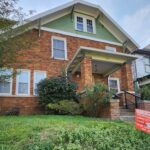
MORGANTOWN — The Morgantown Board of Zoning Appeals has denied an application from West Virginia Sober Living seeking relief from minimum off-street parking requirements for a group residential facility at 201 Waitman St.
According to the Monongalia County Assessor's Office, the nonprofit purchased the 101-year old home and .05-acre property for $335,000 in June with plans to utilize its 2,035 square-feet as a sober living facility.
While the city's planning and zoning code does allow such uses in single-family residential zoning districts by right, it requires a minimum off-street parking equal to one space per employee and one space per five residents.
In this case, the facility would initially have one house manager and seven residents, meaning three parking spaces would be needed. The property has no capacity for off-street parking.
"Our recovery residence is a vital part of the continuum of care and is protected by the Americans with Disabilities Act and also the Fair Housing Act," West Virginia Sober Living Director of Operations Dan McCawley said. "We don't want anything different than any of our neighbors. You know, we just want a nice place where people can recover, and we're going to need a little bit of parking."
Those opposing the request said the parking situation should have been considered before the property was purchased, explaining the historic district is already a highly-congested, blue curb permit parking area adjacent to Morgantown High School.
This issue first arrived on the public radar in June following the sale of the property.
What was meant to be a one-on-one meeting between Morgantown Development Services Director Rickie Yeager and a nearby homeowner morphed into a community argument on June 26 after fliers were distributed in the neighborhood, sparking debate online, and, ultimately, at city hall.
Prior to the BZA's decision, members of the Wojcik family said the facility is already causing issues despite operating at very limited capacity. Dozens of instances were catalogued and provided to the BZA with corresponding images captured by nearby doorbell cameras.
"This activity of intentionally ignoring traffic laws and flagrantly disobeying parking laws continues to create an unsafe situation today. Staff members frequently park literally on the sidewalk in front of the house – not just unloading and loading supplies or picking up and dropping off people, but for long durations," Justin Wojcik said, adding, "The supervisor's pickup truck parked on my mom's sidewalk until 9 p.m. This is in addition to countless other operational staff, maintenance workers, moving trucks and delivery trucks that park illegally - literally in the road at the intersection in front of the stop sign, or in yellow curb spaces across the street, or in blue curb parking without permits. That continues throughout the neighborhood."
The BZA also heard from residents in support of granting the requested variance relief.
In a correspondence to the city's planning division, Don and Susan Sauter, co-owners of two nearby properties on Simpson Street, said West Virginia Sober Living is providing a critically-needed service. Further, they pointed out that if the house had been sold to an individual and used as a single-family home, the owner would be entitled to at least two parking spaces.
Cody Parker agreed, writing, "While zoning codes serve important purposes, in this case the public good clearly outweighs any potential inconvenience associated with reduced parking."
In the end, the BZA said it couldn't square waving the off-street parking requirement while knowing there simply isn't adequate on-street parking available.
The board denied the request on two findings of fact.
One - granting the variance would adversely affect public health, safety or the rights of adjacent property owners or residents due to increased congestion and activity in a neighborhood already dealing with issues of density and congestion.
Two - the board said the applicant did not demonstrate the operation can meet the same required standard expected of surrounding property owners and residents.
After receiving the board's written decision, West Virginia Sober Living will have 30 days to appeal the decision in Monongalia County Circuit Court.