
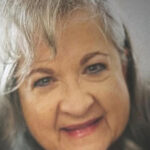
Joy Faini Saab: Respect for students ruled in her classroom
Trending
MORGANTOWN - In the immediate days following Sept. 11, 2001, Joy Faini Saab went from being the professor in front of the classroom - to the mom in front of the classroom.
That's because the students training to be teachers in her early childhood education classes at West Virginia University were wrung out by the enormity of it all.
They were distracted, distraught and even traumatized by television sets and endless video loops of what happened that autumn morning in midtown Manhattan, with achingly blue skies overhead.
Not that the mom still wasn't a teacher.
And Saab, who started out teaching kindergarten at the old Wiles Hill Elementary, did what all good teachers do.
Textbook rubrics and the all of it ... were shunted off to the corner of her desk.
With her help, her students who would soon be in the front of her their own classrooms got through it.
Musings and fears - plus every question lingering like smoke in the air at Ground Zero - became catapults for discussion and mini-lesson plans unto themselves.
Tears and anger, channeled.
The inevitable "What do we do now?" and "Could the same thing happen in Morgantown?" queries, channeled.
Blank pages that would have been full of notes by then on a normal day in her classroom were enlisted.
Be it by way stick figures or not-too-bad renderings, she had her students "draw" what they were thinking and feeling.
After all, the professor said, art - just as poetry - will slyly let you in on what you didn't know you knew.
"Listen to your kids," she told her college students, who were kids to her.
"Don't talk down. Don't discount their emotions. Don't say, 'Oh, that's silly,' because it isn't."
Of dialogue and discourse
Saab, 69, died last week in Morgantown after a lengthy illness. Her funeral Mass was set for 11 a.m. Saturday at St. Mary Roman Catholic Church in Star City.
She never lost hope, her friends said, and never stopped channeling prayers.
Channeling was what the women did, as her friends, colleagues and former students will proclaim with joy for Joy.
While it was no fun in her classroom during those days of terror and trauma 25 years ago, it was still meaningful.
And that's because Saab was instructing her charges on how to be teachers in the 21st century.
She previously tapped that vein during the latter days of the 20th century, in fact, during the first Gulf War.
Were children, she wondered, watching the on-the-ground cable news channels, as missiles lit the night and explosions and gunfire followed?
Saab already knew the answer.
Of course, they were.
So she started researching and writing, exploring the effects of televised war on impressionable minds.
The teacher carried that same track through the twin towers of the World Trade Center and Hurricane Katrina.
Engaged, with emotion
In recent years, she stayed close to teaching, helping her now former students work their doctoral degree preparations - even after her retirement.
She stayed true to the community causes she championed with her husband, Tim, even after his untimely death in 2013.
Saab made sojourns to Italy to work with the landmark childhood education programs of Reggio, Emilia, publishing several papers and curriculum models as a result.
While she had her own children and grandchildren to tend to, there were also other her other "kids" by extension.
She had the all-I-need-to-know-I-learned-in-kindergarten set from Wiles Hills. And all those newly minted educators, going forth from her WVU classroom.
For her, Sept. 11 was a matter of preaching what you teach.
"Many teachers incorrectly assume that young people don't experience a feeling of being threatened when they see a national tragedy through media," she said.
"They need to have their fears respected and they need to be reassured they are safe," the educator continued.
"We can't expect students to come to class and go about their normal routine as if nothing has changed in the world. For most, everything has changed."