
Time is money: City discussing permit application timelines
Trending
MORGANTOWN - In an effort to define expectations for both the public and city staff, the city of Morgantown is looking to establish benchmarks for the timely processing of permit applications.
Development Services Coordinator Rickie Yeager and Chief Building Official Drew Cantis presented on the topic during Morgantown City Council's recent committee of the whole session.
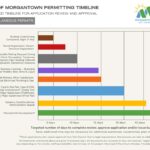
Cantis explained the plan in its current form would set specific delivery expectations for permit applications tied to some 55 city permits across the entire organization.
The move is described as a logical next step following the April 2024 transition away from a paper-based permitting system to an online permitting platform powered by GIS, or geographic information systems.
City leadership explained the transition faced early challenges as both city staff and the applying public adapted to the new system, but the result has been as desired, significantly improving efficiency, record retention, interdepartmental coordination and customer experience.
"Once staff and members of the public became a little more comfortable with the program, we realized the importance and the necessity for really developing some clear and concise targets that we wanted to provide for public expectation, and also for some guardrails for staff, so we could develop a metric to check our own self and make sure that we're performing to the best of our ability within a reasonable time frame," Cantis said.
The turnaround times initially presented to council were established based on a yearlong process involving city staff and community stakeholders as well as input from various West Virginia municipalities.
As one might expect, the targeted timelines vary significantly based on the complexity of the request. While it might take one member of staff five days to field, investigate and resolve a building code complaint, other applications - for example, the establishment of a planned unit development - would require more intense staff review and likely a hearing before a city board or commission before going to city council for review. In that specific example, the proposed timeline is 120 days, the longest of the benchmarks listed.
City Manager Jamie Miller explained the ability to quickly and efficiently turn around applications is also dependent on the state the city receives the applications in.
"Some of the challenges we often face is these timelines work very well if a completed permit application is submitted. Sometimes we have that back and forth of what is required," she said.
To that end, Miller said, the city is also working to ensure that it is putting clear and complete information out to potential applicants about what is required with each application in an effort to reduce unnecessary delays.
"This is one of the engines that drives economic development and is how we're funded and how we operate, so it really, really matters," Councilor Mark Downs said.
While Downs noted he's fully in support of the effort, he still believes some of the timelines are "very conservative," and believes the overall breakdown of the varying timelines is potentially confusing in its level of specificity.
He pointed to guidelines spelled out by organizations like the International Code Council, which provides more general benchmarks like five to 10 days, or seven to 14 days, depending on request.
Even so, Downs said the proposed timelines are a solid first step.
"I'll just say that perfect is always the enemy of good enough, and I think there are certainly opportunities ... as we progress. We're starting with something and we're getting some baselines out there and setting some expectations, and that's great and I think it's going to be tremendously helpful," he said. "But as we progress, I encourage us to challenge ourselves and continue to grow and push ourselves. Through experience, that will come."