
PSC Consumer Advocate Division finds problems in NextEra’s proposed public notice filing for MARL
Trending
dbeard@dominionpost.com
MORGANTOWN - The Public Service Commission’s Consumer Advocate Division found additional flaws in NextEra Energy Transmission MidAtlantic’s revised proposed public notice regarding its MidAtlantic Resiliency Link Project (MARL).
Some, CAD said, were attempts to correct flaws found by PSC staff in its original proposed notice, which fell short of achieving clarity - including its effects on certain customers’ rates.
And one, CAD said, was the surprise addition of another electric utility whose ratepayers will be affected by the construction of the line.
NextEra included a proposed "Notice of Filing" in its Jan. 30 filing for the project. In objections filed FEB. 6, PSC staff said it contained information about the proposed route and the project’s effects on electric bills that the general public may not understand.
Staff asked the PSC to order NextEra to submit a revised Notice of Filing that contains information the public will understand.
NextEra submitted its revised notice on Feb. 18. Late Friday afternoon, CAD filed its response pointing out the flaws in the revision.
CAD said that in the section of the revised proposed notice on rate impacts, NextEra gave percentages and dollar amounts for residential customers, "but removed the percentages for commercial and industrial customers for some unexplained reason."
NextEra also combined the rate increases for Mon Power and Potomac Edison customers into a single chart. For example, for 2027, the impact on Mon Power rates would be 0.29%, and the impact on Potomac Edison rates would be 0.57%. In the dollar chart, NextEra listed them as a 0.24% - 33-cent - increase.
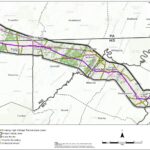
On another topic, CAD said in NextEra’s attempt to be more specific about the proposed route for the line, the company included details PSC staff asked for, but removed the names and voltages of existing lines.
Simply referring to "existing transmission lines" is confusing, CAD said, and asks NextEra to put the names and voltages of those lines back in the notice.
CAD’s final concern stems from this addition in NextEra’s revised proposed notice: "A portion of the cost of the project will also be assigned to the American Electric Power Zone and will be allocated to Appalachian Power Company and Wheeling Power Company, which will impact the customer rates of those utilities. Other municipal utilities and electric cooperatives that procure generation from one or more of these utilities will experience rate impacts as well."
CAD said no effects on ratepayer - percentages or dollar amounts - are included.
Also CAD said, NextEra said in prior testimony that the costs of the project were to be allocated to four transmission zones: Allegheny Power, Baltimore Gas & Electric Company, Dominion Energy and Potomac Electric Power Company.
But the revised filing includes a new fifth zone, CAD said, and "the CAD can only speculate as to why AEP was added."
CAD addresses this issue at length. "Nonetheless, in the span of less than 20 days, a major aspect of the project, and one that directly impacts electric customers in West Virginia, has been altered with no explanation from NextEra. If cost allocation is still under review and is not sufficiently referenced by the application and the testimony filed with the application, one has to wonder if the certificate application was prematurely filed."
NextEra should include rate impacts for APCo and Wheeling Power customers, CAD said. "If that cannot be provided at this time, the CAD is of the opinion that the commission should consider dismissing this case until such time all pertinent information has been settled and can be provided to the commission and the public."
As of Monday morning, letters of protest against the project filed with the PSC stood at 3,784.