
NextEra submits amended proposed public notice to PSC: Addresses concerns raised by PSC staff
Trending
In response to objections filed by Public Service Commission staff, NextEra Energy Transmission MidAtlantic has submitted a revised proposed public notice regarding its MidAtlantic Resiliency Link Project (MARL) to the PSC.
The original proposed notice, included in NextEra’s Jan. 30 filing for the project, contained information about the proposed route and the project’s effects on electric bills that the general public may not understand, staff said in its objections filed Feb. 6.
Staff asked the PSC to order NextEra to submit a revised "Notice of Filing" that contains information the public will understand.
Staff objected to tables in the proposed notice showing the projected impact of the MARL Project on electric rates for West Virginia residential, commercial, and industrial customers of Mon Power and Potomac Edison.
The tables listed the projected rate impacts only in terms of percentages, staff said, and do not contain a corresponding dollar amount. "The average customer may not be able to easily tell what a 0.03% or 1.25% increase to their monthly electric bill actually means, where a dollar and cents amount is widely and easily understood by the general public."
The revised notice keeps the percentage charts but adds one showing, in dollar figures, the estimated rate impacts - compared with current rates - for residential customers of Mon Power and Potomac Edison using 1,000 kilowatt hours per month.
The new chart shows impacts by year from 2026 through 2036. For example, this year’s rate would increase by 12 cents (0.09%); for 2027, 33 cents (0.24%); and for 2028, 46 cents (0.33%).The biggest impact would be in 2032: $1 (0.72%).
NextEra points out that the current cost estimate for MARL is $1.167 billion. Of this, the current cost estimate for the West Virginia portions is $482,706,000. These estimates include siting, engineering, construction, financing, administration, and legal costs.
The revised notice says that "a portion of the cost of the project will also be assigned to the American Electric Power Zone and will be allocated to Appalachian Power Company and Wheeling Power Company, which will impact the customer rates of those utilities. Other municipal utilities and electric cooperatives that procure generation from one or more of these utilities will experience rate impacts as well."
In its objections, staff also said the general public is not familiar with certain information about transmission lines NextEra used. "They would likely be unable to tell where the proposed MARL Project would be located based on such language contained in the proposed Notice of Filing."
In response, NextEra’s proposed revision, submitted Wednesday, includes more detailed descriptions of the project’s proposed route locations - including such things as street references - and an explanation that the abbreviation MP in the notice refers to mileposts along the route.
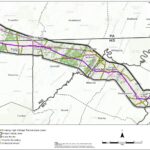
The proposed public notice includes a link to the MARL website - NextEra Energy Transmission | MidAtlantic Resiliency Link - and route maps of the entire project and the four affected counties in West Virginia: Monongalia, Preston, Mineral and Hampshire.
The proposed route for the 500 kilovolt MARL transmission line would span 107.5 miles starting in Greene County, Pa., and ending at a handoff point - a new 500 kV transmission line to be constructed by FirstEnergy - in Frederick County, Va.
About 58.9 miles would cross West Virginia: 5.9 miles across Mon County, 15.8 across Preston, 10.9 across Mineral and 26.2 across Hampshire.
NextEra is asking the PSC to order it to publish the revised notice as legal advertisements in the four counties.