
A look at some MARL details, and some opposition
Trending
dbeard@dominionpost.com
MORGANTOWN - NextEra Energy Transmission MidAtlantic’s application for a Public Service Commission permit for its MidAtlantic Resiliency Link Project (MARL) transmission line spans more than 3,000 pages.
We are going to look at some of the production details, costs and expected benefits described by the company, and look at some of the cons voiced by opponents.
The permit is actually called a certificate of public convenience and necessity. Kaitlin McCormick, NextEra’s senior director for development provided the PSC with some timeline details and described some of the company’s interactions with the public.
NextEra’s Designated Entity Agreement with PJM Interconnection - the regional grid manager that authorized the proposed project - requires the Woodside Substation in Frederick County, Virginia, to be in service by Dec. 31, 2028 and the entire MARL project, including the West Virginia portions, to be in service by Dec. 31, 2031.
However, she said, NextEra is working to provide a pathway to accelerate the in-service date to December 2029 or earlier, pending regulatory approvals.
A separate timeline chart shows the permitting and regulatory approval period running from the present through October 2028. Right-of-way negotiations are already underway and are expected to run through April 2029. Construction would begin in November 2029, or sooner if possible, and wrap up for the December 2031 in-service date.
NextEra is seeking PSC approval of the application within 400 days of filing, which occurred last Friday, Jan. 30. NextEra is also filing similar applications with the corresponding agencies in Pennsylvania, Maryland and Virginia for the portions of the line running through those states.
McCormick said the MARL project will provide an estimated 400-600 construction jobs, including an estimated 200-300 construction jobs within West Virginia. NextEra estimates that the MARL Project will result in about $133 million in property tax payments to the state and to Monongalia, Preston, Mineral, and Hampshire counties; and an estimated $65 million in payments to landowners over the life of the project.
John Deskins, director of the WVU Bureau of Business and Economic Research, expanded on that a bit, testifying to the PSC about a study the BBER did for NextEra.
West Virginia workers are projected to earn a total of $36.7 million across the two years of this project's construction, he said, MARL will support $2.3 million of total spending in West Virginia annually in ongoing operations and maintenance, beginning in 2031.
Direct operating expenditures are expected to eclipse $1.1 million annually, he said. Annual operations and maintenance will also support three in-state jobs, which will be accompanied by over $316,000 in annual employee compensation. The cumulative secondary economic impacts of the Project are estimated to generate an additional $1.2 million within West Virginia annually.
During construction, Deskins said, the project is expected to bring this much to each respective county: $10.3 million to Monongalia County, $27.5 million to Preston County, $18.9 million to Mineral County, and $45.6 million to Hampshire County.
The project is also expected to bring the following total operating impact to each respective county: $241,000 to Mon, $308,300 to Preston, $367,800 to Mineral, and $511,600 to Hampshire.
"This impact is expected to recur annually for as long as the infrastructure operates," he said. Some revenue could spill over into adjacent counties.
Consulting company MCR Performance Solutions did a rate impact analysis for NextEra, and MCR’s Vice President of Regulatory Services Cynthia Menhorn testified about that.
Mon Power residential customers in West Virginia will see an average rate hike of 0.05%, rising to 1.05% in 2032 and dipping to 0.85% in 2036. That amounts to a 22-cent monthly impact, or $2.64 per year.
For Potomac Edison residential customers, the numbers over that span are 0.05%, 1.11% and 0.88%. The dollar amounts for them are the same: 22 cents and $2.64.
On the topic of public feedback, McCormick told the PSC that NextEra has received more 1,500 comments from residents and other interested parties through various online surveys, direct comment cards at open houses, and phone call or email inquiries. Four open houses held in West Virginia were attended by a total of 665 people.
"All of this feedback was helpful in driving decisions in the route selection process," she said.
Asked to characterize the feedback, she chose to generalize, saying NextEra "has received a variety of feedback through these channels. Feedback has included questions pertaining to project need and potential impacts, interest in working with the MARL Project from both landowners and local businesses, general input on areas of public concern, and specific input on resources or property-specific concerns that could influence the routing study."
The opposition
To date, 3,723 letters of opposition to the project have been submitted to the PSC. Some are short and simple, some go on at length. Here are two of the most recent, submitted on Friday.
One (editing for clarity punctuation) says, "Please stop NextEra from damaging WV land to the benefit of VA [Virginia]. ... We are set to lose 10 acres of our farm if this is approved. NextEra are offering peanuts for the land, and the land agents putting pressure on the WV residents with not whole truths. Make VA make their own power."
And the other: "These lines would turn West Virginia into an extension cord for other states while families lose land and electric bills rise. We have a treasure trove of natural resources in West Virginia, and we do not need to ruin it for the sole benefit of other states."
West Virginians Against Transmission Injustice (WATI), has been at the forefront of the opposition.
In a release following NextEra’s PSC filing, WATI contended that "MARL would destroy private property, including multi-generational farms, undermine West Virginia's growing tourism economy, and increase electric rates for decades."
WATI cites a source we’ve spoken to before about the potential rate impacts - a view in contrast to MCR’s. The source is Cathy Kunkel, energy consultant with Institute for Energy Economics and Financial Analysis. She calculates that state ratepayers will pay over $240 million for the construction and operation of MARL across 40 years through their electric rates.
WATI Vice President and retired electrical engineer Byran Hockman said that MARL’s high-power transmission lines will not tie into the distribution lines that provide power to West Virginians.
"Transmission lines, like the MARL line," he said, "are high-voltage lines designed solely for transmission. Their only job is to move electricity from the source towards the demand. In the case of the MARL line, the demand is data centers in northern Virginia."
No distribution lines or substations to bring power directly to West Virginians are in the proposal, he said.
WATI said it has retained legal counsel to challenge NextEra's application throughout the PSC review process, including during upcoming hearings.
WATI says state code requires MARL - in order to obtain PSC approval - must economically and reliably meet current and anticipated electric power needs; serve the interests of West Virginia customers and citizens; and balance reasonable power needs with reasonable environmental considerations.
"This application clearly fails the basic test of public convenience and necessity," WATI President Tony Campbell said. "We will continue to stand with landowners, ratepayers, and local governments to protect West Virginia's land and communities."
Matt Pawlowski, NextEra’s vice president for development, told the PSC that the estimated cost for the entire route - in 2031 dollars - is about $1.1672 billion. The West Virginia portions of the proposed route are estimated to cost $482,706,000 - including siting, engineering, procurement, construction, financing, administrative, development, and legal costs.
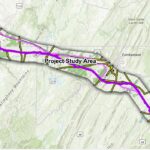
The Proposed Route would span 107.5 miles starting in Greene County, Pa., and ending at a handoff point - a new 500 kilovolt (kV) transmission line to be constructed by FirstEnergy - in Frederick County, Va. A proposed Woodside Substation is also in Frederick County, Va, but about 11 miles to the east of the eastern terminus of the proposed route handoff point.
About 58.9 miles would cross West Virginia: 5.9 miles across Mon County, 15.8 across Preston, 10.9 across Mineral and 26.2 across Hampshire.