
Trending
MORGANTOWN - The Monongalia County Commission on Wednesday unanimously approved a funding source for the installation of license plate recognition cameras recently requested by the Monongalia County Sheriff's Office.
The commission earmarked $60,000 annually for the next three years out of the county's portion of the opioid settlement funds directly distributed to local governments per the terms of the West Virginia First Memorandum of Understanding.
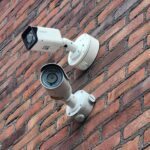
It was explained the funds would support the placement of 20 cameras, with two cameras required at most, if not all, locations.
Commissioner Sean Sikora explained that by approving the program ahead of the Friday deadline set by Flock Safety, the county is saving the cost of installation, which was previously valued at just over $13,000.
During a recent work session with representatives of the MCSD, Mon Metro Drug Task Force and MECCA 911, it was explained that the cameras are becoming an increasingly common force multiplier for law enforcement agencies.
The cameras can catalog the license plate, make, model and color of every passing vehicle. That data is then catalogued within the system and held for a set amount of time. A representative of the MCSD previously said the department was looking at 30 days, which represents the base package for the Flock system.
The system will be tied into the National Crime Information Center - the national database created to facilitate the rapid exchange of information between federal, state and local agencies - as well as the Amber Alert and Silver Alert systems.
It can also be tailored by each individual officer to alert on vehicles tied to their respective cases.
"So if I'm on duty and I'm logged into this app. I'll get an alert that a stolen vehicle has just passed under the license plate reader on 68. Or, if I'm working a case and I'm looking for this wanted individual. If I know they drive this car, I'm going to put that license plate number in there and it'll pop if that person passes by there," MCSD Detective Josh Ward told the commission. "But [officers] won't be able to necessarily just pull up the camera and livestream it, or just randomly search for random things."
The cameras will not be used to issue speeding tickets or determine compliance with traffic laws as such devices are prohibited by state code (17C-6-7a).
Commissioner Tom Bloom, who previously expressed concerns about who would have access to the cameras and data, said he is comfortable moving forward after receiving additional information from Sheriff Todd Forbes.
"I wanted to know how it would be used and if it could be abused. He answered all my questions," Bloom said. "And the bottom line is the safety and security of our citizens supersede my other concerns."