
‘The first step is the scariest — but it can also be the most rewarding’
Trending
MORGANTOWN - The Rape and Domestic Violence Information Center is hosting its annual Walking with Survivors event next week.
First, though, some history.
RDVIC, as the outreach organization is known across the region, has been around since 1973.
You can thank Virginia Hopkins for that - even if she didn't do anything.
She can explain. She had graduated the year before from West Virginia University's College of Law and was a new attorney with idealism to burn.
Hopkins was also a new hire at the North Central West Virginia Legal Aid Society in Morgantown.
Legal Aid was the law firm for people who couldn't afford a law firm.
Forget chairs upholstered in rich leather. Its attorneys then were more apt to sit on the floor in a circle, as they discussed their cases and other matters related to the judiciary.
When a distraught woman showed up one afternoon, Hopkins suddenly wasn't feeling as idealistic as she had been earlier in the day.
In a quavering voice, the woman told Hopkins she had been gang-raped several months before and had become pregnant, even with the trauma of the act.
And, even with the trauma, she was able to successfully give birth to the baby, while soldiering on as a single mother.
On that afternoon at Legal Aid, Hopkins remembered, the woman was fearing for her life and her baby's, too.
That's because her attackers said they weren't finished.
"They said they were going to rape her again," Hopkins told The Dominion Post previously from Kingwood, where she still practices law.
"She was terrified and I was mad because I couldn't do anything. I had to tell her that I couldn't help her."
GUILTY, UNTIL PROVEN ...
That's because victim support services then were all but nonexistent, Hopkins said.
And with no strong laws on the books at the time, the attorney said, rape cases were almost always lost in court.
Stigma and shame kept many victims from even thinking about legal action, if they told anyone at all.
By the time the calendar page turned to 1973, it had been some 20 years since anyone had been prosecuted for the rape of an adult female in Monongalia or Preston counties.
A woman who tried to fight back in court would be subject to loaded questions that would inevitably shift blame.
How drunk were you?
How flirtatious were you?
What were you wearing?
Hopkins didn't like it, and began wielding a pen and notebook to go with her law degree.
She started writing down the names of colleagues who didn't like it either.
In turn, those fellow storefront attorneys and sympathetic prosecutors and police officers and hospital emergency room staffers began jotting names of people they knew.
A similar group was taking shape in Michigan, Hopkins recalled.
"So we wrote them a letter," Hopkins said. "And they wrote us back. That's how you had to do it back then."
Thus, RDVIC was born: A resource network, said Hopkins, who remains associated as a founding board member, which began asking, "What can we do?" opposed to "What did you do?"
About 20 victims contacted the group in its first months of existence - and that was without advertising of any kind.
"That's how we knew we had something," Hopkins said.
YOU DON'T HAVE TO BE A VICTIM
RDVIC at present offers free confidential help to victims of assault and human trafficking across Monongalia, Preston and Taylor counties.
That includes lining up emergency shelter while offering advocacy and other support. The facility's hotline, 304-292-5100, answers 24 hours a day, seven days a week.
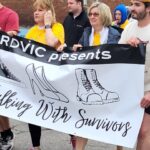
Meanwhile, the annual survivor's walk in Morgantown begins at 1 p.m. April 18 at the Farmer's Market Pavilion on Spruce Street.
Participants will proceed down to Pleasant Street then back to the pavilion, which is about a 1-mile trek, said Amaya Williams, an outreach coordinator for RDVIC.
Dr. Laura Capage, who directs the Monongalia County Child Advocacy Center, will deliver keynote remarks after the walk.
Participants will also learn about sponsorship opportunities and other ways they can direct their dollars, Williams said - since RDVIC relies on financial and in-kind donations to continue its work of supporting victims.
If you're a victim, Williams said, you don't have to be.
"Call our number," she said. "That first step is the scariest, but it can also be the most rewarding."