
City hopeful historic Easton Roller Mill will reopen to the public in June
Trending
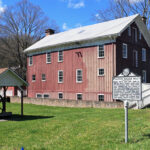
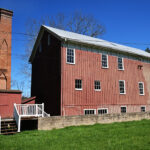
MORGANTOWN - A nationally registered historic landmark recently acquired by the city of Morgantown is about to undergo its first city-led restoration effort.
If all goes according to plan, the Easton Roller Mill could be reopened to the public by mid-June, the estimated completion date of the project.
Morgantown City Council on Tuesday voted 6-1 to accept an $87,440 bid from Veritas Contracting for work aimed at improving community access to the old mill building located at 54 Easton Mill Road.
The project will remove the existing deck and construct a larger deck and an ADA code-compliant ramp. The project also includes paving the parking area, including the creation of an ADA-compliant parking space, as well as the construction of a sidewalk connecting the parking lot to the 150-year-old mill.
The construction of what is now the Easton Roller Mill was completed by Philadelphia carpenter Henry Mack in 1867. Mack had been hired by Henry Koontz, who'd purchased some 600 acres a few miles east of Morgantown - then in the Commonwealth of Virginia - about five years earlier.
The property passed through a number of hands over the years, ending with Estella Ley Pickenpaugh, who willed the mill property to the Monongalia Historical Society around 1980.
The historical society oversaw the site and organized Mill Day celebrations and other events on the property for more than four decades until the impacts of COVID on an already declining membership prompted the organization to dissolve.
The city, and specifically the Morgantown History Museum, was approached by MHS regarding its interest in taking over the site.
Following a year of discussion and analysis, including a structural engineering assessment, that transfer became official in August 2025.
The 0.45-acre property, mill building and various pieces of equipment were deeded over to the city at no cost. With it came $27,000 from the historical society's account.
According to information shared at the time of the transaction, the mill will be operated as an extension of the Morgantown History Museum and will be open seasonally and for special events.
City Manager Jamie Miller explained the city is in the process of conducting a full evaluation of the mill and surrounding property to inform decisions about future restoration projects.
"I imagine this will be a project that goes on for a while before we have full restoration," Miller said, noting, "Certainly we will lean into historical grants."
Councilor Mark Downs, the lone dissenting vote, questioned why the city would direct resources to this property located outside its municipal boundary given the city's increasingly tight financial constraints. Further, Downs said he would prefer the city have a complete picture of what work, and related funding, will be needed before it begins addressing projects piecemeal.
According to information provided by the city, funding for this initial deck project will be 100% grant funded.
"In addition to the monies from the [Monongalia Historical Society], over the past year we have received a number of foundation and other grants specifically for this project; including the most recent grant from the West Virginia Department of Tourism Cultural Facilities Fast Track Program. We are allocating $66,000 from these grants for this project," Director of Arts and Cultural Development Vincent Kitch explained.
Further, Kitch said the city was recently awarded a 30-hour/week AmeriCorps position from the Preservation Alliance of West Virginia specifically to support the Easton Roller Mill site.
In terms of the property's location, members of council said they would like to see continued efforts to annex the property into the city.
"There have been some efforts both on council and within city staff to outreach to connecting landowners. This property is separated from city limits by two adjoining parcels. It's near the airport boundary, or also by a roadway. So there are a couple different options to pursue annexation if the city would wish to do that," attorney Ryan Simonton said.