
Artemis II mission was already in familiar orbit — before it even lifted off
Trending
FAIRMONT - Almost heaven. Most definitely Mars.
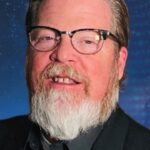
That's how Jeff Edgell has been regarding interstellar affairs of late, as a certain crew continues its work from high above.
"It was going to be exciting anyway," the president and CEO of Fairmont-based TMC Technologies said, "but we're looking at it through a whole different lens, because we're part of it."
Artemis II is the multi-tiered mission that aims to land astronauts on Mars in a future that NASA hopes isn't that distant - and TMC is the local tech firm working to help make it happen.
TMC is located near I-79 Technology Park in South Fairmont, where the space agency's Katherine Johnson Independent Verification and Validation facility set up shop in 1993, just seven years after the Challenger shuttle disaster.
The IV&V is the place where critical onboard software programs and other implements are fully tested out to ensure safe travels - or, as safe as they be - once spacecraft and people slip the surly bonds of Earth.
For this phase of the mission, TMC worked on layers of "digital infrastructure," including critical flight simulators. Programs were vetted for both All Systems Go and just about every emergency scenario that could occur in the high-risk enterprise.
"We've got a 20-year association with NASA," Edgell said.
"So, when Artemis II came around we were thrilled. We knew what this one was going to be."
Roger that.
The flight’s four-astronaut crew has already traveled farther in space than any other sojourners in the history of such flights to the heavens - successfully hanging a U-turn at the dark side of the moon on Monday night.
Said route took the vessel a maximum distance of 252,756 miles from Earth - and 4,101 miles more distant than the previous record flight of ill-fated Apollo 13.
Splashdown, in the meantime, is set for Friday in the Pacific Ocean, off the coast of San Diego.
"It shows what humans are capable of," Edgell said. "It shows what technology is capable of."
Add some Mountaineer ingenuity in there, too, he said.
Edgell is a West Virginia native. He grew up in Buckhannon. So is Wes Deadrick, the Johnson IV&V director who hails from Petersburg.
Katherine Johnson, the IV&V's namesake, is the "Hidden Figure" NASA mathematician from Greenbrier County who once famously reassured John Glenn that it was safe to get in his Mercury capsule during the early days of American space exploration.
Later, she tabulated the launch and splashdown trajectories for the Apollo 11 moon mission in 1969.
Edgell was an infant during that one, but remembers watching the other Apollo flights and shuttle launches while sprawled in front of the console TV in his family's living room.
He went to work for Bell Labs after earning a computer science degree from West Virginia Wesleyan College.
Other degrees from other schools followed as he charted his professional trajectory.
"I never thought I'd be part of something like this," he said.
"We're all proud to be associated with Artemis and we're proud of our Mountaineer connections. A lot of our engineers at TMC and in the tech park are West Virginians. We've got a lot of kindred spirits here."
Including that shared desire, he said, quoting a certain science fiction TV show, "To boldly go."
With that, would he ever hop on a sub-orbital "space tourism" flight?
He didn't require a countdown to answer - but the reply did come with a Cape Canaveral caveat worthy of John Glenn and Katherine Johnson.
"Absolutely, I would. Just as long as I knew that TMC checked it out first."