
WVU Medicine benefits patients, doctors with Abridge AI clinical note-taking platform
Trending
MORGANTOWN - WVU Medicine patients will be seeing their doctors taking clinical notes in a new - and WVUM believes better - way.
Your doctor won’t be clacking away on a laptop or an iPad or the in-room computer, or bringing a scribe into the room to do the clacking.

After a successful pilot program, WVUM is making available to all of its clinicians a generative AI platform called Abridge.
Dr. David Rich, chief medical information officer, and Dr. Brian Dilcher, an emergency medicine physician board certified in clinical informatics - using information technology to improve healthcare delivery (as Google AI summarized it) - talked to The Dominion Post about the systemwide deployment of Abridge.
Pittsburgh-based Abridge offers several AI platforms for clinical note-taking, and major health systems including Johns Hopkins, Duke, Kaiser Permanente and Mayo Clinic have put it to use.
Rich said, "The burden on doctors to generate documentation is high. ... So we’ve been always looking for ways to make documentation easier for the providers." And, in the process, better for the patients.
They started in 2023-2024 with a vendor offering virtual scribing, he said. Then in May 2025 started with Abridge. It was a leading vendor in the space, and WVUM had done some early assessment of their technology.
They began the pilot with 50 users who’d worked with an earlier tool and transitioned them to Abridge.
They learned through experience that Abridge is easy to use, gives good output, lets the doctors get work done faster and with less burden. So they began expanding the pool.
They had planned for about 500 users, but it was so popular that by fall they were approaching 1,000 users. So they told Abridge they wanted to make it available to all providers who want it. Now more than 1,800 are enrolled. They’re approaching 1,300 users who’ve recorded with it at least once, some many hundreds of times.
And as of Wednesday there have been 575,000 notes generated.
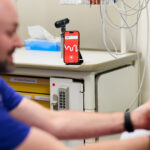
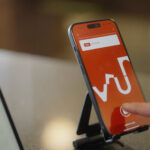
So how does it work? Rich said the clinician first gets permission to record. If the patient OK’s it, the doctor starts the recording - done via their phone or iPad or laptop. Once the recording starts, the doctor can devote all their attention to the patient.
After the visit, the doctor will pause the recording or hit the finish button to create a clinical note. Abridge doesn’t do a word-for-word transcription. It creates a summary that the doctor can review immediately after the visit and add any missed details if needed.
Abridge communicates with WVUM’s Epic electronic medical record system and also immediately puts the clinical note into the patient’s MyChart for the patient to view after the visit.
"Within seconds it processes the recording and then generates output back into our medical record," he said.
The doctor doesn’t hear a recording, Rich said. They see a transcript and can review it before creating the note that goes into Epic - a note that goes not only into MyChart, but can be viewed by other clinicians who may be involved in the patient’s care - as with any WVUM clinical note.
The transcript and recording are securely stored in Abridge servers, he said, and are purged after 30 days. If for some reason, the doctor would need to look again at the transcript, they would contact Abridge. Only the person who did the recording can see the transcript.
And no one at Abridge is sitting there listening to every recording, he said. WVUM carefully vetted their security measures.
Anyone who’s used a transcription app on their smart phone or laptop knows that what you see is full of ums and ahs. Abridge filters all that out in its summary, he said. "Abridge is great for cleaning things up." And it doesn’t place social chitchat and such between the doctor and patient into the transcript or note.
And Abridge is able to distinguish between speakers, for instance if the patient brings someone into the room with them. Rich said he’s seen only one or two instances where the transcript and note needed some editing for that. "Generally speaking, it’s been very accurate."
Rich said a physician not preoccupied with taking notes can devote full attention to a patient. "It’s nice to know it’s capturing the details and I can just focus on the family and the patients."
It also spares the doctor having to worry about charting between visits or after clinical hours.
Do the patients like it? Rich said they haven’t done any formal surveys but informal feedback has been positive.
Rich couldn’t talk about how much the system costs, but said it’s a good investment compared to other solutions such as voice recognition and electronic transcription.
And many WVUM clinicians would bring scribes into the room with them. WVUM calculated, he said, that they could get a license to cover 13 doctors for the cost of one scribe. An additional consideration in the cost of scribes is the fairly high turnover - they have their own career ambitions and move on.
Rich said Abridge and some other vendors have the capability to provide similar functions for nurses. "So we’re looking at this year, hoping we can get it in the hands of some nurses and get their experience with it."
Dilcher said he started using Abridge when the pilot began last May. "I haven’t left a shift with a note to do since I began using it."
He doesn’t have to spend time after work documenting; it’s good for the patients because documentation is completed in real time when their ER visit is complete; and it’s available for other clinicians taking over the care.
He makes his Abridge recording through his iPad, he said. It takes about 10-30 seconds after he clicks the finish button to generate a note.
Like Rich, he said patient reception has been overall positive. Not very many people have been skeptical of having AI do the recording and note creation.
Of course, it took some time to adapt, he said. Previously, in the ER, he would talk to the patient. Tell them he was going to do some tests, then come back.
"Now I find myself explaining what tests we’re going to get." It’s better for their care and their knowledge, and it’s being recorded and going into the note. And he doesn’t have to try to remember the encounter afterword and generate a note.
"That extra cognitive load of basically trying to export all that information from your head is relieved with this system. Ultimately it is a big win for patients too." If clinicians are making best use of this they can spend more time with patients.
Abridge is now available, WVUM said when announcing the roll-out, to more than 2,800 clinicians across its network of 25 hospitals and dozens of additional care settings in West Virginia, Pennsylvania, Ohio, and Maryland.