
Of scrimmages and squash: Lou Birurakis readies for his 100th birthday
Trending
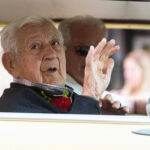
BRUCETON MILLS - Lou Birurakis is already looking forward to the present he'll receive this weekend for his 100th birthday.
"I'm getting a new battery for my pacemaker," he said, chuckling.
"With a 10-year guarantee. Good to go."
In the meantime, he was set to celebrate his century milestone Saturday in the Kennedy Club Room at West Virginia University's Erickson Alumni Center.
His family thought they would start out with, say, 50 invitations, tops - but people kept calling.
And calling some more.
By Friday afternoon, the list had topped 90 - and counting.
"Well, that's my dad," Bob Birurakis said. "Everybody in the world knows him."
After all, a son asked: How can you possibly remain - unknown - when you've lived an epic life for so long?
Lou was born Eleftherios Birurakis on March 22, 1926 in Morgantown.
His parents, Panayotis and Athena, were immigrants from Greece, sailing to these shores from Crete, for a new life in a new land.
That was in West Virginia and Wheeling, where the sojourners had family connections, and then in the Liberty coal camp at Scotts Run, which was dotted by mining companies, one right after the other, just past Morgantown.
Call it a miner's melting pot, if you like.
Liberty was where all the Greek families lived - but the newly minted workforce in West Virginia's chief export hailed from anywhere and everywhere.
Alabama. Calabria. Eastern Europe.
DIGGING IN, WALKING ON
There was a gritty commonality to all this diversity. The patriarchs in all those wood-framed company houses were seeking to carve their purchase of the American dream in West Virginia coal.
Meanwhile, young Lou was as assimilated as could be.
It was the first golden age of college football - the sport would be a big factor in his life and times to follow - and the coal camp kid took to the game in a uniquely West Virginia way.
He and his buddies would play pick-up games using what everyone called a "Scotts Run football." It was a Carnation milk can, heavily wrapped in tape, which the coal companies had in abundance.
You couldn't kick it, he said - but you could pass it and lateral it like nobody's business.
Panayotis decreed that all his kids were going to college - and Birurakis amazed Ira Errett "Rat" Rogers, then the legendary coach of the West Virginia University football Mountaineers - after a buddy talked him into trying out in 1944.
With World War II raging, the team was depleted.
Despite never having played one down of organized football, Birurakis promptly flattened four starters in his first-ever official practice.
A year later, he too got his greetings from Uncle Sam.
He impressed his officers with his fluency both in Greek and with the rifle on the marksman range. The war ended before he saw combat. He came back to Morgantown and went back to WVU on the G.I. Bill.
He earned both his degree and a letter in football. The Pittsburgh Steelers and Green Bay Packers invited him to tryouts, but he was getting married.
With the ink on his diploma barely dry, he took a teaching job at a tiny high school in Mason County. He was also the school's football coach - for a team that only had one goalpost on its field.
Later, as his children arrived and he needed more money to support his family, he reinvented himself as an ironworker, helping build WVU's Hope Coliseum and Milan Puskar Stadium before he was done.
"It's been a good life," he said.
And a gourd one, also, Bob said, with his dad's chuckle.
HOW DOES YOUR GARDEN GROW?
Before Lou gave up his Morgantown area home to move in with Bob and his family in Bruceton Mills, he was known for his lush, verdant vegetable gardens.
Three years ago, the once-removed son of Crete grew a squash topping out at nearly 70 pounds, from seeds one of his sisters picked up during a trip to Greece.
"I kept watching it to see how big it would get," he said.
It was many a rosy fingered dawn (Greeks invented agriculture) that Panayotis and Athena's kid would be working the soil in a garden that threatened to overtake his house.
The family knew not to be alarmed if he didn't answer his phone right away, as he was surely in the green-thumb expanse, working out watering, cross-pollinating and the like.
PUT ME IN, COACH
He raised his family just as well, Bob said.
"Dad worked hard all day, but when he came home, he became totally involved with us," the son said.
"He was involved in our lives. He did things with us. He paid it forward. He still does."
Lou, in turn, said, he's been sustained by his children, his friends and everyone who ever tossed a good deed his way.
"I'm blessed," he said. "I just want to thank everyone."
One other thing: WVU football is in the midst of spring practices.
And Lou, who never misses a game, either from Milan Puskar Stadium or his recliner in front of the TV, is expecting good things from Rich Rodriguez and the latest crop of Mountaineers.
In fact, WVU's oldest-surviving letterman is standing ready, he said. Waiting for the call.
"Hey," he said, twinkling. "I'll go down on that field. If they need me."
"He's serious," Bob said.