
Expanded offerings, upgraded facilities the vision for MGW
Trending
MORGANTOWN - Morgantown Municipal Airport Director Jon Vrabel envisions big things for West Virginia's only city-owned airport.
In the short term, Vrabel said he can foresee the addition of seasonal flights to complement the Essential Air Service (EAS) routes flown by carrier SkyWest Airlines, which offers daily service from Morgantown to Dulles International Airport, in Virginia, and Chicago O'Hare International Airport.
"If we want to have seasonal service. Say we want to go to Orlando; I can talk to a carrier that'll do seasonal service. It probably won't be every day. It'll probably be several days a week, like during wintertime months, or just during the summer," he said.
Taking a 30,000-foot view, Vrabel said he believes MGW can position itself to move off the federal EAS program altogether.
EAS is a federally bid subsidy provided directly to carriers to offset the cost of rural operations and ensure air service in smaller communities.
SkyWest was awarded MGW's EAS contract in December 2024, taking over for Southern Airways Express, which had served as the city's EAS carrier since 2016.
"That's the goal, and I think we can easily get there. It's not going to be immediate, but we want to get to a point where we can get away from essential air service and have carriers who want to be here and provide flight service to our community at their own cost. What that does, it creates that competition model," Vrabel said. "That will take some time, but I think immediately we can start working with carriers that at least do seasonal service and provide different options to our community."
There's reason behind his optimism.
In the first year of operations with SkyWest in place, MGW surpassed 15,300 enplanements, or paying customers boarding aircraft. To put that number in perspective, it's roughly double the 7,700 flown by Southern Airways in 2024 - which was considered a good year by recent standards - and marks the first time the airport has surpassed the critical 10,000 enplanement threshold since 2011.
While SkyWest has said it believes 20,000 enplanements annually is very achievable, just hitting 10,000 changes the airport's designation from “non-primary” to “primary” and dramatically increases funding entitlements through the Federal Aviation Administration’s Airport Improvement Program, which supports capital improvement projects.
Vrabel anticipates MGW's 2025 enplanement numbers will likely land the airport between $1.1 million and $1.2 million in AIP support in 2027, explaining there's a one-year lag between performance and funding.
Those additional dollars are critical as the airport is currently in the middle of the capital improvement project upon which its future hinges - a 1,001-foot extension of its runway to 6,200 feet.
The added length will not only allow MGW to step up in terms of the variety of aircraft it can accommodate, it will allow SkyWest to fully utilize the 50-seat Bombardier CRJ200 jets that make up the bulk of its fleet.
Due to a combination of weight and air density, flight capacity to Chicago is currently limited in the summer.
If it seems like the runway extension has been an airport talking point since time immemorial, there's good reason.
Planning and investment in the project began in earnest more than 16 years ago. The city received FAA clearance to move ahead in late 2019. Construction began in March 2021.
Due to the pace at which federal support has arrived, a project that was once believed to be a five-year, $50 million venture is currently anticipated to be closer to 10 years at a cost that will likely exceed $70 million.
"The longer it goes, the more expensive it is. With the funding coming in the way it has, we're not able to gain any efficiencies. If we had one contractor, say for two or three years, we'd gain efficiency because we wouldn't have to keep paying for mobilization, re-bidding, redesigning. There's a lot of costs there that are driving prices up. Then you've got the rampant inflation that we've had, and that hurts as well," Vrabel said.
Even so, progress is being made.
As part of the work completed in 2025, a portion of an unnamed tributary of Wolfe Creek running through the extension area was cleaned up, encased and buried to flow beneath the runway.
"That was a big piece of the project that had to be done before we could actually start building the runway up. So, our next phase that we're starting - and it was supposed to start this week but got delayed because of the weather - but they will actually start building the bench up. So, I would say maybe mid-summer, take a drive down Wolfe Run Road and you'll probably see it starting to come up ... It'll start taking shape now in the next couple years. You'll really start to see it."
Beyond enplanements and extensions, the airport welcomed Mt. Morris, Pennsylvania-based Shaft Drillers International in 2025. The firm moved its aircraft from Latrobe, Pennsylvania to MGW to reside in a 20,000 square-foot corporate hangar built by the company.
The new hangar is the largest on the airport's property and generates $11,118.50 annually in lease payments in addition to fuel sales and other service costs incurred by the company.
A stone's throw away from the SDI hangar, Full Throttle Auto Spa, an automotive and aviation detailing business, threw open its bay doors in 2025 as well.
As for the public face of the airport - its 63-year-old terminal building - there’s an extensive makeover in the works.
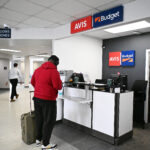
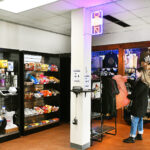
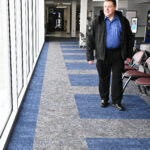
New carpeting, new windows, dressed-up ticket and car rental counters, and an expanded security and passenger holding area have already been put in place - as has the Scan & Go, a self-service gift shop and vending space.
Discussions regarding how the runway-facing, ballroom-sized expanse that served as the longtime home of the Ali-Baba restaurant could be reconfigured, and what offerings it might hold, are in the works.
Zooming out a bit, Michael Baker International conducted a feasibility study of the entire hangar facility in 2024. That study concluded that the most reasonable path forward would be to keep and expand the existing building.
"That's what our plan will be when we get to that point. We have a concept, but no real design right now," Vrabel said. "It would actually expand out into the parking lot a little bit, which would also trigger us probably having to build a parking garage at that point ... With that expansion, it opens up the downstairs for us. So it will be set up more like a traditional airport."
But first and foremost, the runway extension.
"That's the key," Vrabel said. "These things will come. It's just going to take time.”