
West Virginia fails American Lung Association’s State of Tobacco Control evaluation
Trending
MORGANTOWN - West Virginia rated three F’s and two D’s in the American Lung Association's 24th annual "State of Tobacco Control" report.
The report says, "West Virginia's grades show that the state must step up efforts to reduce tobacco use to protect communities. West Virginia's action on tobacco control and prevention is especially critical due to the dramatic rollback of federal tobacco prevention efforts in 2025.
In 2026, said Elizabeth Hensil, director of advocacy at the ALA in West Virginia, policymakers must focus on restoring funding for tobacco prevention and quit-smoking programs to align with CDC recommended levels; preserving local control of smokefree laws throughout the state; and enact a significant tax increase that brings all tobacco products, including e-cigarettes, to tax parity with cigarettes.
The ALA says tobacco use remains the nation's leading cause of preventable death and disease, claiming the lives of more than 4,280 West Virginia residents each year.
The report grades the 50 states and the District of Columbia in five areas. Here are West Virginia’s grades:
Funding for state tobacco prevention programs, F;
Strength of smokefree workplace laws, D;
Level of state tobacco taxes, D;
Coverage and access to services to quit tobacco, grade D;
Ending the sale of all flavored tobacco products, D.
The Dominion Post contacted the offices of the state House speaker and Senate president for comment on any planned tobacco-related legislation this session. The speaker’s office said he was busy with session matters and couldn’t comment. The president’s office did not respond.
West Virginia’s tobacco tax on cigarettes is $1.20 per pack, unchanged since 2016, along with a sales tax of about 31 cents a pack - for an average total pack price of $5.53. The state sales tax handbook shows that ranks West Virginia 31st among the 50 states and D.C. for price per pack.
The state taxes other tobacco products, such as chew, at 7% of wholesale price.
Among West Virginia’s neighbors, only Maryland fares better, earning a B for its cigarette tax of $5 per pack. The others all earn F’s: Kentucky, $1.10; Ohio, $1.60; Pennsylvania, $2.60; and Virginia, 60 cents.
For smoke-free workplace laws, West Virginia regulates smoking only in government workplaces; but not private workplaces, restaurants, bars, casinos or retail stores. The grades for West Virginia’s neighbors: Kentucky, F; Maryland, A; Ohio, F; Pennsylvania, D; Virginia, F.
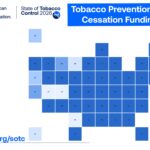
West Virginia earns an F for tobacco cessation and prevention funding for spending only 5% of the CDC’s recommended level of $27,400,000. The state spends $1.56 million.
All the neighbor states also earn F grades: Kentucky, 10.4% of the CDC’s recommended $56.4 million; Maryland, 37.7% of the recommended $48 million; Ohio, 6.4% of $132 million; Pennsylvania, 14.5% of $140 million; Virginia, 12.8% of $91.6 million.
The state earns a D for access to cessation services. It requires Medicaid coverage of medications and counseling, and PEIA coverage of most medications and some types of counseling. It spends 83 cents per smoker for its tobacco quitline, below the national median $2.62. It doesn’t mandate private insurance coverage of services.
The neighbors’ grades: Kentucky, C; Maryland, B; Ohio, C; Pennsylvania, D; Virginia, C.
West Virginia and all of its neighbors earn F’s for lacking state restrictions on flavored tobacco products.
The ALA recommends that West Virginia self-fund tobacco prevention and control programs, raise the cigarette tax and equalize the rates for all other products, include e-cigarettes.
The ALA delivers harsh criticism of federal cuts to the CDC Office on Smoking and Health, to staffing at the FDA’s Center for Tobacco Products, and delaying Congressionally appropriated funding for nearly six months.
"As a result," the ALA said, "tobacco control and quitline programs in all 50 states and the District of Columbia were left at risk of shutting down, with some states drastically reducing lifesaving services."
Hensil said, "It is devastating to see the federal government largely abandon its tobacco control efforts. Walking away from the incredible progress the nation has made on reducing tobacco use over the past 50 years is unacceptable. States need to ramp up their tobacco prevention efforts even more to protect residents from disease and addiction caused by tobacco use."