
Company has until fall 2027 to begin Morgantown hydroelectric project
Trending
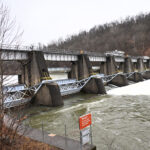
MORGANTOWN - A Morgantown Lock and Dam hydroelectric power project first pitched more than a decade ago is still very much alive according to the company behind it.
The Dominion Post contacted Rye Development regarding its plans to construct hydroelectric power plants at the Morgantown and Opekiska dams as part of a series of projects along the Monongahela River in West Virginia and Pennsylvania.
The Opekiska Lock and Dam is located about seven miles northeast of Fairmont, near Everettville.
"We are intending to move forward with both of these run-of-river hydroelectric projects and will have more project information to share in the second and third quarter of 2026," Rye Development Chief Development Officer Erik Steimle said.
Based on the most recent extension provided by the Federal Energy Regulatory Commission (FERC), the company has until Sept. 29, 2027 to commence with the projects, and up to three years from that date to complete them.
Per the America's Water Infrastructure Act of 2018, this is the final extension FERC can grant for the projects under the original Sept. 29, 2017 license.
The Morgantown project has been lingering since 2012, when Rye Development's predecessor, Free Flow Power, came forward with designs that would have required relocating a portion of the Caperton Trail in order to place a power plant along the river's edge.
The proposal prompted an immediate outcry from various stakeholders, including the city of Morgantown, which envisioned significant future investment in riverfront improvements - some of which came to fruition years later in the form of a $4-plus million overhaul of the Hazel Ruby McQuain Park and Amphitheater, Walnut Street Landing and historic train depot.
In response to the pushback, the project was redesigned to place the powerhouse within the banks of the river. Steps were also taken to appease some community concerns by incorporating access to a fishing platform.
Despite lingering local and state misgivings, FERC issued the licenses for hydroelectric power projects at the Morgantown and Opekiska locks on Sept. 29, 2017. The projects were two of six proposed for the Monongahela River. Another is at Point Marion, Pennsylvania, while the other three are farther north, toward Pittsburgh.
A short time later, the city of Morgantown was among a number of stakeholders - including the WV Department of Environmental Protection, the WV Division of Natural Resources, the Mon River Trails Conservancy and the Upper Monongahela River Association - to request another hearing on the project.
FERC denied the request, but the DEP worked out memorandums of agreement with the developer in an effort to satisfy state and stakeholder concerns about environmental issues and disruption of local recreational fishing.
Julia Butzler, a hydropower specialist with the Army Corps of Engineers Pittsburgh District, previously said ACOE finalized a memorandum of agreement granting Rye Development access to the corps-owned Morgantown Lock and Dam in February 2020.
Rye Development initially indicated the Morgantown and Opekiska projects combined would produce more than 41 gigawatt hours of electricity annually, enough to power some 3,800 homes.
Today, the company's website simply explains the "Monongahela River Cluster" would produce 59 megawatts.
It's not immediately clear how the power will be utilized.
In March 2025 filings with FERC, Rye Development indicates it has negotiated power purchase agreements for the Morgantown and Opekiska projects.
It is known that Rye Development initially sought power purchase commitments from local entities, including the Morgantown Utility Board and WVU.
Leadership with MUB sat for a presentation in late 2018 and walked away calling the pitch, "an exciting prospect." MUB Communications Director Chris Dale said the utility has heard nothing since.
Asked if WVU had brokered a power purchase deal, Shauna Johnson, executive director of strategic communications for WVU responded, "West Virginia University is not currently involved in this project."
Likewise, the city of Morgantown said it didn't have any updates or information to share.
Steimle didn't respond to a request for details regarding the power purchase agreement.
And while no power generation projects are named specifically, a June 2023 press release from Rye Development heralded a first-of-its-kind agreement through which the company "seeks to integrate power generation capabilities into existing dams that currently have no capacity to generate electricity" to provide power to Iron Mountain, which is described as "a global leader in innovative storage and data center infrastructure ..."
As part of the press release, Rye Development notes it has more than a dozen projects in the pipeline, and that instead of agreeing to purchase power from a single project, Iron Mountain signed on to purchase 150 megawatts over ten years from several of Rye Development's low-impact hydroelectric projects in the PJM wholesale electricity market.
"Our agreement paves the way for a new era of clean energy production in the Mid-Atlantic region," Rye Development CEO Paul Jacob said in the release. "By unlocking the potential of numerous low-impact hydro projects, we can work with Iron Mountain to meet their 100%, 24/7 renewable energy goals."