
Mon Medical Center robotic surgery flip room improves patient care
Trending
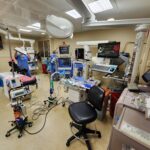
MORGANTOWN - Vandalia Health Mon Medical Center is the first in the region to establish a single port robotic surgery flip room - an arrangement to better serve patients and staff.
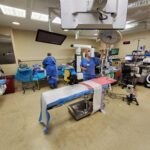
The flip room is actually two adjacent operating rooms equipped with Intuitive Surgical’s daVinci SP system, at the hospital, said Dr. Jaschar Shakuri-Rad, urologist, medical director of Robotic Surgery and Medical Specialties and Master Robotic Surgeon.
Dr. Rad, as he’s called, brought the flip room concept to Mon Medical Center.
The reasons are several, he said. One was his mounting patient backlog. This is actually a national problem, spurred by a growing shortage of urologists.
Various medical publications report that 62% of U.S. counties lack a practicing urologist. The existing workforce is aging out, with 40% reaching retirement age in the next decade - while the patient load is growing as the population ages, bringing age-related urologic diseases and conditions to the fore.
Rad said West Virginia has a 50% shortage of urologists, based on the most recent data.
"You can’t, obviously, create urologists in factories," he said. "And so, instead, we do the next best thing. We treat more patients with the same number of urologists. And the flip room allows us to do that."
The arrangement allows him to operate on five patients per day instead of just three.
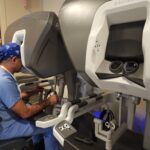
He explained how it works as he allowed us to witness a prostatectomy - removal of a cancerous prostate - in one of the rooms. He sat at one of two side-by-side stations working the robot while we sat at the other, witnessing the procedure in that station’s monitor - seeing the tiny space inside in HD Cinerama quality.
We’ve reported before on the many advantages of single port robotic surgery: the ability to work more precisely and safely inside the tight spaces of the body, vastly reduced risk and faster recovery time among them. (Single port surgery features three tiny interchangeable tools plus a camera on a single robotic arm - inserted into the patient and controlled at the station a few feet away.)
He cauterized blood vessels that opened as he cut away tissue. He pointed out the reduced blood loss possible in single port robotic surgery: just 20 milliliters (4 teaspoons) in this case versus two liters in a conventional prostatectomy.
In this case, after the prostate and a lymph node have been removed and the pathology report shows all the cancer has been excised, he can begin reconnecting the bladder to the urethra.
He knows how long this final stage of the procedure will take. He tells anesthesia and the second team in the other room that he’s about to finish. That team prepares the room, the other robot and the next patient for that procedure.
"So as soon as I finish this, I can go talk to the family [of the current patient] and walk back into the other room all ready to go. There’s no missed time in between. ... We eliminate the turnover time by having the flip room."
And while he’s in the second room, the first room is getting cleaned up and prepped. So when he’s done in the second room, the first room, with the patient on the table and that room’s team back in place, is ready for him.
The flip room arrangement not only allows him to perform more surgeries in a single day, he said, it benefits the staff. He spoke of a colleague in another state who has to schedule surgeries clear to midnight because his facility lacks the resources for a flip room setup - with the accompanying toll on staff and doctor.
With the flip room, Rad said, both teams can be out by 5 p.m. "The staff isn’t burned out. The surgeons aren’t burned out. The patients get good care."
Two essentials for a successful flip room arrangement, he said, are available resources and supportive hospital leadership. "To be able to do this, you really have to have a good administration."
Rad had both, he said. The Vandalia Health system had two single port robots, but the one in Charleston, wasn’t getting used. So he asked the administration at Mon Medical about setting up the flip room to use both and relieve his mounting procedure backlog. The administration supported the proposal.
And more than 10 surgical staff members completed specialized training in the system configuration to prepare for the launch.
It’s not a new concept, he said. "But execution is difficult. You have to have all the right people at the table."
David Goldberg, president and CEO of Mon Health and Davis Health Systems, and executive vice president of Vandalia Health, commented on the flip room system in a statement. "This commitment means our community will experience the benefits of robotic surgery with less waiting and greater confidence in the care they receive."
Rad isn’t the only doctor at Mon Medical to use flip rooms. Dr. William McBee, a gynecological oncologist, performs laparoscopic surgeries and has a pair of rooms, too.
Flip rooms better serve the state’s population, Rad said. They don’t have to leave the state for procedures. "It’s been pretty good so far. I’ve been pretty happy with it."