
MORGANTOWN — The West Virginia University Police Department is moving on up.
And while it may not technically qualify as a deluxe apartment in the sky, it would be difficult to view the UPD’s new digs in the Chestnut Ridge Building as anything but an upgrade over its dedicated home of the last 13 years on Elmer Prince Drive.
For one, it’s bigger – way bigger.
The Elmer Prince Drive facility had just over 8,100 square feet of assignable space. The Chestnut Ridge Building boasts more than 37,300 square feet spread across seven floors, the majority of which will be dedicated to UPD operations.
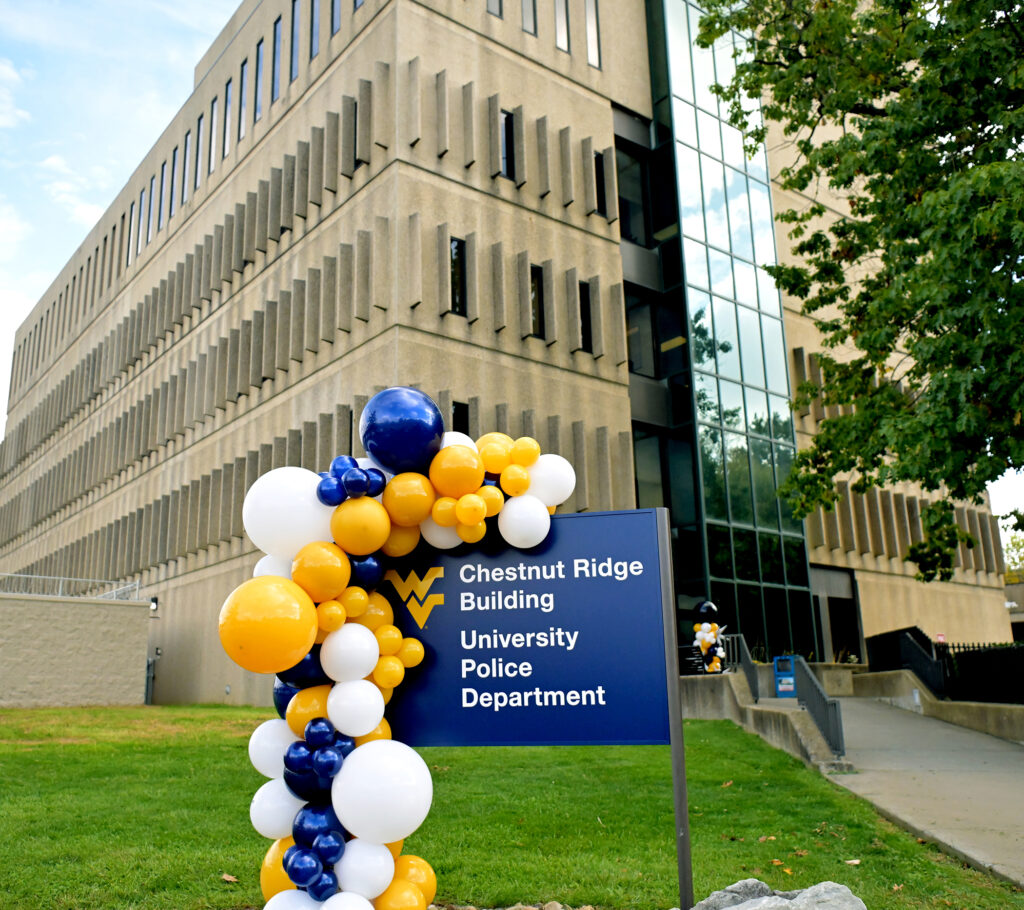
After about three months of moving, buildout and setup, the department opened its doors to the community on Wednesday for tours of the new facility.
“Morale” is a word that came up time and again during one of those tours, led by Capt. Matt Swain.
“Anytime you have great facilities it boosts morale, and it really shows guys that the police department has bought into it and the university has bought into them. It makes them feel important, and then they’re going to go out and do their jobs better,” he said. “They have a good place to call home, you know, and they’re excited about that. It’s been helpful to us.”
The department is utilizing the additional space to incorporate a list of new amenities, including a dedicated shower and locker room area, sleeping quarters, a new “soft” interview room for victims of traumatic crime and an in-house gym, “Hoxter’s House,” named for Maj. Brian Hoxter, who advocated for its inclusion.
The gym is located on the building’s training floor, which is also home to a virtual reality simulator space, rooms that can be set up as mock crime scenes and areas to practice room entries, active shooter scenarios and target acquisition.
Nearly every floor has its own kitchenette, breakrooms, conference areas, offices and meeting space.
Swain said the former UPD facility was a tight fit from the day the department moved in, whereas the Chestnut Ridge Building offers ample room to grow – not only as a department, but as individuals.
“When you move into a building and you’re tight, it’s easy to wonder ‘where’s my growth in this going to be as a career?’ Well, you can see where your growth path can be in here with the new facilities that we have and the state-of-the-art things that we do have,” he said.
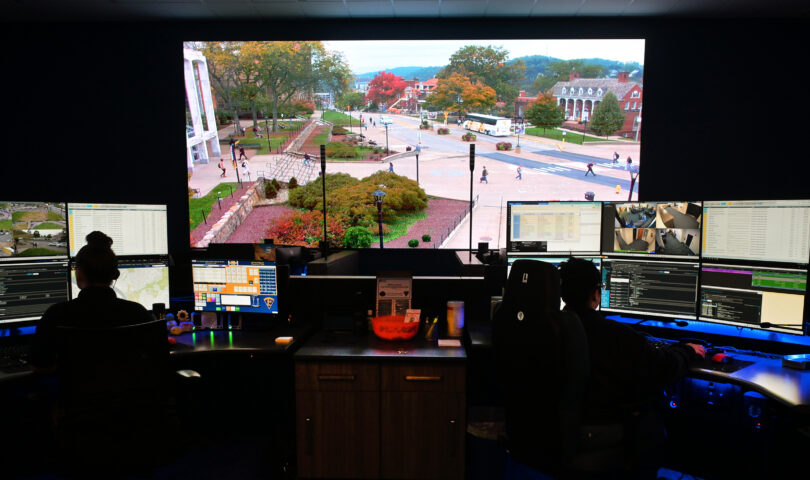
Perhaps the best example of the technological upgrades on offer is the new dispatch center.
The secured room is oriented around a roughly 20×10-foot display that can be divided up to 64 times to pull images from more than 2,300 available camera angles.
“This is a major upgrade,” Swain said. “These folks are our lifeline as far as law enforcement goes, and our dispatchers do a great job. So, when they have to sit here for their entire eight hours, we wanted the place to be nice.”
In addition to the facility upgrade, the department has also seen the recent addition of dual-purpose motorcycles to its fleet. The bikes are suitable for navigating paved roads as well as university-owned trails and farmland.
The move out of the Elmer Prince Drive building was necessitated by WVU Medicine’s development of the new WVU Eye Institute.
The funding for the move is coming from real estate proceeds, including the sale of the previous UPD home to WVU Medicine. Shauna Johnson, executive director of strategic communications, said the total cost of the relocation is still being calculated as renovations continue in the new space.
“The university is committed to making the necessary investments to ensure our police department has the space and resources it needs to serve and protect the University community,” she said.