
Trending
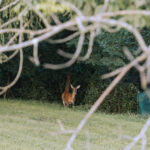
MORGANTOWN -- When Morgantown City Council approved an experimental urban deer hunt in 2011, surveys showed the city's deer population was far beyond carrying capacity.
Thermal imaging at the time estimated about 95 deer per square mile, which was nearly 10 times the U.S. Department of Agriculture's recommended level for urban areas.
Fifteen years later, the City of Morgantown's Urban Archery Deer Hunt has become a community effort, combining herd management with food donations.
"This is a win-win," said Rick Bebout, who has coordinated the program since its start.
"We've built an incredible network of property owners and hunters, maintained a perfect safety record, and donated thousands of pounds of venison to people in need."
The hunt began after years of complaints about overpopulation, including vehicle collisions, garden and property damage. City council unanimously backed the project in 2011, and the first hunts took place on West Virginia University land like the research farms.
Since then, the effort has expanded across Morgantown city limits to both public and private properties.
The hunters are local residents who apply through the city manager's office each spring. They must complete the National Bowhunter Education Foundation's safety course, pass a shooting proficiency test and be assigned to a property.
Hunters work directly with landowners, who retain control over when and where hunting occurs.
"These are safe, discrete, considerate individuals who volunteer their time to help their community," Bebout said.
Each hunter is given seven free urban tags by the state, with the requirement that they take an antlerless deer before harvesting a buck. This year, the season runs from Sept. 6 through Dec. 31, and again Jan. 12 to 31, 2026.
According to the city's fact sheet, Morgantown's urban bowhunters have harvested 1,414 deer in the first 14 years of the program.
The effort has also made a sizable impact in food donation. To date, hunters have donated 14,537 pounds of ground venison to local organizations, including Trinity Episcopal Church, Pantry Plus More and other food pantries. Organizers expect to surpass 16,000 pounds -- eight tons -- this season.
Landowners have reported significant changes in deer-related damage, from landscaping destruction to crop loss. Most importantly, officials emphasize the hunt's perfect safety record.
The program is organized and operated entirely by volunteers. Bebout said that collaboration between hunters, property owners and the community has been key to its success.
"This is a model project for a self-run volunteer group," he said. "We've earned the support of people who never had experience with hunters before, and that says a lot about the work our men and women do every year."