Latest News

Francis Dalton dies at 104: World War II vet who fought in the South Pacific never regarded Japanese soldiers as ‘the enemy’

CLARKSBURG – After the chaplain said a few words … and after the recording of Taps played … and after the American flag was respectfully draped over Francis Dalton’s body … four old vets who had kept company with Dalton in the nursing wing of the Louis A. Johnson VA Medical Center … acted accordingly.

They were all in wheelchairs, but they all stood up – and they all gave a crisp, military salute to their brother who had just transitioned.

“I can’t tell you how moving that was,” Dalton’s son-in-law, Steve Bailes said. “That gesture meant everything.”

At 104, Dalton, who died Saturday afternoon at the facility in Clarksburg, is among the last of the-then young men who marched off to fight in World War II.

The Maidsville native was working in the mines when the news crackled across the radio of the events of Pearl Harbor on Dec. 7, 1941.

After basic training in Missouri, he was bound for the South Pacific. The troop ship docked briefly in Hawaii enroute, where Dalton saw the aftermath.

It was his first look at war. He grew up fast. By the time he was 23, he was already a grizzled veteran, having been wounded twice, doing his work with the 65th Brigade Engineer Battalion.

The men of the 65th built bridges and carved out roads while bullets snapped the air.

A buddy right next to him was shot dead when their armored bulldozer turned into a target – an agonizingly slow-moving target – during one such skirmish.

Like a lot of soldiers from West Virginia who wore the uniform in that war, Dalton came right back home.

And picked right up where he was before he enlisted.

THE BEST YEARS OF OUR LIVES

Down the road, he met Doris Ott Ryan, a spirited lady who worked for Monongalia County Schools as a classroom aide who also did bus duty for the district.

It was a mid-life courtship and marriage for both. She was widowed, with three children who were by then making their own lives. There were Patrick, Joyce and Terry Lynn, who is married to Bailes.

“Francis had a way of drawing people in,” Terry Lynn said.

“He was never a ‘stepdad.’ He was our dad. He and mom married on our 11th wedding anniversary, same day, and our girls were in the wedding. That was special.”

Doris died in 2020, and Francis stayed by himself at their home in Star City for a long as he could.

As recently as two years ago, his was still mowing his lawn and cleaning out gutters, which entailed shimmying up a ladder – which family and neighbors alike really, really wished he wouldn’t do.

Dalton would laugh.

“Well, it needs done and I’m here,” he’d say of those household chores.

Call that a metaphor for the Greatest Generation, if ever there was, Bailes said.

That’s a generation that’s long been in twilight.

More than 16 million Americans served in World War II, but according to the most recent numbers maintained by the National World War II Museum in New Orleans – only around 65,000 remain.

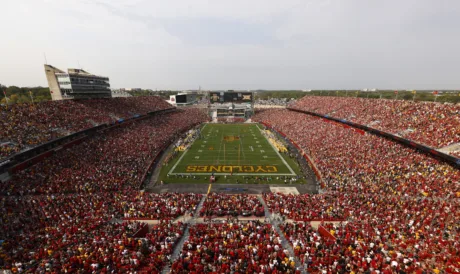
Call that standing-room only crowd at Milan Puskar Stadium, with a few hundred left over. The last of the vets from that war are expected to be seen in the late 2030s, the museum estimates.

PUTTING IT IN WORDS

It took a while before he opened up to his stepkids whom he regarded as his own about his experiences in the South Pacific, Terry Lynn said.

When he did, his recollection was as sharp as the ambient drop of needle on the grooves of a Glenn Miller record in a PX juke box – but he never told anything as a “war story,” she marveled.

One account, she couldn’t get over: Francis heard a rustling on the other side of the jungle wall.

He went stock-still. Of course, he was afraid. This wasn’t a John Wayne movie. This was real.

A Japanese soldier emerged.

Two young men, locked in the amber of the moment: One, hailing from the hills of north-central West Virginia who compelled to enlist after the Pacific fleet came under attack on a sunny December morning in paradise. The other, a conscript to the cause of imperial Japan who had been defined by a code of honor and duty that existed for a millennium.

Perhaps the latter is why it was so extraordinary, as to what happened next.

The Japanese soldier bowed – and surrendered.

Don’t call him “the enemy,” Dalton said for the rest of his days.

“We were all the same,” he said. “Young, and following orders.”

THANK YOU FOR YOUR SERVICE

Terry Lynn stayed in Francis’ room for a week when it became apparent the end was near.

“I was holding his hand when he died. I’m so grateful I got to do that. It was an honor. I don’t know how else to say it.”

Meanwhile, Dalton will be honored this week with a military burial.

Hastings Funeral Home has been entrusted with arrangements, which are still being planned.

Star City Mayor Sharon Doyle has ordered flags in town to fly at half-staff until after the services.