
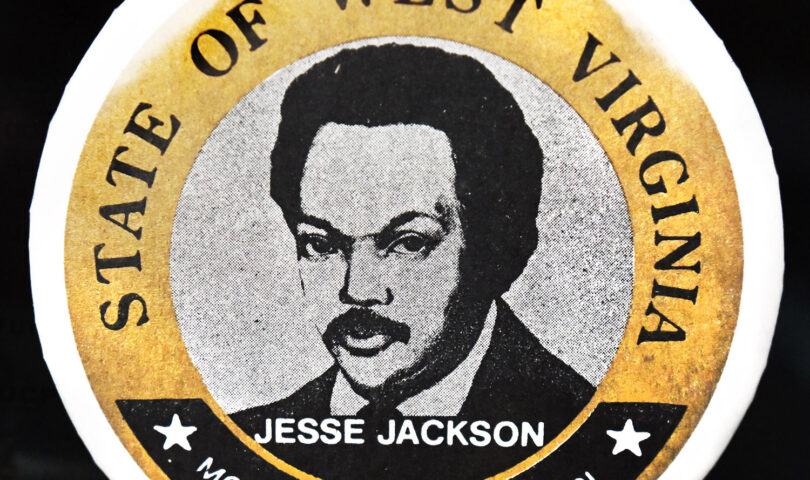
RIVESVILLE – When the Rev. Jesse Jackson rolls into town, you borrow a minivan and let him use your cellphone – no questions asked.
“Well, that’s definitely how it was on this occasion,” Mike Caputo said Tuesday after hearing the news of the death of the civil rights leader and two-time presidential candidate in Chicago.
It was 1998, and Caputo, a Marion County coal miner serving his first term in the state House of Delegates, was enlisted to drive Jackson, who had just flown into the Mountain State from Illinois to the Farmington No. 9 memorial ceremony.
Jackson was to deliver keynote remarks at the site of the disaster, which had happened 30 years before and was the catalyst to sweeping safety changes in coal mining and related industries just months later.
The minivan was because Caputo didn’t know if Jackson would be traveling with an entourage – he wasn’t – and the cellphone was because Jackson made calls the whole way during the drive to the ceremony in the outlying part of the county.
And that particular form of portable communication was still relatively new then.
“He was on the phone with everybody,” chuckled the former lawmaker who would go on to spend several outings with Jackson over the years. “That’s how he did it. He was always talking, always communicating, always making a connection.”
Speaking at a place where 78 miners lost their lives, Jackson told the assembled – surviving family members and fellow miners present – that those lost weren’t just names etched into the striking granite monument that graced the scene.
“They didn’t just die,” he said. “They saved people.”
That was in reference to the sweeping changes in the industry sparked a year after the disaster.
And it was the miners left, those who still toiled in dangerous conditions, to remember and speak out against any mine owner working outside the parameters of what’s safe – and what isn’t.
“We must fight their fight, not just mourn their passing,” Jackson said. “They changed government. Because they died – you live.”
Cecil Roberts, the past president of the United Mine Workers of America who spoke at that same service, said it didn’t take Jackson long to grasp the plight of coal miners here and elsewhere because he just knew.
“He knew what it was like for the working men and women,” Roberts said. “It didn’t matter if you were from southern West Virginia or the South Side of Chicago.”
Roberts even took Jackson on a tour of a coal mine.
“He said, ‘I want to understand this stuff.’ I said, ‘Let’s go.’”
Taking the time, Caputo said, was why Jackson was effective in America’s civil rights movement.
“The movement, everything progressed because of him. After Dr. King, he knew he had to continue the mission. And he did.”