
FAIRMONT – The Marion County Board of Education is aiming to get students right where they live.
During the school day, that is.
The district has retained the services of Wheeling-based McKinley Architecture and Engineering to begin the process of updating its state-mandated Comprehensive Education Facilities Plan – or, CEFP as it’s known – which projects out infrastructure needs of every public school building in the state over the course of decades.
Every CEFP, in every public district, must be updated every 10 years.
West Virginia’s public districts, including Marion’s, are working off the 2020 document, which will require updating four years from now in 2030.
“A lot has changed in public education since 2020,” Marion Schools Superintendent Donna Heston said during Monday’s regular meeting with school board members. “A lot has changed in our facilities since 2020.”
Most of Marion’s buildings have been around since the 1930s.
The former high schools at Rivesville, Fairview, Barrackville, Monongah, Mannington and Farmington went up as part of the Works Progress Administration in President Franklin Roosevelt’s White House.
All of the above – with the exception of Farmington, which was condemned due to mine subsidence in the mid-1970s – are now serving as middle schools.
Fairmont Senior High School was built in 1928 and the original East Fairmont High of that same vintage was replaced in 1993.
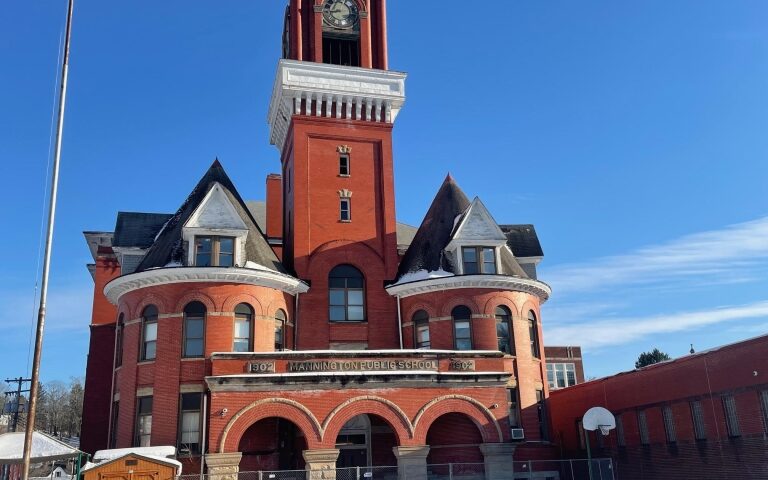
The building in Mannington, which is one of the oldest in the Mountain State, was built in 1902 by the same firm that designed Woodburn Hall on the downtown campus of West Virginia University.
A signature clock tower figures into both buildings.
Meanwhile, all of Marion’s buildings are currently being outfitted with Safe Schools entrances to reflect that changing social landscape to which Heston was referring when she discussed the CEFP work.
The administrator of an elementary school in Marion County found out in the early 1990s that being built to last – and being built to evolve – are two decidedly different architectural animals.
Maintenance and information technology workers trying to retrofit her school for the then-new internet encountered something those 19th century designers couldn’t have conceived of, in relation to the late 20th century.
Said building contained a concrete wall with a bunker-like thickness of 4 feet, making it almost impossible to drill through to run the coaxial cables.