
Social media our beloved enemy? The illusion of health, beauty and reality in the digital age
Trending
Have you ever searched for a medication, watched a video about a medical condition, or even discussed a procedure with someone while your phone was nearby, only to find your feed filled with related content? It can almost feel as though your phone is listening. Algorithms use online activity and sophisticated predictions to identify our interests and repeatedly present similar content.
Social media has transformed how we learn and make decisions about our health. From medications and surgical procedures to nutrition, fitness and physical appearance, medical information has never been more accessible. But accessibility does not necessarily translate into accuracy.
Watch videos promoting a medication and you may encounter endless testimonials about its benefits. Watch videos about surgical complications and your feed may become filled with frightening experiences. This repetition can create the illusion that a treatment is universally successful, unusually dangerous, or something everyone needs. What appears to be overwhelming evidence may simply be an algorithm at work.
Social media also shapes our perception of physical appearance. Seemingly spontaneous photographs may involve careful staging, lighting, strategic positioning, makeup, filters and digital editing. Artificial intelligence can even create realistic images of people who do not exist. We often compare our everyday reality to someone else’s manufactured image. Natural skin texture, wrinkles, asymmetry and variations in body shape begin to look like problems requiring correction. When we are constantly exposed to an illusion, reality itself may begin to look imperfect.
Adolescents and young adults may be particularly vulnerable. Body dysmorphic disorder (BDD) is a recognized mental health condition involving excessive preoccupation with perceived physical flaws that may be minor or invisible to others. It can lead to compulsive mirror checking, constant comparison, social withdrawal and significant distress. Social media may intensify existing concerns. When these concerns interfere with daily life, professional mental health evaluation and treatment are important.
I recall a patient who told me she was traveling to another state to see a surgeon primarily because the surgeon had millions of followers on TikTok. In this world of illusions, a physician’s follower count or ability to entertain an audience by dancing on TikTok may overshadow credentials, specialized training and clinical experience. Attracting an audience and providing excellent medical care are entirely different skills.
Medicine is not an exact science. Two people can have the same disease, receive the same treatment and experience different outcomes. Popularity is not scientific evidence. Repetition is not confirmation. Testimonials are not guarantees. Followers are not credentials.
Social media can be an excellent educational resource. Verify credentials, question scientific claims, consider financial incentives and seek different perspectives. Use medical information online to prepare questions and discuss options with your physician, rather than independently determining your treatment.
Social media algorithms are designed to capture our attention, not protect our self-esteem or determine what is medically appropriate for us. Social media can be an amazing friend when we understand its limitations and a powerful enemy when we allow it to shape our perception of reality.
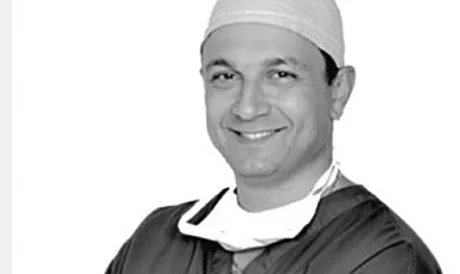
Ehab Akkary, MD, FACS, FAACS, MBA, is a fellowship-trained, triple Board Certified Cosmetic Surgeon practicing in Morgantown, West Virginia. He is Board Certified in cosmetic surgery by the American Board of Cosmetic Surgery (ABCS), Facial Cosmetic Surgery by the American Board of Facial Cosmetic Surgery (ABFCS), and General Surgery by the American Board of Surgery (ABS). He is also a Fellow of the American College of Surgeons (ACS) and the American Academy of Cosmetic Surgery (AACS). Through this monthly column, he shares practical, evidence-based information to help readers make informed decisions about their health, surgery, and overall well-being. Learn more at www.YourDreamBody.com or contact him at eakkary@yourdreambody.com.