
More than books: How West Virginia libraries impact communities, economy
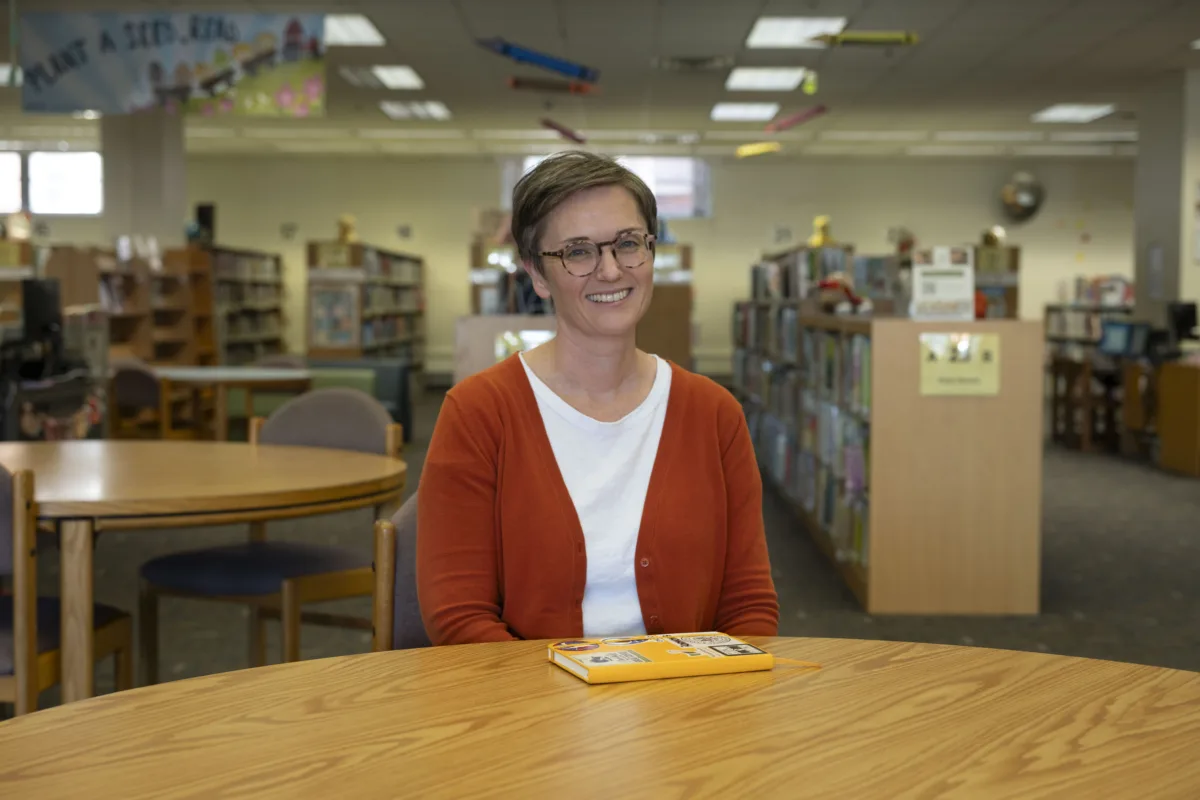
Alejandro Bellido/WVU Reed School of Media Director of Morgantown Public Library System Sarah Cranstoun poses for a photograph at the Morgantown branch on Oct. 29.
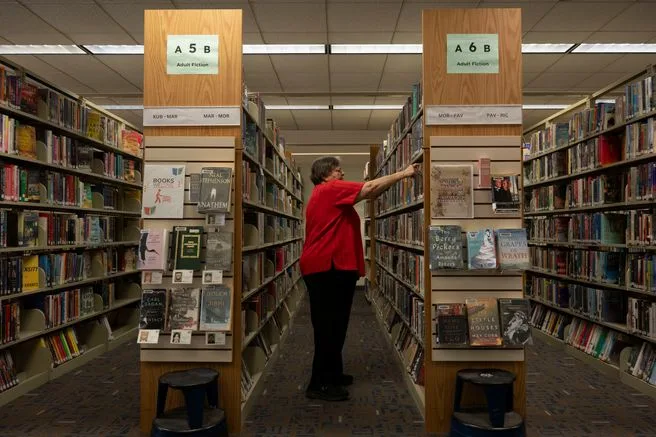
Alejandro Bellido/WVU Reed School of Media TyeAnn Phillips, a library assistant at the Morgantown Public Library, organizes the shelves Oct. 29.
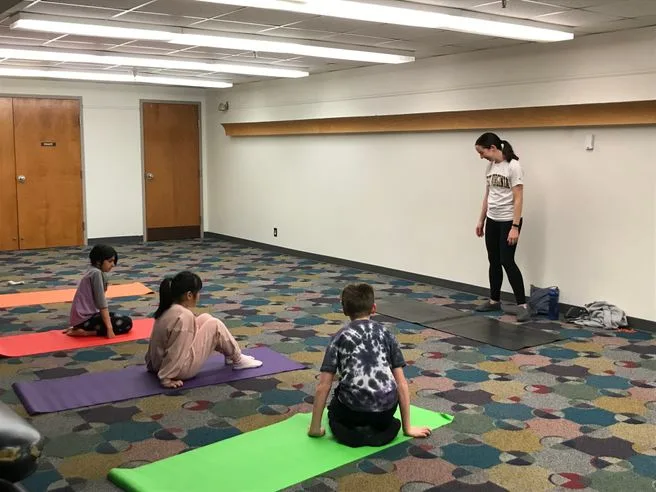
Photo courtesy of Abigail Cyphert/Morgantown Public Library System Certified yoga instructor Sarah Schaefer teaches a children's yoga class at the Morgantown Public Library on Feb. 21.
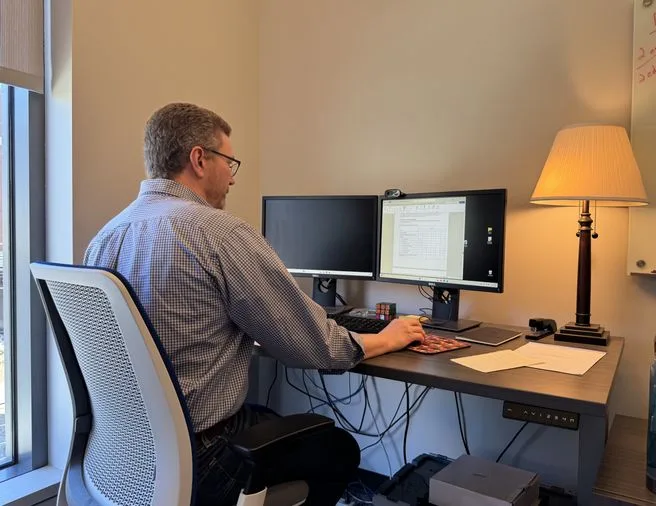
Sophie Machesky/WVU Reed School of Media John Deskins, director of the WVU Bureau of Business and Economic Reserve, works on a document Oct. 22 in his office in Reynolds Hall in Morgantown.
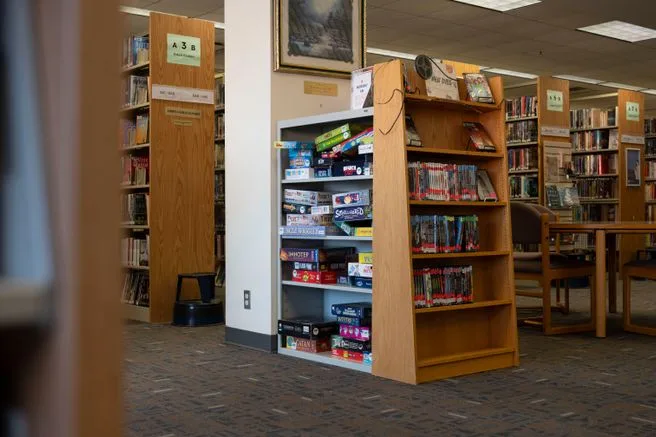
Alejandro Bellido/WVU Reed School of Media Board games and DVDs available for use in the Morgantown Public Library in Morgantown, taken Oct. 29
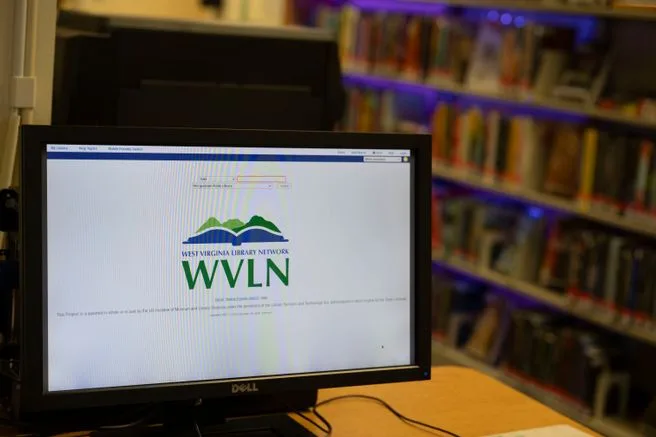
Alejandro Bellido/WVU Reed School of Media Closeup of a computer available for use in the Morgantown Public Library in Morgantown, taken Oct. 29.
Alejandro Bellido/WVU Reed School of Media Director of Morgantown Public Library System Sarah Cranstoun poses for a photograph at the Morgantown branch on Oct. 29.
Alejandro Bellido/WVU Reed School of Media TyeAnn Phillips, a library assistant at the Morgantown Public Library, organizes the shelves Oct. 29.
Photo courtesy of Abigail Cyphert/Morgantown Public Library System Certified yoga instructor Sarah Schaefer teaches a children's yoga class at the Morgantown Public Library on Feb. 21.
Sophie Machesky/WVU Reed School of Media John Deskins, director of the WVU Bureau of Business and Economic Reserve, works on a document Oct. 22 in his office in Reynolds Hall in Morgantown.
Alejandro Bellido/WVU Reed School of Media Board games and DVDs available for use in the Morgantown Public Library in Morgantown, taken Oct. 29
Alejandro Bellido/WVU Reed School of Media Closeup of a computer available for use in the Morgantown Public Library in Morgantown, taken Oct. 29.
Trending
MORGANTOWN - Imagine it's 1990. You just walked into the library. The scent of dust brushes past you while the warm sunlight hits your hands through the large glass windows.
You walk up to the circulation desk, return your most recent read, then make your way to the shelves.
Skimming through the shelves, you find the author you've been looking for, select a book and walk back up to the librarian. She scans your library card and says your hold will be due in two weeks.
It's now 2026, and you have kids of your own. You walk into the library. Your youngest daughter joins the children's yoga class and your teen son pulls up a seat at the Dungeons & Dragons club meeting.
You put your headphones on and finish the last chapter of your audiobook before walking to the pickup shelf and grabbing the hardcover you placed on hold on the library's website before you left the house.
The library of your childhood - full of hard-back books and maybe some VHS tapes, if you were lucky - has transformed into a hub of technology, programs and events that reflect your communities' changing needs.
As the state makes decisions about where to place resources to bolster the economy, one economic expert says libraries can be part of a solution in making communities more attractive to investment.
"They're not going to have the impact of, like, a 1,000-employee manufacturing facility or a major hospital, or a major university, but they make the area more attractive to potential residents," John Deskins, director of the WVU Bureau of Business and Economic Research, said. "Especially for West Virginia, with the demographic decline that we have and the dwindling population that we have, we need to make the state more attractive to everybody."
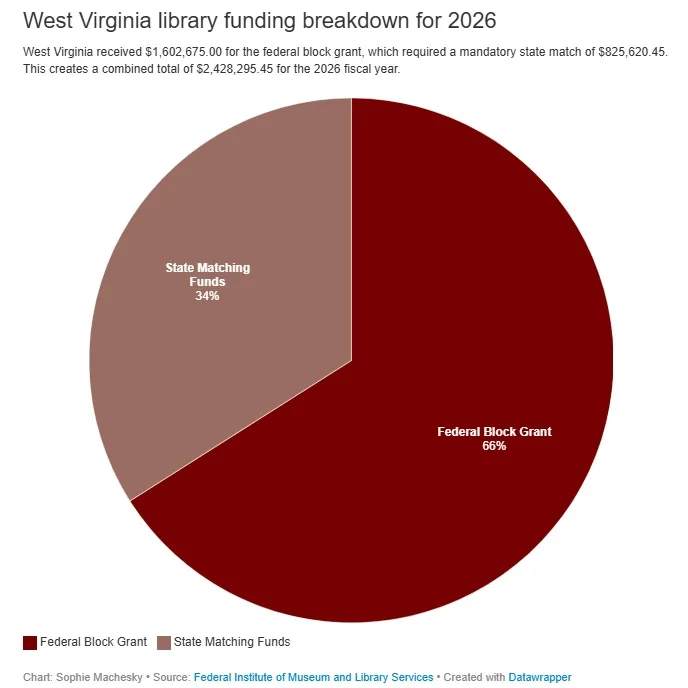
According to an allotment table by the federal Institute of Museum and Library Services, West Virginia's libraries rely on a combination of federal, state and local funding to maintain their combination of robust offerings. West Virginia's network received a federal block grant that covers 66% of funding for the 2026 fiscal year; the state is legally required to match the other 34%, leaving West Virginia with $2.4 million for the 2026 fiscal year.
West Virginia has received about $1.5 million from the federal block grant for each fiscal year since 2022. Its highest was about $1.7 million in 2024, but that number has decreased slightly in the past two years.
While West Virginia's federal library grant has remained relatively close to $1.5 million annually since 2022, consumer prices have risen about 22% during the past five years, increasing the costs for maintaining and improving library resources, according to the U.S. Bureau of Labor Statistics.
Sarah Cranstoun, director of the Morgantown Public Library System, said there is no clear standard for measuring libraries' return on investment for state funding, but she said she thinks libraries are an obvious representation of what tax dollars do.
"We don't have a good number for the return on investment for tax dollars to libraries in West Virginia," she said.
But Cranstoun said she believes libraries extend value beyond fiscal measurements, pointing to the programs, resources, public spaces and sense of community they offer to residents.
According to the latest West Virginia Library Commission Statistical Report, in 2024, library patrons across the state checked out over 4.8 million books, DVDs, video games and other physical materials, 1.8 million electronic materials and had more than 450,000 visitors attend program sessions offered for all age groups.
Sarah Schaefer, a certified yoga instructor and real estate agent, said she praises the Morgantown Public Library System for its ability to offer much more than books.
"Library members can check out books, audiobooks, movies, games, music and so much more," she said. "They regularly have events and group activities for everyone from toddlers and kids to teens and adults. I teach kids yoga classes there a few times a year, and the kids really love it."
Schaefer said she wants to continue supporting local libraries with her tax dollars, since she sees it as reinvesting in the community.
"These resources are so important to the people in the community because it gives access to things they might not normally be able to do," she said. "The low- or no-cost programs encourage people to grow their creativity, imagination and knowledge without the hurdle of financial constraints."
While some residents see libraries as worthwhile recipients of tax dollars, others think public funding should address different community needs.
Angela Wolfe, a stay-at-home mom living in McMechen, West Virginia, said she would like her tax dollars to be spent on fixing roads.
"The infrastructure of West Virginia is crumbling beneath our feet," she said. "The state needs to figure out how to fix the roads in a manner that does not require the road being shut down for months if not years at a time."
Despite differing opinions on how public funding should be spent, Deskins said he thinks libraries and bookstores are part of the overall picture that make an area the kind of place someone might want to live, and that the resources offered by libraries can improve the quality of life for everyone.
"For low-income people who might not be able to afford five different subscriptions to Netflix, Paramount Plus, and HBO Max, and people who may not be able to just buy books to read on their Kindle, I think the library really offers a kind of positive asset for those people," he said.
Deskins said the ability to read a book at a lower cost than a department store's selling price, or just for free, is an advantage not many people are realizing.
"I also think libraries are largely just overlooked," he said. "I think a lot of people who can afford to go to Barnes & Noble just don't even realize that they can get the same thing for free at the library."
But libraries offer much more than books.
"I love the adventure of the library," Cranstoun said. "We have lots of different programs. We have space just for people to be and exist, to get out of your house, schedule, and routine, come here and play with the toys and computers."
Schaefer said the Morgantown Public Library System has adult and children programming across a wide range of topics.
She shared events that will be held in November, including preschool storytime, sessions that teach patrons about digital technology and electronics, tween painting, group adult crocheting and knitting, Dungeons & Dragons meetings, Pokémon club, sessions to help seniors avoid scams, virtual author talks, crafting events and science and technology sessions for children.
"We try and hit as many ages as we can," Cranstoun said. "This summer, we had our own version of the NPR Tiny Desk Concert - we had the library desk concert, behind the cirque desk here, and had three different acts come in and play. We probably had 150 people come through that night."
Meridith Balas, Hardy Family Engagement and Innovation professor at the WVU John Chambers College of Business and Economics, said libraries are important for all ages, but can be especially beneficial to children.
"I have come across research before, especially in the community of Athens, Georgia, where I used to live, that third- and fifth-grade reading levels are the big drop off points for some, perhaps other patterns might later occur in life that would lead you to then need some more support from your community," she said. "If we're able to help children in third and fifth grade to be avid readers, we might be able to set them up for an even stronger future where they won't need so many community resources later on."
Schaefer said she agrees, and that the library is a free gateway to knowledge, information and imagination, which allow young minds and adults to learn, grow and get different perspectives.
"Teaching kids to love learning and reading is the foundation for them to become contributors to society - I only see that as beneficial for the local economy," she said. "Not to mention, with the cost of living being such a burden on local families, having a free resource of the library is invaluable."
Balas said the most-used app on her cellphone is Libby, an app that allows users to sign in via their library cards to access e-books and audiobooks.
"I have a hold on like 15 books, and I just can't wait for my holds to become available," she said. "You see a moment of frustration where you're like, 'Oh no, I have to wait 10 weeks to read this book,' but the other part of that is kind of exciting to know that 100 other people also want to read this book, and they live in West Virginia."
Balas said the advent of apps like Libby are useful tools that her library hadn't offered in her childhood.
Cranstoun said people and relationships are the most important assets to libraries.
"They become the heart of what we do," she said, "and when we listen to what our community wants, and then we share that amongst ourselves, as staff, we come up with solutions for the problems we can [solve]."
From access to books and technology to educational programs and community events, the public libraries in West Virginia continue to provide resources to residents, despite rising costs and relatively unchanged investments.
This story was produced by journalism students at WVU's Reed School of Media. Read more on their website.