
North-central West Virginia coming to a screen near you
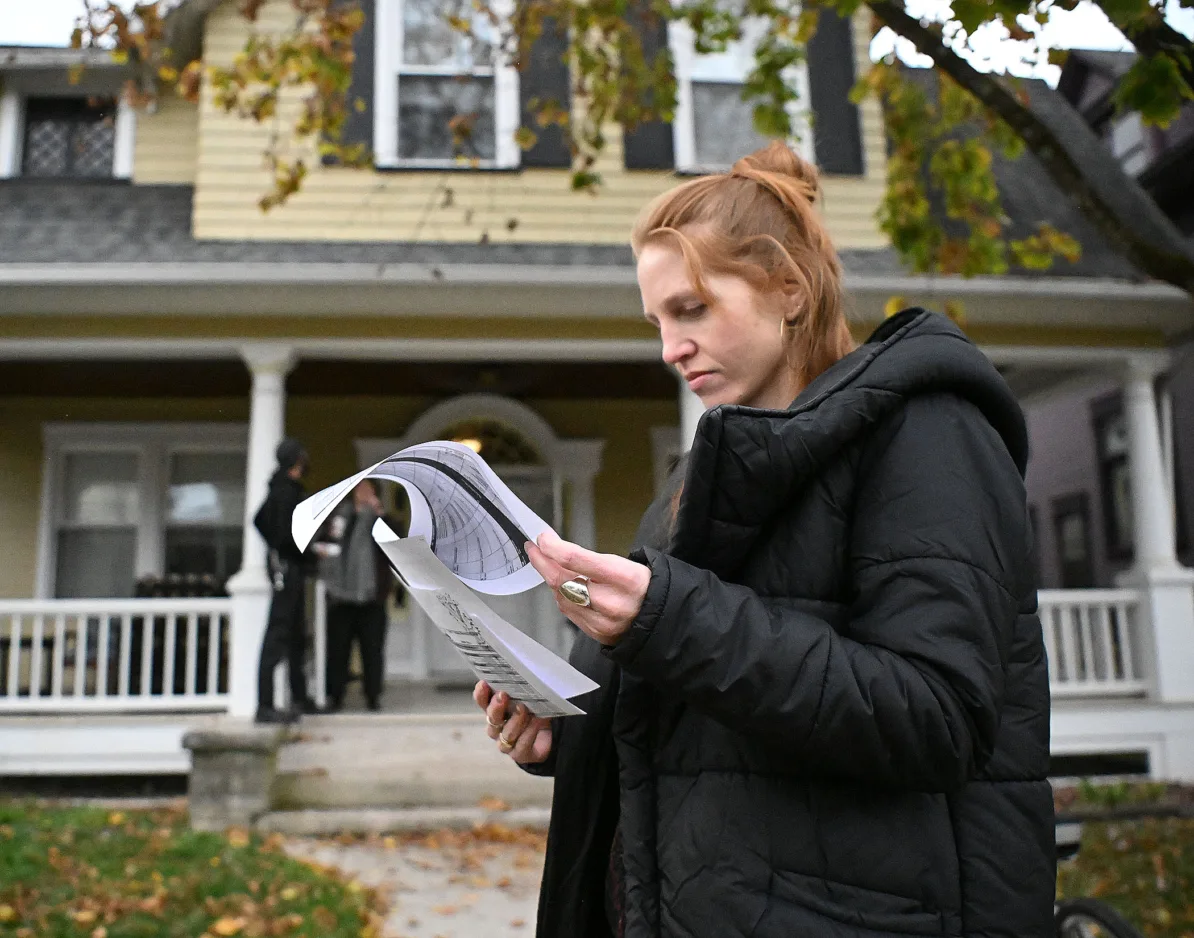
Ron Rittenhouse/The Dominion Post Director Erica Scoggins looks over notes in front of a Grand Street house being used as the setting for some scenes in an Allegheny Image Factory film.
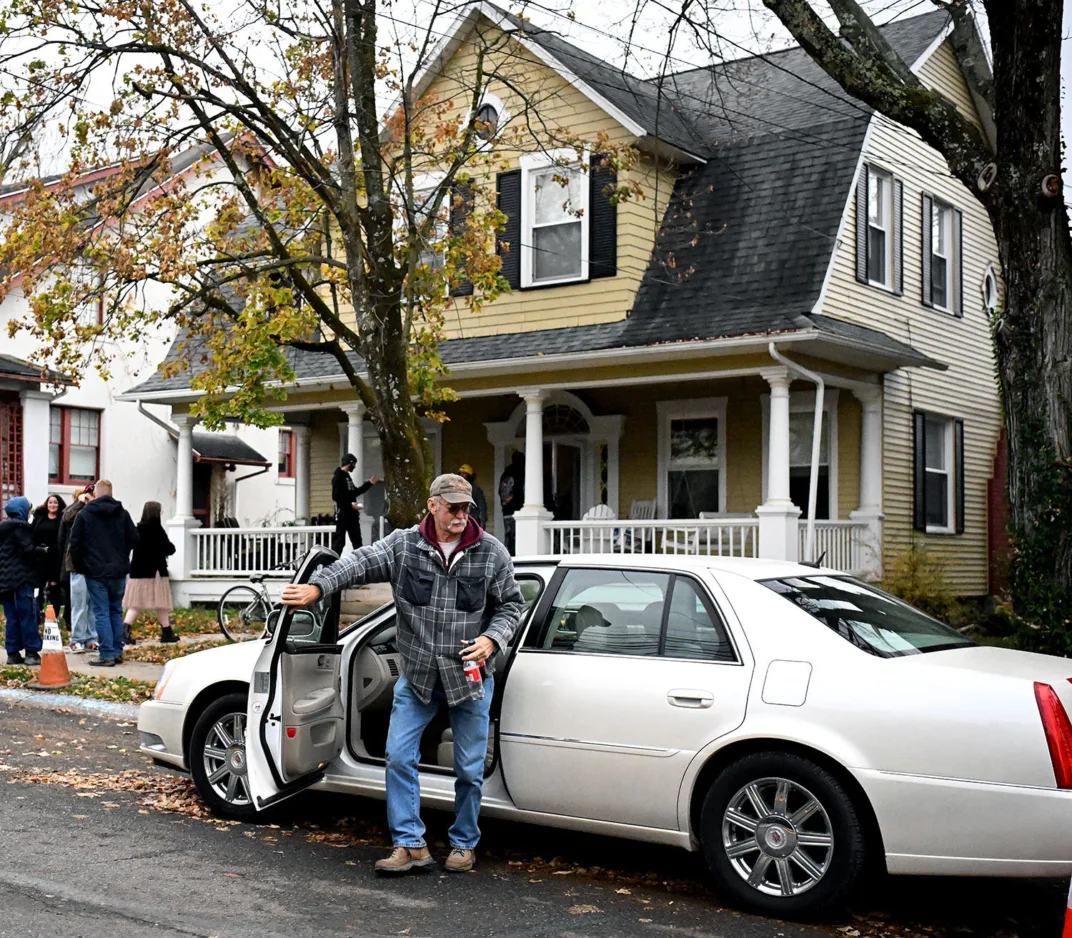
Ron Rittenhouse/The Dominion Post Porter Stiles gets out of a 2003 Cadillac that will be used in the film that was shot in Morgantown's South Park neighborhood in November.
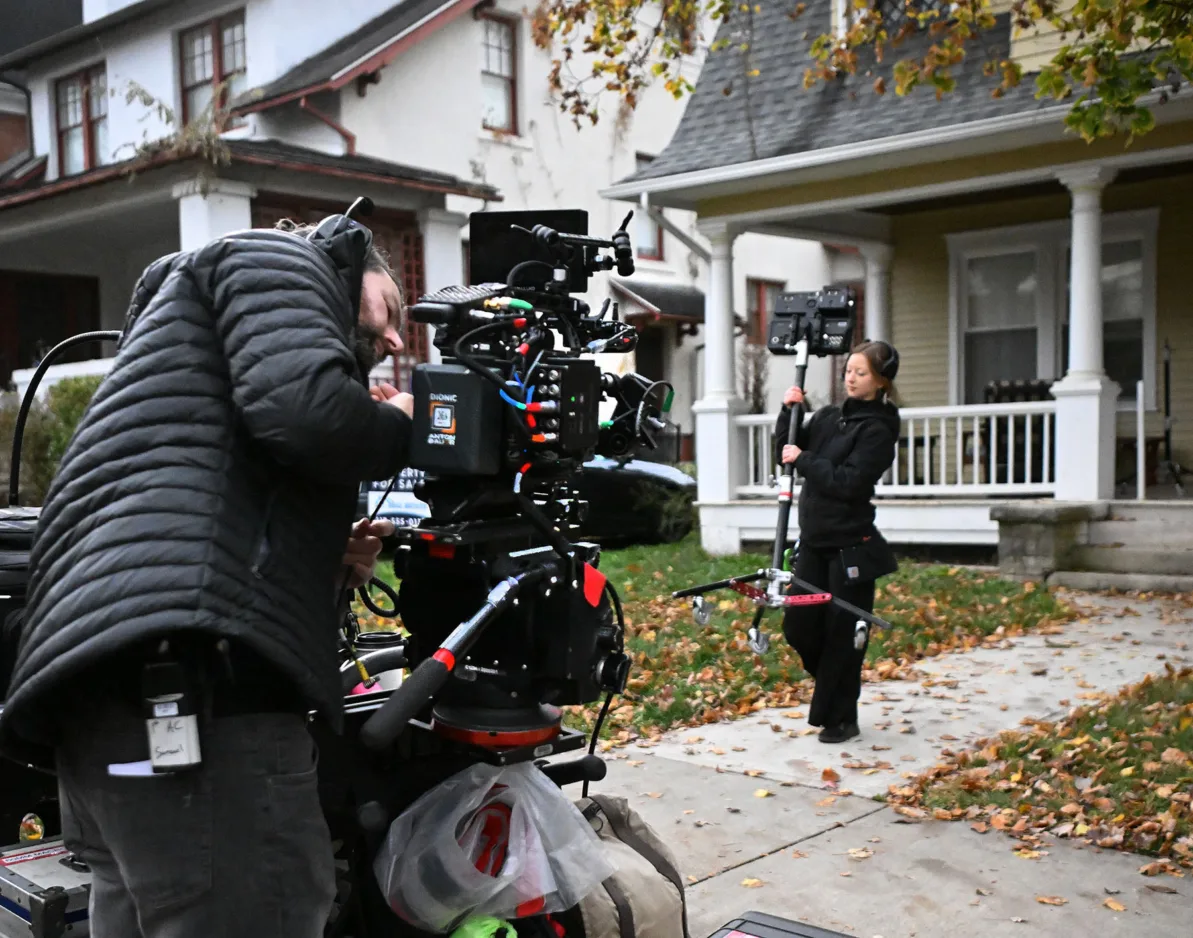
Ron Rittenhouse/The Dominion Post A film production crew gets set up for a day of shooting at a home on Grand Street in Morgantown's South Park neighborhood.
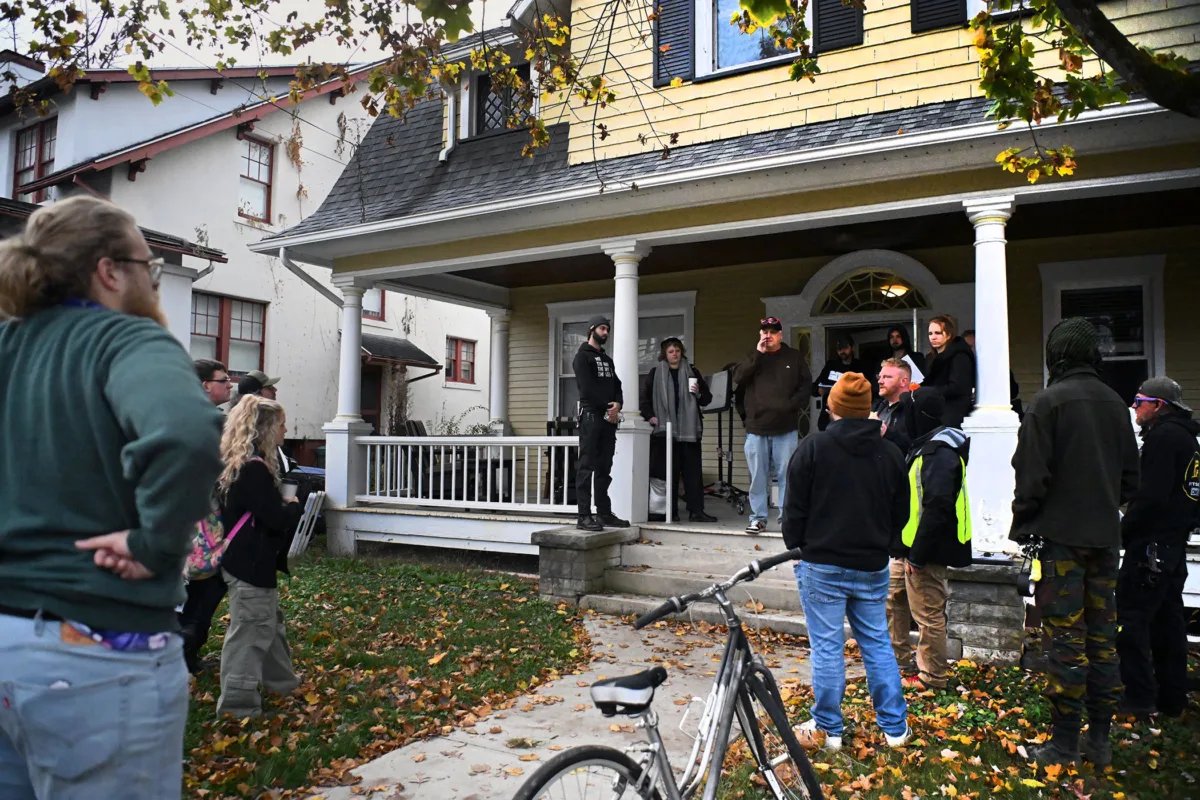
Ron Rittenhouse/The Dominion Post First Director Phil Rush gives last minute instructions before filming began at a Grand Street home in Morgantown earlier this month.
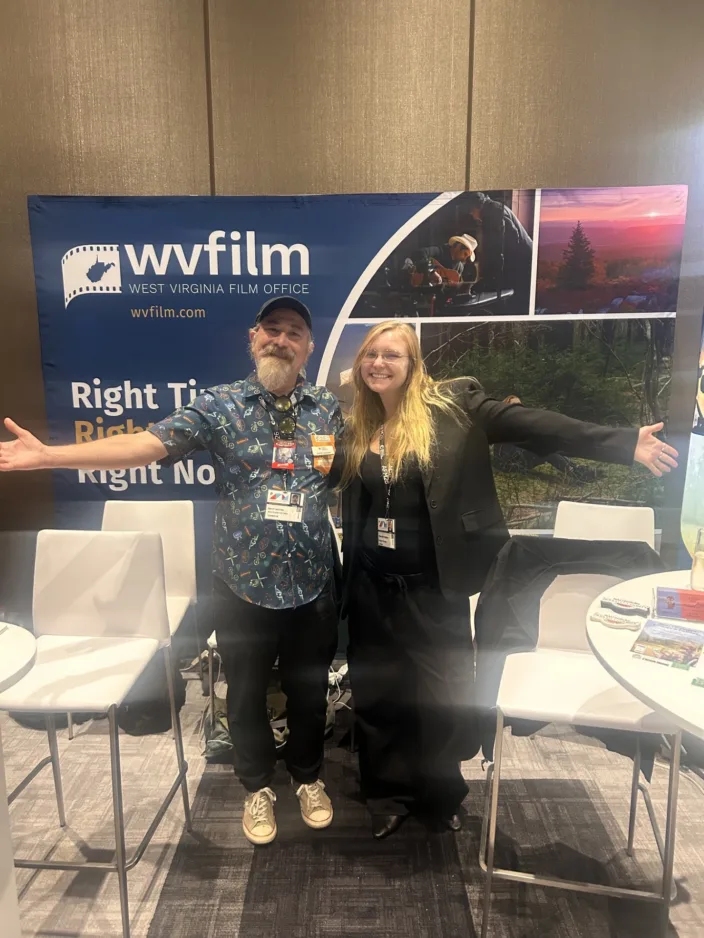
West Virginia Film Office Director Dave Lavender, left, poses with director, and Greenbrier County native, Rebeccah Crabtree during the American Film Market event in Los Angeles. Crabtree recently shot part of her new feature film, "The Kingdom of Rexmonte," at the WV Renaissance Festival site in Greenbrier County. A weekend premiere for the film will be held at the Lewis Theater in Lewisburg Dec. 10-12.
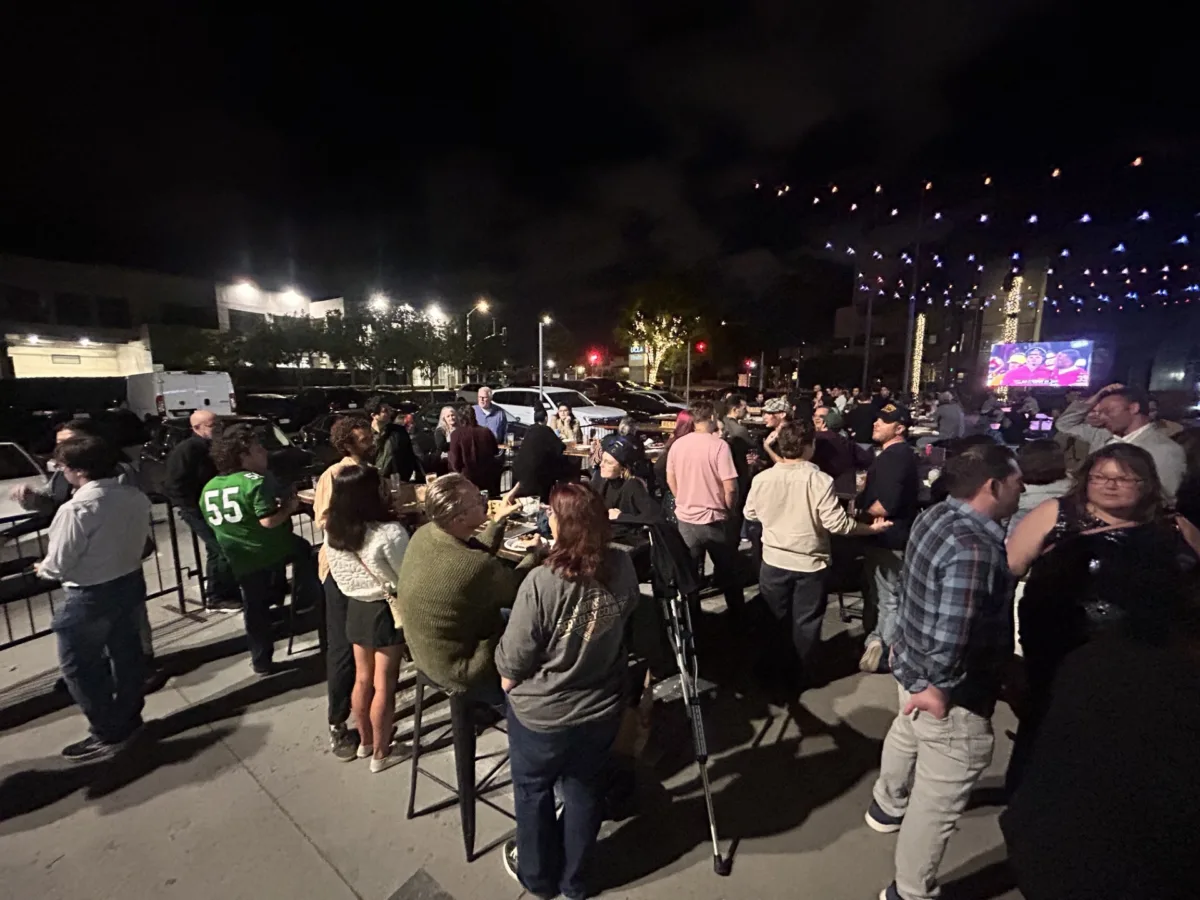
The West Virginia Film Office sponsored a meetup during the American Film Market called the LAppalachians Meetup at Santa Monica Brew Works that brought together folks from West Virginia and across central Appalachia who are working in the film and TV industry in Hollywood.
Ron Rittenhouse/The Dominion Post Director Erica Scoggins looks over notes in front of a Grand Street house being used as the setting for some scenes in an Allegheny Image Factory film.
Ron Rittenhouse/The Dominion Post Porter Stiles gets out of a 2003 Cadillac that will be used in the film that was shot in Morgantown's South Park neighborhood in November.
Ron Rittenhouse/The Dominion Post A film production crew gets set up for a day of shooting at a home on Grand Street in Morgantown's South Park neighborhood.
Ron Rittenhouse/The Dominion Post First Director Phil Rush gives last minute instructions before filming began at a Grand Street home in Morgantown earlier this month.
West Virginia Film Office Director Dave Lavender, left, poses with director, and Greenbrier County native, Rebeccah Crabtree during the American Film Market event in Los Angeles. Crabtree recently shot part of her new feature film, "The Kingdom of Rexmonte," at the WV Renaissance Festival site in Greenbrier County. A weekend premiere for the film will be held at the Lewis Theater in Lewisburg Dec. 10-12.
The West Virginia Film Office sponsored a meetup during the American Film Market called the LAppalachians Meetup at Santa Monica Brew Works that brought together folks from West Virginia and across central Appalachia who are working in the film and TV industry in Hollywood.
Trending
MORGANTOWN - Robert Tinnell isn't at liberty to say much about the project that had a team from Allegheny Image Factory shooting on Grand Street in Morgantown's historic South Park neighborhood on a chilly afternoon in November.
He can't tell you what the movie is about, or who it's for or the actors it features.
He has to keep it light on detail, what with all the contracts and nondisclosure agreements - you know, Hollywood stuff.
"The current film, which I am not at liberty to discuss in detail, is nearly completed. I will say it's a genre picture. It's a really smart, cool film shooting in the region," he told The Dominion Post. "We're shooting in Morgantown just for today."
What he can say is it's part of a growing trend of content creators, television producers and filmmakers selecting West Virginia as the setting for their stories.
That's not by accident.
It's a combination of having one of the nation's top film tax credits (up to 31% on in-state spending), a landscape seemingly constructed of visually striking natural backdrops, and a devoted team of individuals officiating the unlikely marriage of hollars and Hollywood.
Enter Dave Lavender.
"I often say that we're not looking for Marvel; we're looking for marvelous," Lavender says, pausing for effect.
He's got a lot of lines like that.
And it's clear, even over the telephone, that he has a very particular set of skills when it comes to selling West Virginia.
"The tax credit opens the door, without question, but once they get here, they get how wonderful West Virginia is and what a sweet spirit it has. I often tell people that ‘Country Roads’ is our stadium anthem, but ‘Lean on Me,’ the Bill Withers classic about growing up in Slab Fork, that's our mantra and our motto. And that really comes out in filmmaking. It really does take a village to put on a film, and in West Virginia, you get a village that's there to help you, and that's excited that you're there," he said.
"Storytelling is our secret sauce in Appalachia, right? Whether it's a song, whether it's a quilt, or a painting, a statue, or whether it's the kinetic art that is filmmaking, right? And so, it really does shine through. When people come here, they fall in love with West Virginia, and they're going to want to come back."
The West Virginia Film Office was shuttered for about five years leading up to the implementation of the tax credit in 2022. That's when the West Virginia Film Office was reconstituted within the W.V. Division of Economic Development.
In the first fiscal year the credit was in place, it drew about $5.2 million in investment, easily surpassing what the previous film office was able to do in its first five years.
That number was north of $20 million in the 2025-26 fiscal year, and growing.
The largest production to date was the 2025 Disney/20th Century Fox pilot for the reboot of the hit television series “Prison Break,” shot in and around the former West Virginia Penitentiary in Moundsville. That production spent more than $12 million in the state.
Lavender said his office averages more than 100 meetings annually with various production teams and industry professionals.
He spoke to The Dominion Post days after returning from the American Film Market in Los Angeles, where he helms a West Virginia booth in the Locations Expo.
"We really try to pitch that we have the perfect recipe to come and bake a creative cake with us. And people really buy into that. I often tell people, you know, we're kind of fun-sized moviemaking. We can handle big productions like Disney and 20th Century Fox, but we love story-forward indie films as well," he said. "Every year, we get new filmmakers who we meet from all over the world who come here to make movies. And we get to connect with a lot of what I call ‘LAppalachians’ - folks from West Virginia and central Appalachia who are out in L.A. You know, we believe that filmmaking is a great team sport, and we're just building our team out."
As Marion County products, Robert and Jeff Tinnell, who founded Allegheny Image Factory in Fairmont after years building reputations, and connections, in Los Angeles, are firmly among that cohort.
"Thanks to the West Virginia Film Production Tax Credit Program we've been able to bring a significant number of films to the state," Robert Tinnell said. "And the support that we have received from state and local institutions and government is just off the charts. And it is noted in L.A. I can tell you that. We're getting a good reputation."
Tinnell and company featured Mason Lake, Coopers Rock and the Monongahela River while producing the upcoming slasher flick “River” for Shudder. The film, which had a successful screening at the Toronto Film Festival, was bought by Universal and opens nationwide in January.
Fairmont, Morgantown, Mannington and various locales across the region have played non-speaking parts in numerous titles produced by Allegheny Image Factory that have aired on Netflix, Lifetime and other familiar platforms.
At one point, the production house had two of the top five films on Netflix with "Gaslit by My Husband: The Morgan Metzer Story," and "Bad Guardian," both of which were shot in north-central West Virginia.
"In August and September, we did a film for Lifetime. We shot a big chunk of that at Cheat Lake. I don't want to give the title of that yet because I'm afraid they're going to change it. It's a drama with Kim Raver and Meagan Good," Tinnell said.
"These are not huge budgets. Some aspects of it are rather modest in terms of fees. But when you look at them cumulatively, it's just bringing a lot of money into communities, and directly to individuals in some instances. Because you have crews of 40 to 80 people, and casts. It's not just what is being spent directly on the movie, but they're here, they're spending their off hours here visiting our attractions, our restaurants. They're staying in our hotels, and they tend to fall in love with the area. And then they talk about it, which is great."
So what makes the right location?
Hard to say, Pittsburgh-based location manager Barry Stephens explained.
You know it when you see it.
"I was scouting for a very particular home that could serve as sort of a charming storybook dollhouse-esque kind of look," Stephens said of what drew production to South Park earlier this month. "I scouted all through Mannington and Fairmont and Clarksburg and finally managed to find a good fit up here in Morgantown."
Stephens explained that location scouting is very much about logistics - where will the crew members park? Who will cater meals and where will everyone eat? Where will extras gather to get ready and be staged when not on set? What law enforcement needs to be involved if production includes a public right of way?
"We stay local. We spend all our money locally. It's a pretty interesting infusion into the local economy. Imagine a business starting up and shutting down all within six weeks. That's essentially what we are," Stephens said. "All the food we buy. The gas we buy. The hotel lodging and other expenses. That all goes into the local economy. Then we move on."
Both Lavender and Tinnell believe people generally have no idea how much homegrown talent - both in front of and behind the camera - resides in or hails from West Virginia.
Lavender runs through a long list of actors, directors and cinematographers who are putting the Mountain State on the map.
"These people are great disciples of West Virginia film, and they're really spreading the word that West Virginia is a really fun place to come make movies and TV shows," Lavender said. "It's about getting out in front of the people who make the decisions, the production company heads and the people in the industry who can spread the word. Now we're on people’s radar, which makes us feel good that we're not only bringing in a lot of good quality productions, but also getting a lot of people from West Virginia, like the Tinnell brothers, to come back home and make films.”
And that, Robert Tinnell said, is something out of a Hollywood script.
"It's incredible to be able to do this thing that I love, but also get to live in the place that I love. I never would have dreamt. The other day we were shooting on the campus of my high school. The place where I sat and daydreamed about getting to do this. What would that 16-year-old kid think if he knew that one day he was going to have a crew there shooting," Tinnell said. "It's unbelievable."