
WVU workforce leader helping Appalachians build futures close to home
Trending
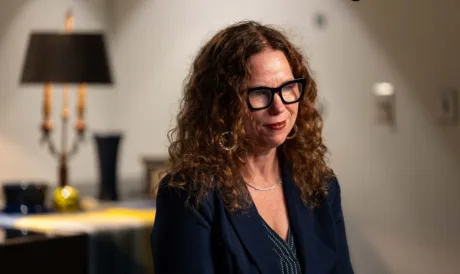
West Virginia University workforce development leader Liz Vitullo wears many hats. What links them is her instinct for spotting where people, programs, and resources can come together for the betterment of all.
Vitullo serves as the assistant vice president for economic innovation at WVU, co-founder of the West Virginia Grant Resource Centers, and chief workforce officer for the U.S. National Science Foundation Resilient Energy Technology and Infrastructure Consortium, or RETI. Her work spans grant support and community development to preparing people for jobs employees need now and skills the region's workforce will need next.
She came to West Virginia from Toronto, Canada, nearly two decades ago. Her life led to the Mountain State, and she fell in love with the place.
"My whole heart is here even though I'm not a native," she said.
She's raising a family in Morgantown, and she said she's always felt like it's a great place to put down roots. She feels that so strongly, she said, that she wants to connect any and every dot she can to help young people across the region build a future of their own here.
Vitullo arrived as a graduate student, earning an MBA before joining the staff at the WVU John Chambers College of Business and Economics to run its executive MBA program. That work took her across West Virginia, where she met people building businesses and their communities. She helped to launch the online MBA program and developed offerings for large organizations and corporate partners.
Her doctoral studies in higher education brought her into new parts of the University from teaching and curriculum development to program management. Later, as assistant dean for graduate programs in the WVU Chambers College, she continued working with communities and organizations around the state.
"What are we leaving on the table?" became a central question in her work as she looked for ways that she and the University could support West Virginia's priorities.
A conversation with WVU colleague Priscilla Santos and her work with her counterpart, Sara Payne, at Marshall University helped spark another. The team wanted to find out whether communities needed help in their pursuit of grants. They surveyed key players and the results were astounding. Hundreds of people said "Yes, desperately," in less than two days, she explained.
That early outreach became the building blocks of the West Virginia Grant Resource Centers, in partnership with Marshall University. The Centers provide grant-writing assistance and training to communities and eligible applicants at no cost. So far, the team has helped bring over $65 million into West Virginia.
"What will these dollars mean in five to 10 years?" Vitullo said. "It's exciting to think about the potential ripple effect of the work that we've done."
The work has also shown her how much can happen when people with different expertise find a common purpose. That instinct to connect people and needs is part of what brought her to RETI, a WVU-led initiative that brings universities, employers, and other partners together around energy technology, infrastructure, and regional economic growth.
Vitullo initially supported the effort behind the scenes until Erienne Olesh, RETI's chief executive officer, asked her to take on the workforce part.
At RETI, Vitullo is doing what she does best -- creating connections. Her work includes building partnerships between employers, workforce providers, schools, and community and technical colleges.
The task at hand is to help the region prepare for both the jobs companies need now and the roles that may emerge as technology and industry change.
She said she's been struck by how willing people are to work together. For her, success means creating a regional network that responds to what employers need while giving people meaningful paths into good-paying jobs that give them a solid reason to stay.
RETI's regional projections include the addition of 21,000 jobs, spanning startups and evolving technologies. Vitullo said she sees that future as a collection of roles connected through education, training, and employer partnerships.
"Those jobs are a quilt that needs to be sewn together really well," she said.
For Vitullo, the measure of that work is personal as well as economical. She said she wants her own daughters, son, and other young people in the region to be able to find opportunities close to home if they want to stay.
"When you connect the dots and see things come together, there are a lot of opportunities here and amazing people working in these spaces," she said. "The idea of playing a part in creating jobs, prosperity, and hope for people of this region is everything to me."