
Gov. Morrisey comes to WVU to announce $9.3 million in grants for Rockefeller Neuroscience Institute
Trending
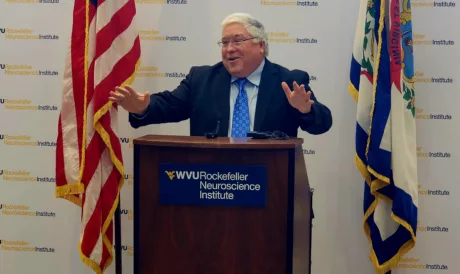
Morrisey ad Dr. Ali Rezai.
Jessie Crooks
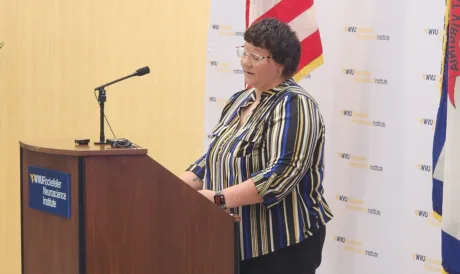
Katie McComas
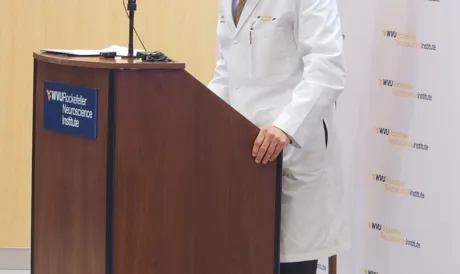
Dr. Ali Rezai
dbeard@dominionpost.com
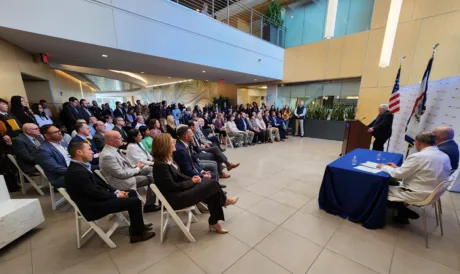
MORGANTOWN - A crowd of WVU Rockefeller Neuroscience Institute staff and leaders gathered at the RNI building on Thursday to celebrate the announcement of three grants to advance the institute’s addiction treatment research and practice.
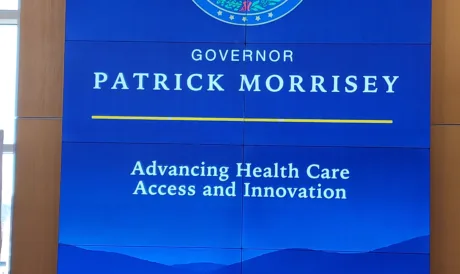
Gov. Patrick Morrisey stood before the group to announce the grants.
Two grants of just more than $6.3 million, he said, come from the West Virginia Rural Health Transformation Program - funded by the federal Rural Health Transformation Fund administered by the Centers for Medicare and Medicaid Services.
They will fund technology and additional staff for RNI, he said.
"We know that better health is built one step at a time," he said. "And we also know that recovery from addiction kind of works the same way. Sometimes the first few weeks of treatment can be the very hardest to overcome."
One grant is $3 million for the Digital Disease Management Platform. RNI explains that this is a recovery monitoring platform that links a phone app and wearable sensors to a patient's medical record. When a patient's risk of relapse rises, the platform alerts the care team so a coordinator or peer specialist can reach out early with a check-in call or help with counseling, housing, a job, or transportation.
RNI said the award aims to bring hundreds of new patients onto RNI's Human Operating System in its first year, with stronger data security, privacy protections, and reporting to the state.
The second grant is $3,382,229 for RNI’s Recovery Access Coordination Hub. It will go toward hiring dozens of new staff, such as recovery care coordinators, peer recovery specialists, mobility coordinators and drivers in Morgantown, Martinsburg and Charleston. It will provide more than 10,000 one-way rides to care and more.
The program serves more than 14 counties including Monongalia, Preston and Marion and Marion, Morrisey said.
The third grant is a $3 million state Economic Enhancement Grant for WVU Innovation Corporation’s innovator labs to help startups in life sciences and other fields gain access to lab space.
RNI explains that the money will be used "to capitalize on the nation- and world-leading research into addiction and other diseases of the brain currently being conducted at the RNI and translate it into the manufacturing of treatment modalities, like focused ultrasound, which has been shown reduce substance cravings and addictive behaviors."
Morrisey said this grant will help further build-out at WVUIC to bring in another 600 jobs in addition to the approximately 600 currently there. "This is what economic development is all about."
RNI Executive Chair Dr. Rezai said of the two rural health grants, "It will improve addiction treatment and recovery directly here in the state and expand access for patients and their families across the state.
And of the money for WVUIC: "These state-of-the-art laboratories ... will attract medical technology and keep our best and brightest here in the Mountain State and will attract high-tech jobs."
He thanked Morrisey on behalf of all RNI staff. "This team, I believe, is going to make a significant impact in the future of addiction care, addiction prevention and treatments. We believe that West Virginia can be at the forefront of developing technological innovations plus the human touch."
Two women also addressed the audience, putting a human face on what the technology and medical care can provide
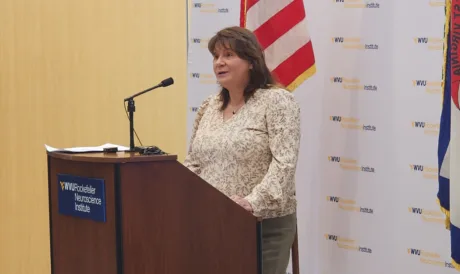
Katie McComas said she came through a nearly eight-year struggle with addiction to marijuana, cocaine, methamphetamine and alcohol. Five rehab treatment efforts failed. She lost her parental rights.
But in June she came to RNI for low-intensity focused ultrasound treatment.
She had to have her hair cut off, she said. But, "after everything addiction had taken from me, cutting my hair off seemed like a small price to pay. I would shave my head all over again for the life I have today."
She has no more cravings and as of Thursday was 190 days clean and sober. "For the first time in nearly eight years, I feel in control of my life."
Her faith played a role both in her recovery and in finding RNI to get help, she said. "Even in my darkest hours, I believe God never gave up on me."
She has a job, a driver’s license and a car, she said, and aims to go to nursing school to become an RN.
Jessie Crooks is a peer recovery support specialist at RNI. She’s there for patients to call when they need support.
"As peers, we build trust, inspire hope and reduce feelings of isolation through shared life experience," she said. "The human connection that peers provide is often what what keeps someone moving forward, and when everything feels uncertain and unmanageable, we are here."