
Proactive protection: What to know about W.Va.’s ‘voluntary intoxication’ loophole
Trending
MORGANTOWN – West Virginia Code §61-8B-1(3) defines the term "mentally incapacitated" as "a person is rendered temporarily incapable of appraising or controlling his or her conduct as a result of the influence of a controlled or intoxicating substance administered to that person without his or her consent or as a result of any other act committed upon that person without his or her consent."
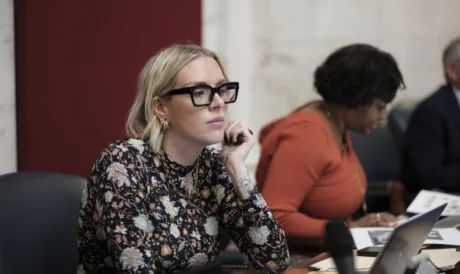
Del. Kayla Young, D-Kanawha, is proposing an amendment to the code in the 2027 Legislative session, changing the language to "'Mentally incapacitated' means that a person is rendered temporarily incapable of consenting, or of appraising, understanding, or controlling his or her conduct, as a result of the influence of alcohol, a controlled substance, or any other intoxicating substance or combination of substances, regardless of whether the person consumed the substance voluntarily or it was administered to that person without his or her knowledge or consent [, or as a result of any act committed upon that person without his or her consent]."
Young joins 15 other lawmakers to make amendments to their states' constitutions, https://bit.ly/4iCdcZo. Nineteen states currently have laws treating intoxicated victims as "incapacitated," only if someone gave them substances without their knowledge.
Young stressed that choosing to have substances legally should not affect a person's right to consent.
"If you do have a drink and then you're sexually assaulted, the law might treat you differently because they would say 'Oh, well, she was drunk, she could have consented,' or something of that nature," she said. "We just want to clean that up because just because you have a drink, you can still say 'no,' and we just want to make sure that victims of sexual assault are taken care of."
Young said that this loophole came to light nationally following the Jane Doe Cornell case. She said she has advocated for similar reform with previous legislation in W.Va. state code, such as the exception to marital rape, which changed in the 2024 Legislative Session through Senate Bill 190.
"I somehow became kind of the arbiter of fixing these kinds of issues because I care so much about victims of assault," she said. "They're usually women or people with lesser means. It's just so common, and I just want people to be able to live full, happy, long lives, and that's what the government should be doing, protecting people in those instances."
Young said that she doesn't feel the current legislation was written intentionally, but it's more important now than ever to improve laws that historically have been unfavorable to women and minority groups.
She explained how this proposed legislation will help protect young people at W. Va. college campuses.
"We know that sexual assault usually happens with so someone that someone knows, a victim and a perpetrator usually know each other, and it is also much more prevalent on college campuses," Young said. "There are such high numbers of sexual assault, but even then, we know that it usually goes unreported or underreported. ...Kids are experimenting, they're around substances. I just think it's very prevalent, and so we need to make sure that victims are protected."
The Rape and Domestic Violence Information Center (RDVIC) of Monongalia, Taylor and Preston Counties provides advocacy, counseling, legal services and more for survivors of sexual violence, according Amaya Williams, outreach and volunteer coordinator.
"Our entire mission revolves around believing survivors first, and that they don't need to justify anything to receive services from us," she said.
Williams agreed that survivors should always be protected legally, whether they took the substance voluntarily or not. She said many factors often contribute to not reporting an attack, but relationships to the abuser and voluntary consumption are often the reason.
"More often than not, if we have a student who has drunk or taken a substance, their biggest fear is being judged because they did consume something, or not being believed, or even getting in trouble for taking the substance," she said.
Williams praised Monongalia County's prosecuting attorney Gabrielle Mucciola and the county's police for continuing to support victims, despite the state code,
"Our prosecuting attorney is an absolute powerhouse when it comes to supporting victims and getting them the justice they do deserve," she said. "Even with law enforcement, if there are ever any issues, we're pretty good at being able to talk to them and have that sit down conversation with or without the client to explain, 'hey, this is what's going on. Here are some trauma-informed ways to provide advocacy.'"
Williams is hopeful for the legislation change this spring.
"Changing the code, not only from a legal standpoint, but as far as our courts are concerned, would definitely increase the likelihood of justice being served. As long as we take the steps to properly educate the community, if these changes do come into the 2027 session, we are hopeful that first time's the charm," she said. "I would like to say a special shout out to Delegate Young for being so proactive in making changes towards West Virginia's future."
A full list of services and resources can be found at the RDVIC's website https://www.rdvic.org/.
The 2027 W.Va. Legislative Session begins Jan. 13.