
Trending
Why do we pray? Folks have offered different answers to that question. John Calvin spent 52 sections of his Institutions exploring the question only to conclude we pray because God commands us to do so... thanks John. Prayer is a phenomenon that transcends religious tradition and time. We have recorded prayers to ancient gods, like the Babylonian Marduk. We can see prayer used in many of the faiths around us. Why do we as humans pray?
Jesus' teaching on prayer sits smack in the middle of the Sermon on the Mount. It has sometimes been said that the whole of the gospel of Matthew is just commentary on these five verses. The prayer that Jesus taught is divided into two sections of three petitions each. The first three petitions are God focused, while the second three are us focused. Our Father in Heaven, make your name holy, make your reign come, make your will be done on earth as it is in heaven. The Greek in these petitions is in the imperative tense. Jesus teaches his disciples not to passively make requests of God, but to demand that God show up, that God be faithful to God's promise. But what do these petitions mean? What are we demanding that God do?
To Hallow means to honor as holy. In Ezekiel 36:22-36, God hallows God's name by liberating the oppressed. Ethicist Stanley Hauerwas says; "To think of this command as merely a caution against speaking God's name among assorted expletives is to trivialize the meaning. It may be much more of a profanation when we say, "God is on our side," as we go off to war..." The second two petitions are deeply connected. When we pray for God's reign to come and God's will be done on earth as in heaven, we are committing a subversive act. Biblical scholar Warren Carter writes "to pray this prayer is to seek nothing less than the total transformation of life on earth. It is to reject the status quo and pray for its complete realignment..." What will it look like for God's will to be done on earth as it is in heaven? The second set of petitions illustrate Jesus' understanding of what God's kingdom looks like.
Give us today our bread for survival, and forgive us our debts as we forgive our debtors. Lead us not into temptation but deliver us from evil. It's common to spiritualize these three petitions, but to spiritualize them defangs their demands on us and likely is not what Jesus' meant when teaching this prayer. For the people Jesus taught daily bread, forgiveness of debts, and deliverance from evil were material gifts of grace from God experienced here and now. They were foretastes of God's reign present to us in this moment.
Gregory of Nyssa points out the irrationality of praying these petitions while seeking our bread at the expense of others: "We cannot pray this prayer when we are wedded to our own security and prosperity." When we pray for daily bread; we are asking God for a radical, just redistribution of resources. When we pray for forgiveness of debts; we are praying that God's year of Jubilee will finally come. When we pray for deliverance from temptation, we are praying for deliverance from the powers of greed and violence. When we pray these five verses, we are praying for the wholeness of God's reign to come and to be made manifest through us and our lives.
Why do we pray? Just over halfway through my senior year of college I was at an inflection point. I had realized that teaching choir was not what I expected. So one night, I decided to pray that if God had other plans for my life that they would be made apparent. The next morning I had two email notifications; one from my campus pastor and one from an admissions counselor. Both informed me that no one had applied for the full ride scholarship at the local seminary and invited me to apply.
Why do we pray? I don't think my prayer actually changed any actions in the world. Regardless of whether I had prayed those emails would have come that morning. What changed was me. Prayer changed how I received and responded to their invitation. It opened me to new possibilities, to new ways of experiencing the world around me. Why do we pray? We pray in the hope that we will be transformed. That the world will be transformed. Prayer reflects the reality of God's reign in our lives here and now. That is the prayer that Jesus teaches that in and through us God's reign will come and God's will shall be done on earth as it is in heaven.
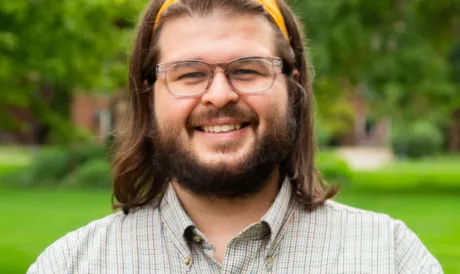
Stephen Lowe is the pastor at Morgantown Church of the Brethren-Mennonite. They are licensed for ministry in the Mennonite Church USA and are writing as part of the Morgantown Faith Leaders Network.