
Mountain Line turns 30, initiates comprehensive transit study with MPO
Trending
MORGANTOWN - Formed from a merger of city and county bus services in 1996, Mountain Line Transit Authority has provided more than 20.3 million rides since opening its doors in 1996.
Over the years, it's grown from an organization utilizing an $883,000 budget to provide just over 122,000 annual trips on a fleet of 12 buses, to an $8 million enterprise offering more than 630,600 trips yearly through a variety of services utilizing a diverse fleet of 38 vehicles.
But that's all in the rearview mirror.
What about the road ahead?
Working in conjunction with the Morgantown Monongalia Metropolitan Planning Organization, Mountain Line has tapped consulting firm Kimley-Horn to conduct a thorough examination of the transit system.
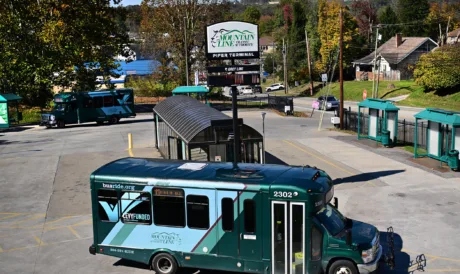
Estimated to take as long as 18 months, the transit study is focused on three primary areas - optimization of transit routes and services, evaluation of potential locations for an additional transit hub, and planning level recommendations for Mountain Line's existing Pifer Terminal facility in Westover.
During recent discussions with Morgantown City Council and the MPO Policy Board, Mountain Line CEO Maria Smith laid out her expectations as the transit authority looks to optimize operations in the face of ever-rising costs and tightening budget allocations.
"What we're looking at is the efficiency of all the routes with all of the growth in our community. We just want to take a fresh look at where people are going, where they're wanting to go. We're going to be studying the travel patterns using cell data and things like that. This is going to give us a lot of information from our non-bus riders (RideMon, etc.) to try and fit what they're wanting to do," Smith said. "We're also looking at the efficiency of the routes as far as the transfers. We've got the Northern Circulator and the Eastern Circulator, which create a lot of transfers for our riders, so we're going to be looking at alternatives for those systems."
Smith said the creation of a secondary hub could dramatically improve efficiency by reducing the number of redundant runs between downtown Morgantown and Pifer Terminal.
Those constant trips back and forth across the Westover Bridge became necessary in 2018, when the city told Mountain Line it needed to vacate its Garrett Street depot to make way for the city's multi-million-dollar riverfront revitalization project.
The eastern and northern circulators were created at that point in an effort to offset the additional time and distance required to operate out of Westover.
"This can look like just a right-of-way where the buses can pull in, transfer people, and pull out with no infrastructure or anything," Smith said when asked what a secondary hub would look like. “Pie in the sky, we could have some public-private partnership where we have a little market or coffee shop along with a transit station and facilities for them.”
"They're going to be looking at our service area in the route system to determine where the best location would be, whether that's where we are, or downtown, or closer to campus, Sabraton. They're going to be looking at all areas in general," she said.
In terms of the Westover terminal, Smith said Mountain Line no longer has adequate garage storage for all of its vehicles.
Russ Rogerson, who serves on the Mountain Line Transit Authority, said the study is expected to take everything into account, including what vehicles are utilized for the various services offered.
It was noted the last deep dive into Mountain Line's operations occurred prior to COVID, which had a significant and lasting impact on transit services.
"There's been a lot of changes in the evolution of some of the routes, and different solutions for the routes beyond just traditional big buses going everywhere. They've made a lot of progress on that front," Rogerson said. "All this will help be more efficient with taxpayer dollars and hopefully get more riders."