
Trending
At least 170 newspapers have shut down this year, according to the Medill Local News initiative, a Northwestern University Research project dedicated to addressing the newspaper desert crisis. According to their State of Local News annual report published Oct. 13, that's three newspapers a week.
McDowell County joined the 206 counties with no newspaper in 2023, that number increasing to 238 in 2026. Here's what life looks like there since then.
The U.S. Census credits McDowell County with the state's lowest median income, $31,559 a year, and the lowest voter turnout rate in the 2024 election at 32.14%. Additionally, McDowell produces West Virginia's lowest percentage of high school graduates, 75.5%, and only 6.8% of residents have a bachelor's degree or higher.
McDowell County, West Virginia has been without a paper since March 14, 2023 when the Welch News ceased publication. The business began as the Welch Daily Times in December 1927 and transitioned to three times a week in 1995, according to the WV Metro News.
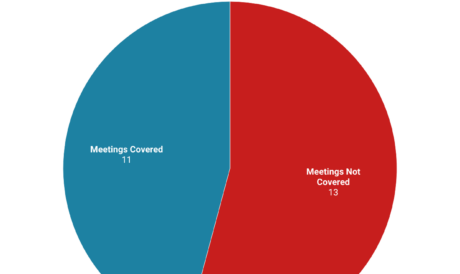
In the year prior to its closure, 11 of the 24 McDowell County Commission meetings received coverage in the Welch News, 45.8% of meetings in 2022.
According to the Bluefield Daily Telegraph website, their jurisdiction includes McDowell County, in addition to Mercer and Monroe. However, from March 2022-2024, the Bluefield Daily Telegraph covered zero county commission meetings here.
Neither papers covered any of the 65 McDowell County Board of Education meetings held between March 2022 and 2024, according to their archives.
Eric Cravey, editor for the Times West Virginian and regional editor of the Bluefield Daily Telegraph and The Register-Herald, said "his heart goes out to" communities like Welch without a newspaper.
"I cannot imagine living in a place that has no daily paper or presence of a newspaper," he said. "There have been all kinds of studies about how people tend to trust each other less, and health outcomes drop. It can be very scary if all those studies point to those things as truths today because when the free flow of information stops, we get disconnected."
He said the Bluefield Daily Telegraph manages cross-county coverage as best as it can with limited staff and encourages residents to reach out with pressing issues they need reported on.
"People are upset. People call us and ask why we aren't covering them, and so forth. We have to always be prepared for things that pop up with very little notice. For example, the governor will send a notice on any afternoon saying he's going to be in your city the next day. Well, that was great in the day we had seven or eight reporters in the newsroom. We no longer have that luxury. We have to rely on planning," he said.
Jay Chatman joined the paper in February 1971 in the advertising department, occasionally as a photographer and proofreader. At the time, the Welch News had a circulation of 12,000, and people everywhere wanted their name in print, Chatman said.
"We had stuff every week regarding political agendas, business meetings, county commission meetings, city council meetings," he said. "Also, we presented accidents, court cases, stuff like that."
Chatman said he first noticed a decline in ad sales following a layoff in the mining industry in the late 1970s, and it slowly continued until the paper's closure. Chatman worked at the Welch News for 35 years before retiring.
His favorite part of the job experience was meeting his neighbors and being their trusted source.
"It was just being known to the people and knowing a lot of folks throughout the county," he said. "It helped a lot of the time, depending on what situation you were in or if you were at certain meetings. A lot of the time you'd end up at those meetings and other parts of the towns in the county as a representative for the newspaper, and everybody respected that."
Chatman called the paper "the pulse" of the community; most importantly, the newspaper informed the community when a loved one lost theirs.
"A worse problem is the obituaries. When we had those, people kept up with them because we had them everyday. Sometimes, you got the paper, a person who had already had a wake and a funeral, you didn't even know they had passed away until a few days later. It's even worse now with no paper at all," he said. "I've had friends that have passed away, and you don't hear about it until a week later."
Chatman said he gets his news now from Facebook, surrounding news stations and the Bluefield Daily Telegraph, but it will never amount to the coverage McDowell County once received.
Debbie Colo also began at the Welch News in 1971, where she worked as a typist. She called her experience "the most fun job she ever had."
"Everybody was like a big family," she said.
For Colo, the Welch News was truly a family affair, whose older and younger brothers also worked at the newspaper headquarters as paper boys and on linotype machines.
She said reading the paper made her the most informed she ever was, whether that was on global events or updates on her community members.
Colo left the paper in 1983 for Beckley, W.Va., in search of more job opportunities after her ex-husband lost his job during the mine closures. While she doesn't see the possibility of a paper ever returning, she stressed that her hometown needs attention from government officials.
"It's really sad. I would love to see the area built up and the governor caring more about that section of West Virginia," she said.
Hobert Collins delivered the Welch News and submitted photos from 1997 to 2012, following in the footsteps of his two older half-brothers. He said despite the internet providing news quicker, the community was "more connected and better informed" during the era of the Welch Daily News.
He said the biggest loss is the lack of high quality information to the public, delivered directly to their doorsteps, rather than having to search for the news themselves.
"For many customers or subscribers that got the newspaper, it was a big thing to wait for it or see the news," he said. "I think lots of people don't know when the holidays are or even the election coming up."
Learn more about news deserts near you at https://localnewsinitiative.northwestern.edu/projects/state-of-local-news/2026/report/.