
W.Va. education officials unveil major overhaul of $2B school funding formula
Trending
CHARLESTON – For the last several years, lawmakers have talked about reforming West Virginia’s formula for sending tax dollars to the state’s 55 county school systems. Now, the Department of Education believes it has a fix.
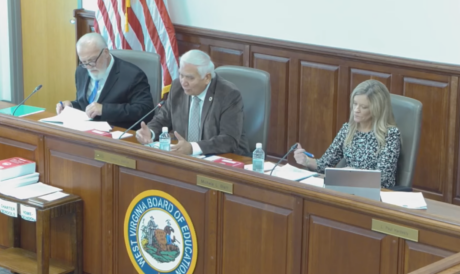
During Wednesday’s meeting of the West Virginia Board of Education, department officials unveiled draft legislation to reform the Public School Support Program, also known as the state school aid formula.
The state school aid formula was born out of a 1982 decision by former Ohio County Circuit Court Judge Arthur Recht after a parent brought a class action lawsuit in 1975 against Lincoln County Schools arguing that poorer rural counties were being disadvantaged over larger, wealthier counties.
While county school systems receive local funding through property tax revenue, bonds and levies, the seven-step school aid formula plays a large role in setting their budgets. According to Uriah Cummings, the school financial operations officer for the Department of Education, the school aid formula provides approximately $2 billion to county school systems.
That funding formula relies heavily on student enrollment numbers for each county, which are finalized every October. Those enrollment numbers have been steadily falling for decades, decreasing by more than 50,000 students in the last 10 years alone. Cummings said 35 other states also base their state public school funding on enrollment, but West Virginia needs to take into account other factors.
"A lot of our formula, as it’s currently written, is driven by enrollment, and I don’t know that’s necessarily the incorrect way of doing that,” Cummings said. “However, especially in today’s climate where we’ve had this massive decline in enrollment over a 10-year period, to me, there has to be some analysis done to be able to steady the ship, so to speak, and smooth out what’s happening within the funding that’s based upon that enrollment count.”
Cummings said the expenses of educating children, especially special education students, have remained the same or increased, putting pressures on school systems to either find other sources of revenue or cut expenses, such as closing underutilized public schools.
"What that means is that essentially, as a proportion of our general population, it has become more saturated with more costly students," Cummings said. "That doesn’t mean that we should kind of turn a blind eye to that, in my opinion. We need to further support that notion to be able to provide the increased resources necessary to be able to educate all children in the State of West Virginia, which we have the constitutional authority to do so, or requirement to do so, I should say."
The proposed bill introduces a funding enrollment mechanism that calculates base funding using the higher of the prior year’s second-month net enrollment or a three-year average, shielding districts from abrupt revenue cliffs. It would replace a flat per-pupil allocation with specific funding weights for special education students tiered by service intensity, low socioeconomic status/poverty, English learners, career and technical education, gifted students and rurality.
It would create a dedicated funding allowance for previously unfunded, statutorily required operational positions, such as treasurers/CFOs, transportation, facilities, personnel and child nutrition directors; and it would expand funded medical/support personnel, such as speech pathologists, psychologists and nurses.
The draft bill would restrict full operations funding for underutilized facilities (those below 50% capacity) and would condition professional operations funding for districts with fewer than 4,000 students on state-approved shared-services plans.
It also would streamline funding by treating public charter schools as distinct local education agencies/school districts directly within the formula, eliminating the former 99% county-pass-through model and defunding virtual charters for unused physical infrastructure/transportation costs.
"This has been needed forever," said board member Robert Dunlevy. "For all of us who deal with education over the years, the funding is just not there. We’re losing students for various reasons ... when you fund your systems based on your enrollment, the money just keeps going down and down and down. ... So, this really is needed.”
The full cost for implementing the proposed bill was not available Wednesday and would be determined in a second phase. But implementing changes to special needs funding could be as high as $190 million.
State Superintendent of Schools Michele Blatt said the final draft of the bill was provided Tuesday to Gov. Patrick Morrisey; House Speaker Roger Hanshaw, R-Clay; Senate President Randy Smith, R-Preston; and the leaders of the House and Senate Education and Finance committees.
"I feel like our issue has been we didn’t have everything into a bill format so that when the Legislature meets, they’re able to take this and determine what they can afford, what they like, what they don’t like, and that it’s something that everybody can get behind," Blatt said. "This is a document that puts everything that’s been discussed over the past two or three years, in my opinion, in one place, so that we can have further discussions and determine the direction that not only the state board wants to go, but the Legislature and the associations."
Lawmakers have been talking about making changes to the school aid formula for years, including commissioning a RAND Corporation report nearly one year ago. State Board of Education President Paul Hardesty, who was absent Wednesday, has also called for lawmakers to tackle the complicated formula. Morrisey has recently said he is working on his own formula reform plan.
House Education Committee Chairman Joe Statler, R-Monongalia, said by phone Wednesday that he has staff of his and the House Finance Committee reviewing the draft bill. Further discussions could be possible next month when House members come in for meetings at the State Capitol Building the week after the Nov. 3 election.
"It comes as a little bit of a surprise," Statler said. "I’m glad they put a proposal out for us to look at. We are looking at the proposal and what it would mean for the system, how it would work, and the details. We’re very early in. We’re happy they have moved (the) ball off the goal line and down the field."
The ACLU of West Virginia filed a petition at the end of September over the school aid formula, seeking a writ of mandamus from the state Supreme Court of Appeals asking the justices to determine that the Legislature, members of the Board of Public Works, the Department of Education and state Board of Education, the State Tax Department, and members of the Lincoln County Board of Education have violated their constitutional duty to maintain a "thorough and efficient" public school system.
In Wednesday’s meeting, the state board voted to provide its attorney in the case with a position agreeing with the ACLU-WV that “the school funding formula, as it stands, is inadequate and does not provide a thorough and efficient system of education to the students in the public schools in our state.”
“While it is the Legislature’s constitutional responsibility to provide for a thorough and efficient system of free schools, our Supreme Court has held that it is the board’s constitutional duty to ensure the complete executive delivery and maintenance of a thorough and efficient system of free schools,” said state board member Scott Rotruck, reading from the position paper. "The current school funding formula fails to allow the board to fulfill that duty."
Board member James Paul said he supports a review of the school aid formula but voted against the motion to submit the position paper to its attorney.
"In a lawsuit, you shouldn’t admit allegations that you haven’t examined closely," he said. "I think the remedy for the formula is ultimately with the Legislature. ... I want to be clear that I support a serious review of the formula. I’m particularly interested in special education funding and looking at solutions there, but I don’t support conceding that this board failed in its duty."