
West Virginia worthy: The Arc’s mission to save 5 miles of the Gauley River
Trending
Preserving West Virginia's natural areas is a delicate balancing act. On the bright side, West Virginia is one of the most stunning mountain states in the eastern U.S., with streams flowing into rivers and lakes. But on the flip side, the state has plenty of natural resources (fossil fuels and forests), and a history where extracting resources was often prioritized over environmental protection.
Even so, we've got the 63rd U.S. National Park in the New River Gorge and Preserve right here in West Virginia. Plus, we've managed to set up 36 state parks and nine state forests that cover just over 200,000 acres of wilderness. You can find a spot to enjoy the great outdoors, go for a hike or a walk, fish or hunt in every part of our state. And guess what? Ten of our state parks also have resorts with restaurants, conference rooms and golf courses. Pretty good, right?
Even with all this natural beauty, every county has its own special spots in need of protection as public spaces. This way, they can be enjoyed by all, and future Mountaineers can experience the legacy of the great outdoors.
One environmentally sensitive location is the Gauley River and its surrounding area. The Gauley River starts in Monongahela National Forest and flows its way to Summersville State Park, which opened in 2023. After you get to Summersville Lake, the Gauley River keeps going from the U.S. Army Corps of Engineers dam that creates the lake, into the Gauley River Recreation Area, and then it joins the New River to form the Kanawha River. The Gauley River is famous worldwide with kayaking and rafting enthusiasts.
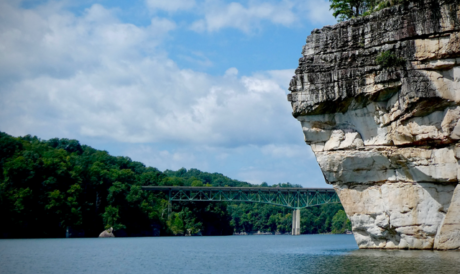
Summersville Lake isn't just the biggest lake in West Virginia; it's also famous for its crystal-clear blue waters. To keep these waters secure, the Gauley River upstream must be well-managed.
West Virginia has a number of nonprofit conservation groups that have helped to protect its lands and rivers over the years. This includes The Nature Conservancy (conserving 125,000 acres of critical natural land), The Conservation Fund (saving 113,000 acres of land and water), and The West Virginia Land Trust (protecting 62,000 acres). Focusing on water and watershed protection are groups like The West Virginia River Coalition (statewide), Friends of the Cheat, Friends of the Cacapon River, Friends of Decker Creek, and Friends of the Blackwater.
The Arc of Appalachia (Arc) is the newest member of the region’s conservation team. The Arc secured 1,200 acres in Wild Rock Canyon in 2024 (12 miles west of Lewiston). Arc has since added additional acreage to expand Wild Rock Canyon to 1,545 acres. More recently, the Arc led a campaign to secure sensitive habitats adjoining the New River Wilderness by securing 1,980 acres.
"We have been overwhelmed by the welcome we have received from our West Virginia conservation nonprofits and conservation-minded citizens, and this has been totally a feel-good experience for us,” said Nancy Stranahan, Director of Arc of Appalachia. “In truth, we are dazzled by the beauty and world significance of West Virginia, and for us, it is truly almost heaven."
The Arc has preserved over 18,000 acres of wildlands, mostly in Ohio, and is extending its reach into West Virginia and Kentucky. Currently, the Arc is leading a campaign to secure 5 privately owned miles of the Gauley River, flowing out of the Monongahela National Forest through Nicholas County.
The campaign has already raised about 72% of the $3.7 million project cost, with about $1 million left to raise. Supporters have an opportunity to help protect the Gauley River for future generations--whether they're following in our footsteps, paddling in kayaks and rafts, or simply hiking along the trails.
What sets Arc apart is its dedication to preserving and healing lands in need. The organization is on the lookout for unique land that connects other protected areas. Arc also offers a variety of educational programs, accommodations on their properties and interesting places to explore.
Find out more about Arc and how you can support its mission by visiting arcofappalachia.org.