
What’s blooming at WVBG?
Trending
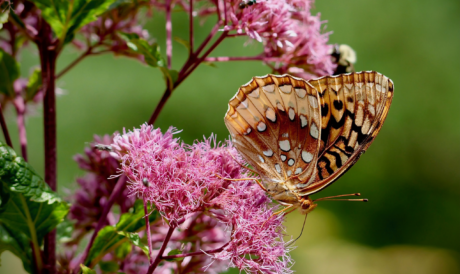
The last weeks of summer are a symphony of sounds and sights as bees, beetles, butterflies and other pollinators flock to the blossoms of Appalachia. You can see it all at the West Virginia Botanic Garden on Tyrone Road.
As you step into the Garden, you'll be greeted by a burst of blooms, beautifully framed by lantana and hyssop. And if you're planning to grab a bite at the Visitors Center (the cage is open Thursday to Sunday from 10 a.m. to 4 p.m.), you can unwind and soak in the beauty of the blooms while you're relaxing in the outdoor seating area.
Blooming now are all manor of native perennials including Joe-Pye weeds, turtleheads, cut-leaf coneflowers and more. The WVBG has hollow Joe-Pye weed, Eutrochium fistulosum, which is also common along hillsides and roadways in Appalachia. It can grow up to 12 feet tall, with purplish stems and whorls of 3-5 leaves. The blooms are a composite of flowers that open sequentially to bring in pollinators over several weeks. Not only do bees and butterflies love this plant, but it is a larval host plant for many moths--including the Clymene moth, eupatorium borer moth, ruby tiger moth, and the tree-lined flower moth. It is also available as a "baby Joe-Pye weed" for those who want to have the same ecological impact in a smaller size. At the WVBG, you'll find the baby Joe-Pye in both the Butterfly and Yagle Gardens.
The Turtlehead genus Chelone includes four species, of which the WVBG has the pink turtlehead, C. lyonii (if you want to see the white turtlehead, head to Cranberry Glades; they are blooming now). Turtleheads get their name for their resemblance to turtles, and as they become mature, their petals open just enough to admit bumblebees into the blooms. It becomes riotous as these blooms open. Bees arrive in full force, with each bloom having multiple contenders for nectar and pollen. You can observe this spectacle at the WVBG around the Visitors Center and in the Butterfly Garden.
For more blooms, check out zinnias in the Butterfly Garden, which are attracting European honey bees, and the containers around the Education Center, which are at their peak for the season. There, you will find everything from sunflowers and ageratum to Brugmansia, known as angel's trumpets. There are multiple angel's trumpets this year, since we propagated the original specimen over the winter. Each now has 7-inch trumpet-like blooms with a color gradient from yellow to pink, a sight to behold.
There is always more to find at the WVBG, visit soon and become a member at WVBG.org.