
WVU professor: Planning, preparation key when addressing inevitability of future disasters
Trending
MORGANTOWN - What's the difference between calamity and commonplace?
These days, not much, says Nicolas Zegre, a West Virginia University professor and climate change expert who directs the school's Mountain Hydrology Laboratory.
Hours after the world was still trying to process the CGI-looking enormity of north-central Nepal being decimated by walls of water and mud taller than some buildings - Zegre was musing Friday morning on what it all might mean to north-central West Virginia.
And all of Appalachia.
Climate change was the catalyst for the fatal surge of water in Nepal.
The collapse of a glacier Wednesday triggered the flash-flooding that killed at least 579 people with more than 1,900 missing, as of the afternoon two days later.
In past years, Zagre said, the disaster would have been called unprecedented - but upward degrees recorded on the global thermometer of late are inching down the impact of that descriptor.
"We hear multiple times about these 'unprecedented' weather events," he said.
However, he said, there's a chaotic caveat to it all.
Meteorological patterns, such as watching the same CGI movie over and over, can't be called unprecedented, he said, if they keep happening.
"Well, then you're into the 'new normal,'" the professor said.
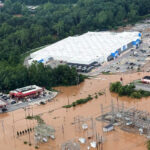
The new meteorological normal in the Mountain State means dangerous heat waves, torrential rains, tornadoes (previously unprecedented) and flooding - which caused deaths in a deluge in Wheeling last summer.
"We don't have flood insurance here," he said.
The key, the professor stresses, is pragmatic planning, across West Virginia and everywhere else.
No effective early warning systems were in place in Nepal to alert people of the deadly torrent of water surging their way, Zagre said.
Call it the same in central Texas last summer, when young campers drowned after the Guadalupe River jumped its banks.
In today's world, he said, meteorology isn't just science. It's socioeconomics.
And, geopolitics.
Zegre, who spent eight years in the U.S. Army and was honorably discharged one day before Sept. 11, 2001, knows that unstable weather begets unstable climates of a different kind.
Think the Syrian refugee crisis of a few years back, he said.
That calamity, he said, began after a prolonged drought collapsed the country’s primarily agrarian economy.
"There was no water, and very extreme temperatures," the professor said. Call it the politics of survival.
And such large-scale emigration - fleeing the weather, that is - presents very real challenges for receiving countries, he said.
There's also the coexistence factor of climate change, Zegre said.
In West Virginia, he said, that might mean tasking a highway engineer with the job of designing an enhanced culvert that can handle even more runoff from storms.
Or a county commission dealing with a collection of impoverished homes smack in the middle of a flood plain.
Ideally, it will mean quelling the human-led practices that have contributed to climate change in the first place, he said.
The research by Zegre and his team - bolstered in part through a National Science Foundation award and published in the Journal of Applied Meteorology and Climatology - has said that climate change, if continued unabated, will make West Virginia 10 degrees warmer by the end of the century.
And relatively equal degrees warmer everywhere else, which won't bode well for other glaciers.
Science, at its core, is nonpartisan, he said.
Which aligns with his hope that the above research can be used to nudge across-the-aisle reforms and other policies to at least slow the environmental damage.
Or, to at least have effective warning and response systems in place for the next climate-fueled disaster.
"I have to be an optimist," he said. "You can't just throw up your hands and not do anything."