
Trending
At the end of his life, Moses gives one final speech to sum up his teachings to the Israelites. In my NRSVUE, the editors label this last section of this speech Choose Life. "See, I have set before you today life and prosperity, death and adversity," Moses says in verse 15. In his speech, Moses sets before the people a choice between life and death; remaining in covenantal relationship with God will bring life and prosperity, by turning away will bring adversity and death. The choice seems like a simple one, but the reality is that choosing life can be much more difficult than it seems; after all, simple is not the same as simplistic. The choice for life gets spelled out in verses 16 and 19-20. Deuteronomy 30:16 explains that life involves loving God, walking in obedience to God, and keeping God's commands, decrees and laws. Deuteronomy 30:20 describes the choice for life as loving God, listening to God's voice, and holding fast to God.
Obedience is a word I do not like to use. Personally, it conjures feelings of being patronized, of passive submission, and of a lack of agency. This is not how Deuteronomy envisions obedience to God. Deuteronomy envisions obedience as an active response to God's covenant not as a passive, uncritical submission to authority. It is active -- walking and listening and debating. Obedience also meant that the Israelites were expected to act in appropriate ways toward each other, God, and the rest of creation. They were to relate in mutuality, recognizing God's image in each created being. Love gets repeated in both verses, because love of God is the biblical foundation on which our obedience to God is built. In the Hebrew Bible, love is depicted as a whole person experience involving one's body, identity, and heart, the seat of intelligence and conscience, not just emotions as in modern usage. Unsurprisingly, these triads should bring to mind the command in Deuteronomy 6 and quoted by Jesus to "Love the Lord your God with all your heart, being, and strength." To love God is not to have a purely intellectual or emotional experience. It is also an embodied experience. Likewise, choosing life involves more than an intellectual or emotional decision. It involves a holistic commitment to be and to do. Loving God, choosing life involves walking in the ways of God and listening to the voice of God. It involves keeping God's commands and clinging to God.
Dr. Randy Woodley, a member of the Keetoowah Cherokee nation writing at the intersection of his Christian and Indigenous identity, discusses how these two traditions and faith traditions can inform and learn from each other. In his book, “Shalom and the Community of Creation: An Indigenous Vision,” Dr. Woodley discusses the Hebrew concept of Shalom and the Cherokee concept of the Harmony Way and how they differ in their approach to justice and creation from that of colonial western Christianity. He argues that the Hebrew concept of Jubilee and the Cherokee concept of the Harmony Way, understand the oneness of the created order; all of creation is connected and reflects the image of God. This stands in contrast to western colonial Christianity which sees the human order, which it labels civilization, as superior to the rest of creation, which it labels nature or savagery. By breaking from this oneness of creation, humans have broken from what one culture calls shalom and the other calls the community of creation.
Both Moses' speech in Deuteronomy and the Shalom/Harmony Way concepts challenge the narrow-minded view all too common in Christian circles that the Law is a legalistic trap that keeps believers ensnared in calcified ritualistic minutiae and relationships of domination and submission. Far from it! Moses is urging his people to commit, heart and soul and body, to a vibrant relationship with the God in whom they live and move and have their being. In anabaptism, our ancestors used the word Gelassenheit, or in English yieldedness, to describe this type of relationship. I personally prefer this word to obedience. For me, it captures the power still held by those who yield. It also evokes elements of consent and mutuality I find lacking in our modern meaning of obedience. And, by yielding to God's way alone, we also resist yielding to the way of injustice, empire and domination, which only brings death and adversity. Choosing life means choosing to live in a relationship of active love and justice with God, other humans, and creation. It means yielding our own will to that of the community of creation. If you're curious about what it means to choose life and resist death, I'd invite you to join our congregation on Sept. 8 at 6 p.m. Visit www.morgantowncob.org for more information.
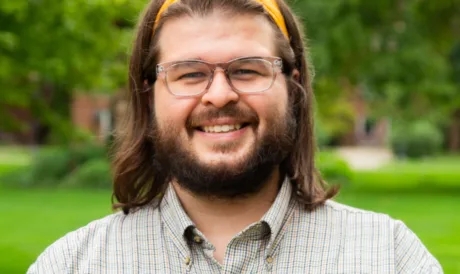
Stephen Lowe is the pastor at Morgantown Church of the Brethren-Mennonite. They are licensed for ministry in the Mennonite Church USA and are writing as part of the Morgantown Faith Leaders Network.