
Bird’s-eye view: A visit to the Avian Conservation Center of Appalachia
Trending
Imagine you spot a bird, perhaps an owl or hawk, and it seems its wing is broken. It's still there, resting on the road. What should you do?
According to the Avian Conservation Center of Appalachia's website, here are some steps you can take:
"Before we give advice, please know that handling wild birds is at your own risk! Depending on the size of the bird, carefully and gently place a towel, jacket, or bedsheet over the bird and scoop it (towel and all) into a cardboard box. If the bird is a raptor (hawk, owl, or falcon) be careful of the bird's talons (feet). Do not allow the bird to grab you with its talons. Wearing heavy gloves can help but may not offer adequate protection. If the bird is a heron or another waterbird, be careful of its sharp beak. Just to repeat, handling wild birds is at your own risk!
Secure the box and take the bird to Cheat Lake Animal Hospital, 286 Fairchance Road, Morgantown, WV. The hospital's emergency department is open 24 hours a day, 365 days a year." (See more details at ACCAWV.org)
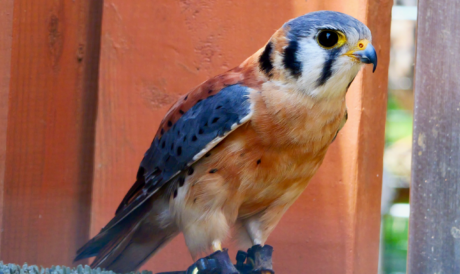
Saving birds is central to the ACCA's mission. They annually admit more than 600 injured or displaced wild birds representing more than 60 species. Often, the birds can be released back into the wild. But if they're injured and can't survive on their own, they might need care for the rest of their lives. If that happens, they might end up at the ACCA Outdoor Classroom on Morgan Hill Road in the Cheat Lake area of Morgantown. If you visit (they have open house hours on Friday afternoon), you'll see over a dozen birds in captivity, each supported by donations from ACCA members. You will also get a chance to hear more about each bird’s unique story. The ACCA has five staff members and over 40 volunteers that support its mission.
Besides helping injured birds, the ACCA is also dedicated to spreading awareness and education about birds in the Appalachian region. They offer educational programs, a summer camp and community outreach when they're invited to events around the area. You'll often see their staff, with birds included, at many regional fairs and programs. Annually, the ACCA hosts about 1,500 visitors at its Outdoor Classroom and reaches over 4,000 bird lovers at off-site events.
Another component of the ACCA's mission is to conduct research in critical areas of avian conservation. Projects include an American Kestrel Box Program, monitoring avian diseases and enhancing the understanding of the success rates of avian rehabilitation.
So stop by the ACCA Outdoor classroom on a Friday afternoon from 1 to 6 p.m. through October to learn more, meet the educational staff, and meet the birds. Online, visit ACCAWV.org to learn more about this regional nonprofit and become a member today.