
Trending
Stories about adoption often focus on building a family, highlighting the lovely, cozy moments of bonding that occur between parents and their new child. In his new film "A Mosquito in the Ear," director Nicola Rinciari. "We were encouraged by the adoption agencies and the parents to depict it that way because they felt that there wasn’t enough representation of what it actually means to adopt and the difficulties and the challenges that both as parents they have to go through. I remember several partners and executive producers, besides the real family that had adopted, always told us, 'Don’t make it pretty!' We were very drawn to that, and the reception on that end has been amazing."
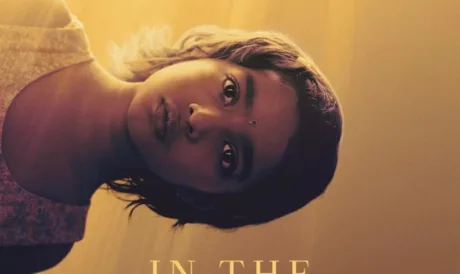
The movie is based on the Italian graphic novel "Una Zanzara nell’Orecchio" by Andrea Ferraris and tells the true story of an American couple who adopt a young girl from India and spend 10 days there getting to know her before bringing her back to the United States. The team filmed on location, and Rinciari explained that they got a crash course on the themes of communication explored in their movie.
"We lived part of this story because we went to India to make the film. We had a contingent of a very few people from the United States, including me, working with a whole Indian crew. We were staying there for an extended amount of time, so that same exchange of perspective and understanding each other that we were depicting in the film was also happening behind the scenes among us. I felt that that was for me a great lesson, a great way, and an open-minded way of how differently, sometimes, we can do things, and how many possibilities there are."
Another way that the film explored this struggle with communication was with the selective use of subtitles throughout. The little girl, Sarvari, speaks Hindi, while her parents speak only English. Rinciari told us, "I really wanted to switch perspectives throughout the film because we were telling a story of these three people coming together. There were moments where we wanted to embrace the parents’ perspective, and moments in which it was important to highlight Sarvari’s perspective. And so, when there are subtitles, the audience is put into a position of understanding Sarvari fully, whereas when there aren’t subtitles, the audience is put in the position of the parents, where they also struggle to understand what is going on. So they might relate to them and see the difficulties and the challenges that they are trying to navigate, and that’s why we switch back and forth in selected moments, to be able to do that."
This is also conveyed in one scene. Sarvari has run away, and her father, Andrew, is looking for her in the street markets in India. "We wanted to make this experience different for Andrew and Sarvari because Sarvari has lived there, so for her, it’s beautiful. Even the music highlights that. It’s almost a choreographed piece because she goes in there and she feels right at home. Whereas for Andrew, it’s a very scary experience as a foreigner trying to go through the market and those busy streets. We wanted to switch and actually highlight that what’s threatening or dangerous for him actually is very much also his perspective of that place. Whereas for Sarvari, that’s just her beautiful world."
"A Mosquito in the Ear" is available to watch on VOD.