
Dig into ‘Public Archaeology Day’ at WVU Jackson’s Mill
Trending
WESTON - There's more beneath the surface of this West Virginia University-maintained property than you might think.
Depending upon your depth of regional history, you may regard WVU Jackson's Mill for its standing in the only state born of the Civil War.
After all, the 500-acre expanse near Weston in Lewis County is the boyhood home of Thomas "Stonewall" Jackson, the Confederate general who earned his nickname by standing tall in a hail of Union bullets in the Battle of Bull Run.
Maybe you think of the place that's an hour's drive from Morgantown as the home of the state's 4-H Camp, first.
Should you want to go a little deeper Saturday, you'll discover a place where indigenous artifacts and ancient fossils are there for the digging.
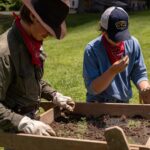
From noon to 4 p.m., the Mill is hosting Public Archaeology Day, which will be led by students and professors from WVU and Marshall, who are currently doing digs and other research there for the first time since the 1980s.
That means ancient fossils and wood from trees which once grew tall in primordial forests.
Visit WVU Extension on Facebook for more details. The event’s rain date is Sunday.
"Digging," organizers say, is the watchword. The soil is already yielding thrilling clues, in the signs of human habitation from more than 1,000 years ago.
Which is why WVU Jackson's Mill respects and abides by its real estate.
The Mill, of course, wasn't there first.
It resides on land including ancestral territories of the Shawnee, Lenape, Seneca, Cayuga, Onondaga and Delaware tribes.
Those of the Oneida, Mohawk, Tuscarora, Cherokee, and many others, also.
As a working grist mill, the place predated West Virginia's by 63 years and was an industrial linchpin of its day.
That's why Joe Obidzinski, who does historical programming at the Mill, loves giving tours while helping conduct mini-seminars of rope-making, candle-dipping and more.
"Jackson’s Mill as a whole really tells us a unique story about the earliest days of western Virginia," he said, with that story naturally weaving into the story of West Virginia and all that history - archaeology, included.