
History in Conversation: Telling the Mountain State’s story as America turns 250
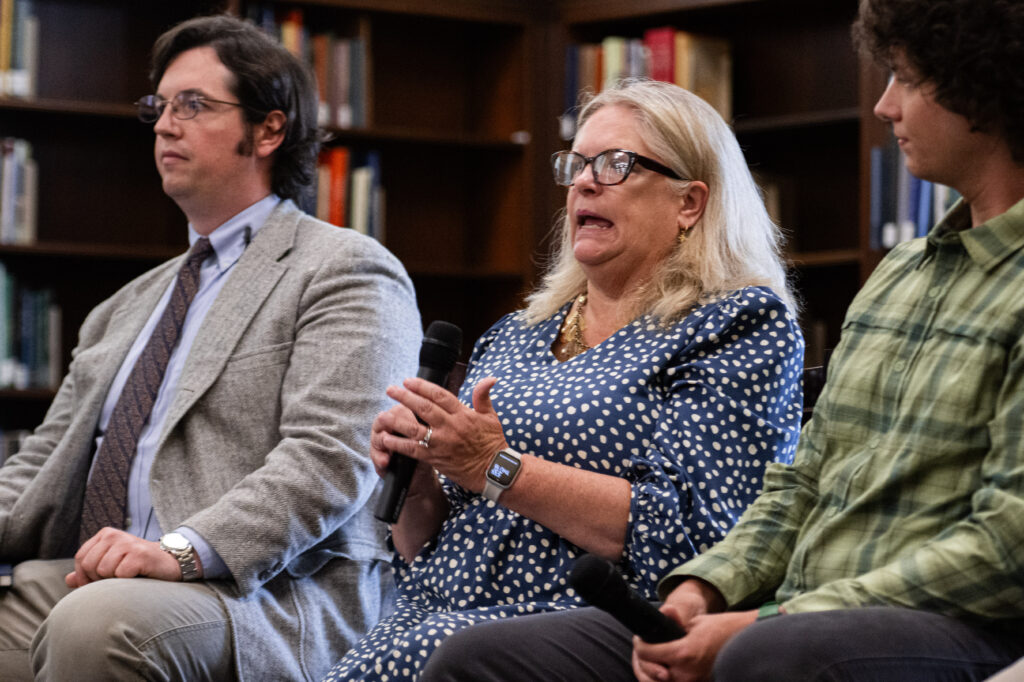
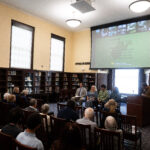
Dr. Kristen Bailey, PHD answers questions from the community during a panel discussion inside WVU Downtown Library on Thursday afternoon.
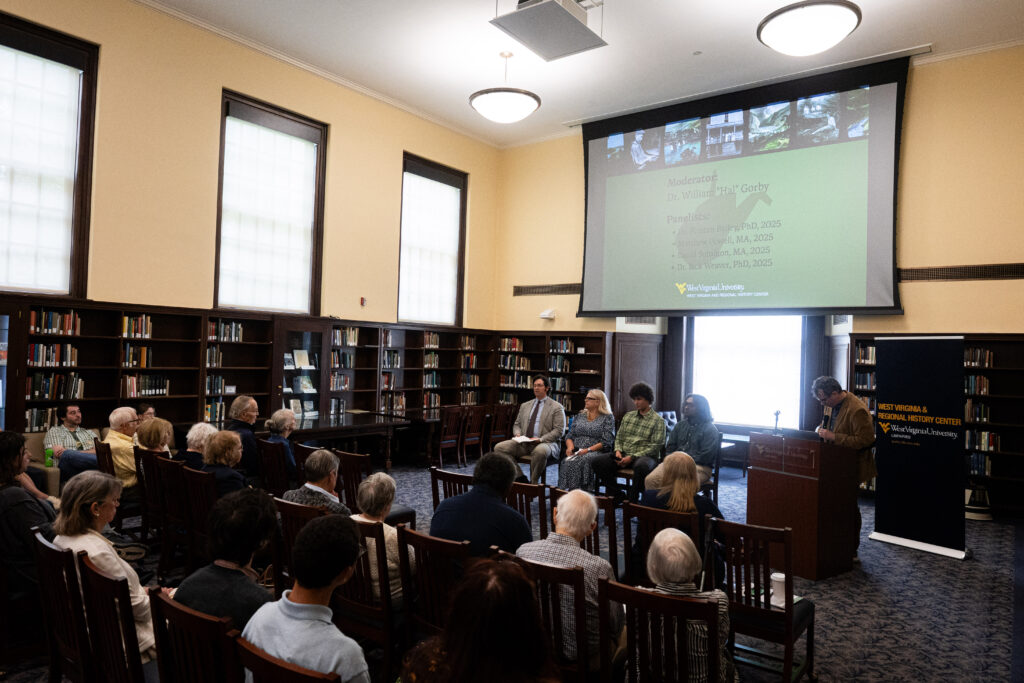
WVU scholars Dr. Jack Weaver, Dr. Kristen Bailey, David Solomon and Mathew Powell talk about the history of West Virginia and the state's impact on America the past 250 years. (Benjamin Powell/ The Dominion Post)
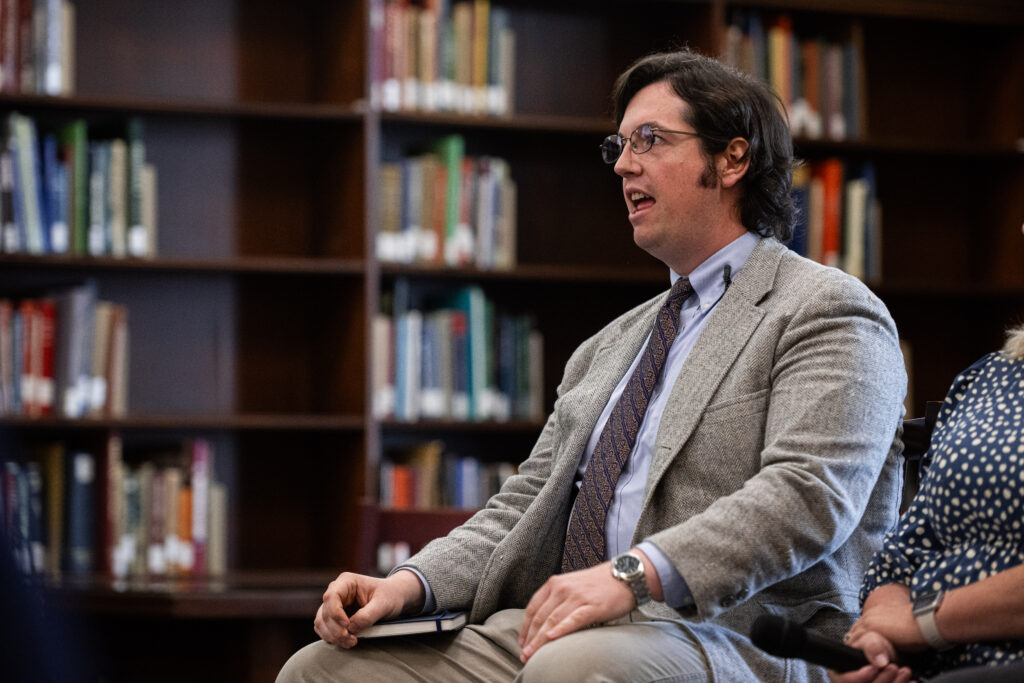
Dr. Jack Weaver, PHD gives some insight on West Virginia's history to the community during a panel discussion inside the WVU Downtown Library on Thursday afternoon.
Dr. Kristen Bailey, PHD answers questions from the community during a panel discussion inside WVU Downtown Library on Thursday afternoon.
WVU scholars Dr. Jack Weaver, Dr. Kristen Bailey, David Solomon and Mathew Powell talk about the history of West Virginia and the state's impact on America the past 250 years. (Benjamin Powell/ The Dominion Post)
Dr. Jack Weaver, PHD gives some insight on West Virginia's history to the community during a panel discussion inside the WVU Downtown Library on Thursday afternoon.
Trending
MORGANTOWN -- As West Virginia marked another year of statehood and the nation approaches its 250th anniversary, historians, alumni and community members gathered Thursday afternoon inside the Milano Reading Room at West Virginia University's Downtown Library to reflect on the stories that have shaped both.
Hosted by the West Virginia & Regional History Center in partnership with WVU Libraries, the event brought together recent graduates of WVU's history program for a panel discussion exploring topics spanning the Revolutionary era through the modern civil rights movement.
The program served as both a West Virginia Day celebration and an opportunity to spotlight new scholarship emerging from WVU researchers using the university's historical collections.
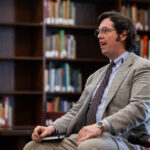
Moderated by WVU Associate Professor of History Dr. William "Hal" Gorby, the discussion featured four recent graduates whose research examined different chapters of West Virginia's historical identity across nearly 250 years.
The panel included Dr. Kristen Bailey, whose dissertation explored the intersection of politics and capitalism in West Virginia statehood; Matthew Powell, whose work examined labor and environmental control in Appalachian paper mill communities; David Solomon, whose research focused on the West Virginia Human Rights Commission and the civil rights movement; and Dr. Jack Weaver, whose dissertation studied material culture and identity during early America.
Lori Hostuttler, director of the West Virginia & Regional History Center, said the panel was intentionally designed to reflect the breadth of West Virginia history while showcasing research built from primary source materials housed at the university.
"We work really closely with the WVU History Department," Hostuttler said. "We have graduate assistants from the history department working in our department, many of us are WVU history graduates, and we see lots of history students using our collections for research."
As planning began for this year's annual West Virginia Day event, Hostuttler said she looked at recent graduates and recognized an opportunity to create a broader historical narrative.
"When I looked at the list of graduates from 2025, there were some really nice papers that represented across time," she said. "It seemed like the perfect opportunity to highlight West Virginia primary source research."
The discussion moved chronologically through history -- beginning in the Revolutionary era and continuing through statehood, industrial labor and the civil rights movement.
Weaver, who completed his doctorate in spring 2025 and previously worked at the West Virginia & Regional History Center, returned to participate in the event and reflected on the interconnected history of early West Virginia and neighboring regions.
"A lot of ways the history of the lands that became West Virginia were very interconnected with the stories of eastern Virginia, Pennsylvania, Maryland and the Carolinas during the era of the American Revolution," Weaver said.
He described how migration patterns, frontier settlement and regional identity shaped what would eventually become West Virginia, while also noting that local events created experiences unique to the region.
For Bailey, the event represented more than presenting historical research -- it highlighted the relationships that continue long after students graduate.
"For many of us whose research centers on West Virginia, Lori Hostuttler has been very pivotal to our research, and she's probably the biggest reason most of us are here," Bailey said.
Bailey emphasized that the university's history department fosters continued connections among alumni and scholars.

"Once you leave, you're still not really gone," she said. "You're still connected to the department."
She added that researchers often find themselves supported by staff who become invested in the work being produced and in preserving the stories being uncovered.
The event also marked one of the first major public programs for Dean of WVU Libraries and Press Mark Paris, who joined the university this spring.
Originally from Indiana and having spent nearly three decades in the Boston area, Paris said his family also has historical roots in West Virginia and that he quickly recognized the significance of the stories preserved across the state.
"I think there is just a powerful history here -- a powerful story to be told," Paris said.
"Our collections tell that story very well," he added. "There's so much here that people outside of West Virginia might not necessarily appreciate or understand. It's an opportunity to help tell that story."
Thursday's discussion served as both a reflection on the past and a reminder that history remains active through research, preservation and public conversation.
For WVU Libraries and the West Virginia & Regional History Center, organizers said the goal is not only to preserve history but continue inviting new generations to examine and interpret it.